Свяжитесь с Zhouxiang

Обновлено в августе 2026 г. · Практическое руководство по планированию для команд, занимающихся автоматизацией сварки
График пусконаладки сварочного робота — это план с контрольными этапами, на каждом из которых назначены ответственный и решение о допуске к следующему этапу. Этот план на шесть недель начинается после подтверждения готовности площадки, а не в день прибытия оборудования. При необходимости этапы можно приостановить, выполнять параллельно или вернуться к предыдущему, если проверка выявит проблему.
Краткие характеристики
- Плановый график: шесть недель после входного контрольного этапа; это не средний отраслевой показатель и не обязательство по договору.
- Основная последовательность: безопасное установленное состояние → интерфейсы → процесс сварки → SAT → компетентность → контролируемый запуск.
- Правило перехода к следующему этапу: переходите дальше после принятия подтверждающих данных, а не по календарю.
- Направления контроля: безопасность робота, опасности процесса сварки, опасная энергия, качество, конфигурация и распределение ответственности.
- Итоговый результат: подписанный комплект подтверждающих документов для допуска к производству и контролируемый список незакрытых вопросов.
Краткий ответ: Планируйте шесть недель только после подтверждения полной готовности. Рассматривайте каждую неделю как контрольный этап: если безопасность, интерфейсы, результаты проверки сварки, компетентность или возможность восстановления не подтверждены, приостановите работы или вернитесь к предыдущему этапу, а не переходите дальше по календарной дате.
Кратко
- Отсчёт начинается с подписанного подтверждения готовности, а не с доставки.
- Разделяйте меры защиты робота и меры контроля сварочного дыма, излучения, огневых работ и пожара.
- Учитывайте, что отключение и изоляция источников энергии, проверка, временное включение и повторная изоляция будут повторяться.
- До SAT используйте репрезентативные детали и согласованные критерии контроля.
- Допускайте к производству только после того, как местный персонал продемонстрирует штатную работу и безопасное восстановление после сбоев.
Сколько времени занимает пусконаладка сварочного робота?
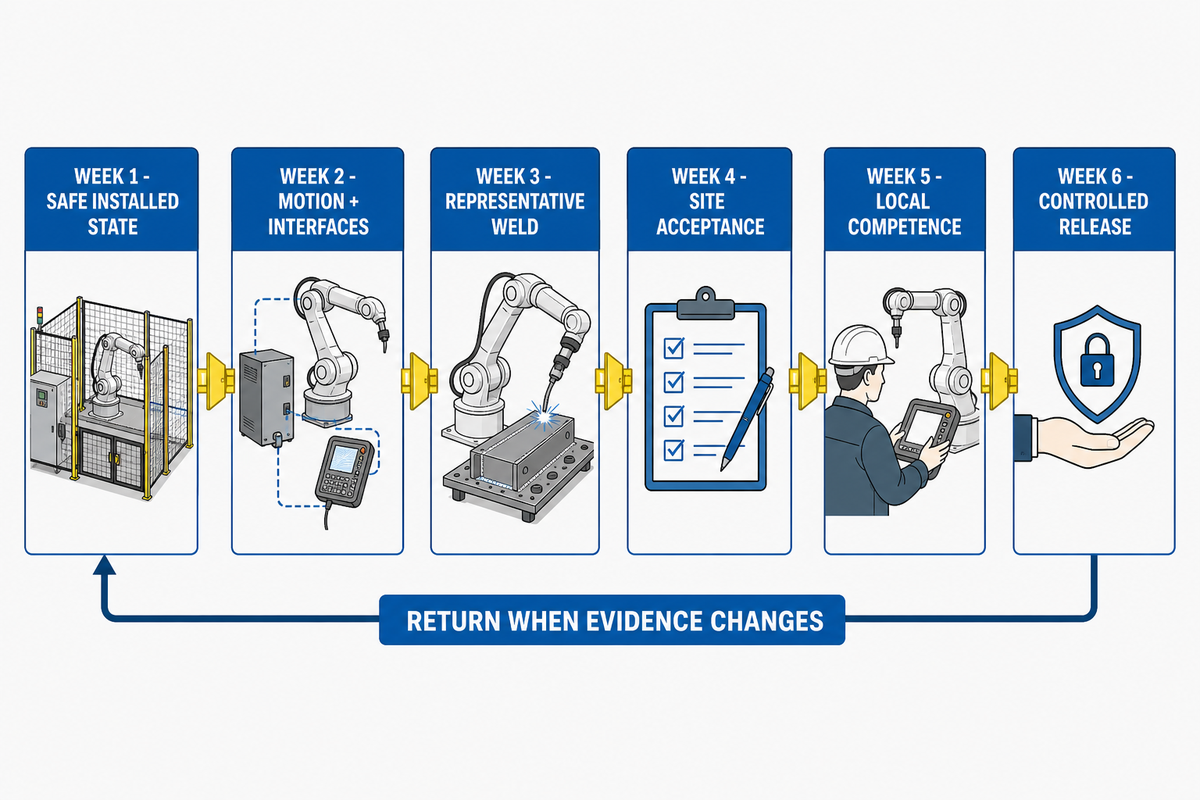
Для подготовленной роботизированной сварочной ячейки можно запланировать шестинедельный цикл пусконаладки, однако авторитетные источники не подтверждают, что шесть недель — универсальный срок. Фактический график зависит от сложности ячейки, разнообразия деталей, готовности площадки, охвата смен, объёма приёмочных испытаний и нерешённых изменений; определяющим остаётся подписанный проектный план.
Опубликованные графики часто нельзя сравнивать, потому что отсчёт в них начинается с разных событий. Один может включать разработку концепции, изготовление, заводские приёмочные испытания, доставку и монтаж; другой — считать только дни пусконаладки на площадке у интегратора. Этот план начинается, когда установленная ячейка и исходные данные для пусконаладки готовы. Он не заменяет более широкое планирование — от выбора до запуска производства, описанное в существующем руководстве по выбору сварочного робота.
Карта контроля пусконаладки на 6 недель
| Плановая неделя | Подтверждаемое состояние | Подтверждающие данные перед допуском |
|---|---|---|
| 1 | Безопасное установленное состояние | Средства контроля рисков, защитные устройства, инженерные сети, метод контроля энергии, меры контроля опасностей процесса |
| 2 | Перемещения и интерфейсы | TCP/системы координат, I/O, технологическая оснастка, сухие проходы траектории, восстановление, резервная копия конфигурации |
| 3 | Репрезентативный процесс сварки | Применимая WPS, протоколы испытаний, результаты контроля, утверждённые корректировки |
| 4 | Приёмка на площадке | Согласованные испытания, протокол с результатами «пройдено/не пройдено», контролируемый перечень замечаний, подписи ответственных |
| 5 | Компетентность местного персонала | Демонстрации по ролям, отработка восстановления после сбоев, схема эскалации |
| 6 | Контролируемый допуск к производству | Функциональность, качество, производительность, простои, исключения, резервные копии, утверждение ответственного |
Неделя — это временной интервал для планирования, а не разрешение двигаться дальше. Если на неделе 3 корректировка сварочного приспособления меняет рабочую систему координат, команде может потребоваться вернуться к проверке интерфейсов на неделе 2 и повторить затронутые проверки безопасности. Возврат к предыдущему этапу свидетельствует о контроле, а не о срыве графика.
Что должно быть готово до недели 1?
Неделя 1 начинается только тогда, когда доступны установленная система, инженерные сети, репрезентативные детали, актуальная документация, ответственные сотрудники, средства контроля рисков и правила приёмки. Доставленный робот рядом с незавершённым сварочным приспособлением — это ещё не готовая к пусконаладке роботизированная сварочная ячейка, даже если контроллер можно включить.
План пусконаладки, график пусконаладки и план безопасности при пусконаладке следует рассматривать как единый взаимосвязанный комплекс контроля. Если в них указаны разные даты начала или предположения об ответственных, входной контрольный этап нельзя подписать.
Каждый, кто работает с ячейкой или рядом с ней во время пусконаладки, должен пройти соответствующий своей роли инструктаж, получить допуск и подтвердить компетентность до начала работы. На неделе 5 расширяют и документируют передачу оборудования в производство; это не первый момент, когда персонал, участвующий в пусконаладке, проходит обучение по вопросам безопасности.
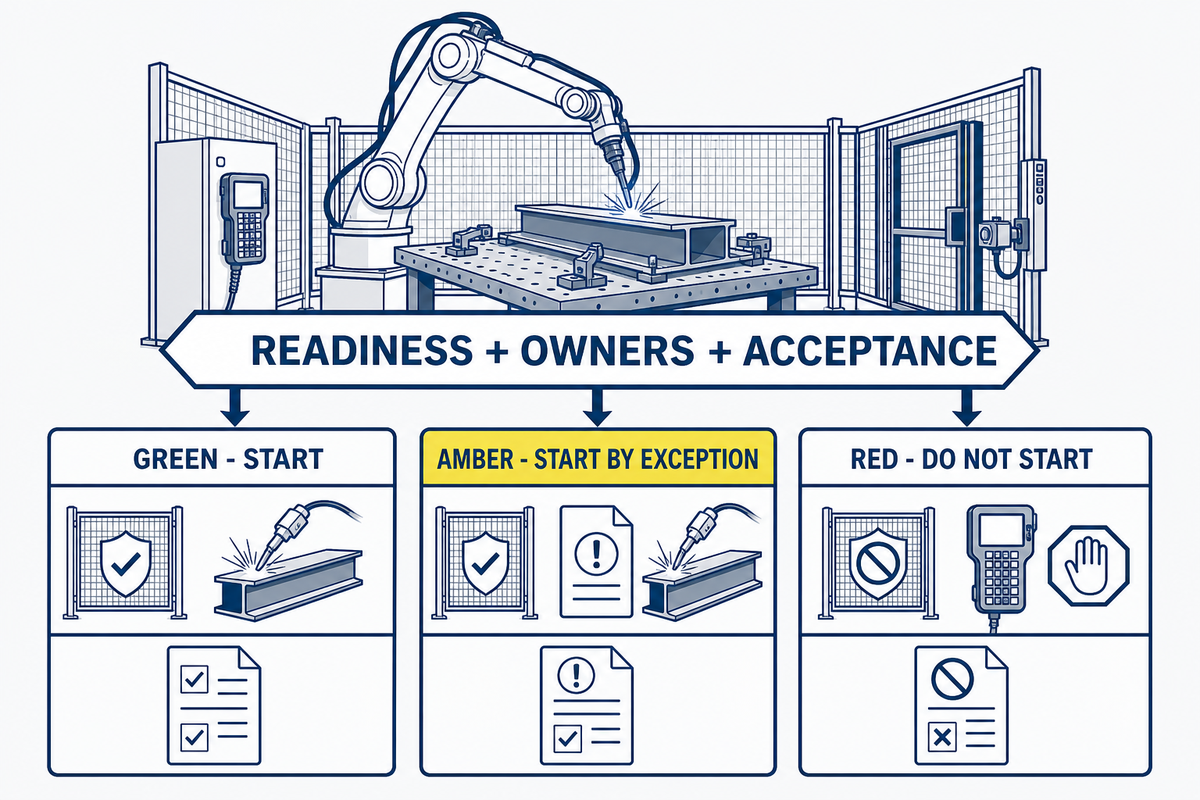
Входной контрольный этап: зелёный — жёлтый — красный
Зелёный — начать
Рабочая документация соответствует установленной ячейке; параметры инженерных сетей стабильны; репрезентативные детали и приспособления на месте; оценка рисков, процедуры, план контроля, персонал и критерии приёмки утверждены.
Жёлтый — начать как исключение
Для ограниченного по объёму вопроса предусмотрены меры сдерживания, назначен ответственный и установлен срок; письменно согласовано, что запланированные работы не пересекут затронутую границу допуска.
Красный — не начинать
Отсутствуют защитные устройства, контроль опасной энергии, вентиляция при сварке или меры пожарной безопасности, критически важные инженерные сети, репрезентативные детали, утверждённые процедуры либо полномочия на приёмку.
Входная проверка должна охватывать два направления безопасности. Средства управления роботом учитывают интегрированное применение и ячейку; ISO 10218-2:2025 рассматривает интеграцию и пусконаладку, но не охватывает опасности, возникающие при обработке таких материалов, как металл. Отдельно в рамках безопасности процесса сварки контролируют дым, газы, дуговое излучение, ожоги, огневые работы, горючие материалы, реагирование на пожар и воздействие конкретных материалов в соответствии с применимым законодательством и процедурами площадки.
Неделя 1: обеспечение безопасного установленного состояния
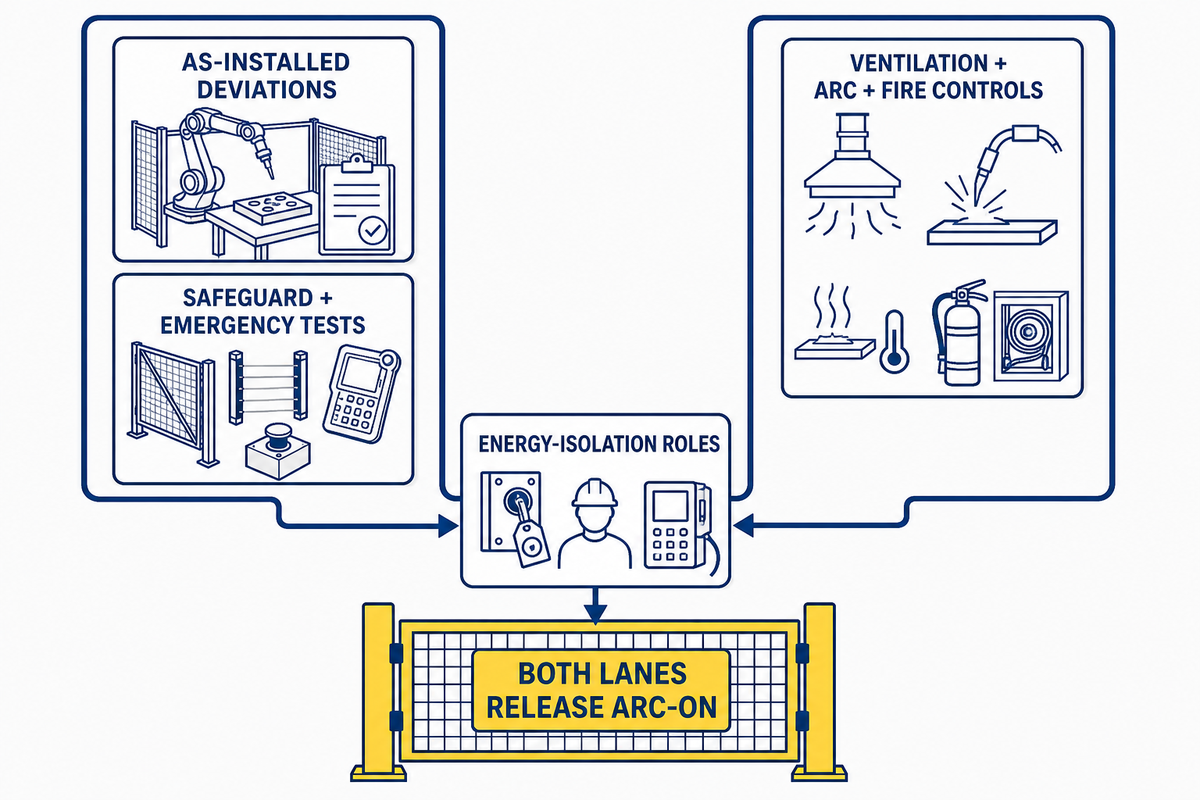
На неделе 1 подтверждают, что установленная ячейка соответствует утверждённому проекту, а предусмотренные меры безопасности работают в реальных условиях на площадке. В протоколе допуска фиксируют доступ, ограждения, функции аварийной остановки, инженерные сети, накопленную энергию, опасности процесса, временные меры безопасности при пусконаладке и персонал, уполномоченный менять режимы работы.
Специалистам по пусконаладке следует сверить фактическую компоновку и ограждения, двери, сканеры, аварийные остановы, устройства разрешения движения, выбор режима, функции обучения, приспособления, позиционеры, точки обслуживания сварочной горелки, заземление, вытяжку и доступ для обслуживания. Процедуры площадки работодателя и методика испытаний интегратора должны быть согласованы до того, как кто-либо войдёт в опасную зону или временно отключит штатный производственный режим.
Если применимы рекомендации OSHA, проверка безопасности и приёмка площадкой должны предшествовать первому запуску. На неделе 4 проводят согласованные договором приёмочные испытания SAT; этот этап не даёт разрешения впервые включить ячейку, которая ещё не прошла приёмку.
В рекомендациях OSHA по пусконаладке основное внимание уделено документированной оценке рисков на основе выполняемых задач и проверке того, что защитные устройства и меры снижения рисков работают по проекту.
Следует сохранять
- Перечень отклонений фактического монтажа от проекта и утверждённые решения по ним
- Протоколы испытаний защитных устройств и функций аварийной остановки
- Точки отключения и изоляции источников энергии, роли уполномоченного персонала
- Подтверждение наличия вентиляции при сварке, защиты от излучения, контроля огневых работ и пожарной безопасности
Не следует принимать
- Формулировку «на FAT всё работало» в качестве подтверждения проверки на площадке
- Останов по цепи управления в качестве устройства отключения и изоляции источников энергии
- Временные обходы защит без разрешения и записей о восстановлении исходного состояния
- Наличие защитных устройств робота в качестве доказательства того, что опасности сварочного процесса устранены
Испытание контрольного этапа Northline, сценарий 1 (пример): Ячейка проходит проверку дверей ограждения и аварийных остановов, но баланс местной вытяжки для фактического расходного материала и рабочего цикла не подтверждён. Подтверждение безопасности робота может быть зелёным, тогда как безопасность процесса сварки остаётся на красном уровне. Испытания с включением дуги откладываются; проект не маскирует это различие общей отметкой «безопасность подтверждена».
Неделя 2: проверка перемещений, систем координат, технологической оснастки и интерфейсов

На неделе 2 подтверждают, что робот, технологическая оснастка, позиционеры, датчики, PLC, сварочный комплект и окружающее оборудование согласованы по физическому состоянию и логике работы. Успешного перемещения в ручном режиме недостаточно: команда должна продемонстрировать сухие автоматические циклы, работу блокировок, реакцию на неисправности, восстановление, резервное копирование и контролируемое управление конфигурацией.
- Проверьте базовые точки — зафиксируйте TCP, системы координат базы, пользователя, приспособления, шва и позиционера по утверждённым методикам.
- Проверьте интерфейсы — испытайте полевые I/O, защитные I/O, сигналы готовности, состояния зажимов и позиционера, разрешающие сигналы источника сварочного тока и аварийные сигналы.
- Выполните сухие проходы траектории — проверьте штатные перемещения, подвод, отвод, поведение кабелей, зазоры при возможном столкновении и все входящие в объём работ варианты продукции.
- Смоделируйте ограниченные по последствиям неисправности — по утверждённой методике испытаний проверьте останов, прерывание, перезапуск, возврат в исходное положение, удаление детали и порядок эскалации.
- Зафиксируйте базовую конфигурацию, пригодную для восстановления — сохраните конфигурации контроллера, PLC, HMI, системы машинного зрения, источника сварочного тока и рецептур; запишите версии и испытайте согласованный порядок восстановления.
Контроль опасной энергии не заканчивается на неделе 1 и не остаётся без внимания. Если при обслуживании испытания или позиционирование требуют временного включения оборудования, в OSHA 1910.147(f)(1) описана контролируемая последовательность: освободить зону, вывести сотрудников, снять устройства контроля энергии в соответствии с процедурой, включить оборудование для испытания, затем обесточить его и повторно применить средства контроля, прежде чем продолжить работу. Необходимо также назначить ответственных за координацию подрядчиков, групповой контроль и передачу смен.
Это руководство не охватывает полную программу кибербезопасности сетевой ячейки. В документацию по пусконаладке всё равно нужно включить утверждённую резервную копию, проверку восстановления, ответственного за доступ, состояние удалённого доступа, журнал изменений и зависимости, которые могут помешать безопасной работе. Общие принципы обучения описаны в существующем руководстве по программированию роботов; этот раздел посвящён проверке установленной ячейки.
Терминология в разных областях сварки различается. Производитель металлоконструкций или сварщик может называть одну и ту же установку роботизированной сварочной ячейкой или системой роботизированной сварки, а в производственной документации отдельно учитывать манипулятор робота, комплект для MIG-сварки, слежение за сварным швом, офлайн-программирование и окружающие системы управления. Независимо от того, используется ли контроллер FANUC или другая платформа, при пусконаладке необходимы контроль версий, репрезентативные испытания и обучение операторов, привязанное к установленной конфигурации.
Как перевести проектную терминологию в подтверждения для пусконаладки
В проектных заданиях часто смешивают терминологию процессов, оборудования, труда, планирования и инвестиций. Команде по пусконаладке следует преобразовать каждый термин в проверяемый результат передачи, не выходя за рамки этого плана: выбор оборудования, бизнес-обоснование и общий график внедрения сюда не входят.
| Группа терминов | Термины, используемые проектной командой | Подтверждения, необходимые для пусконаладки |
|---|---|---|
| Объём процесса | MIG-сварка, TIG-сварка, лазерная сварка, автоматизированная сварка | Укажите фактический способ сварки и применимую процедуру; этот план не рассматривает разные способы сварки как взаимозаменяемые. |
| Формат ячейки | коллаборативный робот, сварка коллаборативным роботом, базовый робот, современные сварочные роботы, роботизированные системы | Зафиксируйте интегрированное применение, режимы работы, средства контроля доступа и меры снижения рисков для установленной конфигурации. |
| Цепочка оборудования | источник сварочного тока, мощность при сварке, сварочное оборудование, сварочные горелки, контроллер робота | Проверьте права доступа к интерфейсам, аварийные сигналы, версии, подачу расходных материалов, состояние калибровки и возможность восстановления базовой конфигурации. |
| Перемещения и код | перемещения робота, траектории робота, программирование робота, программирование роботизированной сварки, время на программирование | Проверьте системы координат, сухие проходы траектории, блокировки, варианты продукции, восстановление после неисправностей и контролируемое изменение версии программы, а не оценивайте трудозатраты по количеству строк. |
| Система деталей | свариваемое изделие, проектирование сварочного приспособления, семейства деталей, переналадка, повторяемость | Определите, для каких деталей действуют результаты проверки, используя репрезентативные по сложности детали, контролируемые состояния приспособлений и документированные проверки при переналадке. |
| Параметры сварки | параметр сварки, скорость перемещения, защитный газ, многопроходная сварка, термическая деформация | Свяжите допустимые параметры и влияние последовательности операций с применимой процедурой, протоколом испытания, результатом контроля и утверждённой корректировкой. |
| Производственные операции | ручная сварка, квалифицированные сварщики, сварочные операции, применение роботизированной сварки, производительность | Определите обязанности операторов, сварочного персонала, специалистов по обслуживанию и контролю качества; допускайте к работе на заданной производительности только после того, как безопасная работа и приёмка сварных соединений будут обеспечены. |
| График и экономика | монтаж и пусконаладка, время пусконаладки, «сколько времени это занимает», ROI, стоимость роботизированной автоматизации | Отделите подписанную дату начала пусконаладки и контрольные этапы по подтверждающим данным от утверждения капитальных затрат, выбора системы, доставки и предположений об окупаемости. |
| Ответственность и документация | системы управления, проблемы с качеством сварных соединений, понимание сварки, индивидуальные роботизированные ячейки, сварочные роботы для MIG-сварки | Назначьте компетентного ответственного за каждое замечание и сохраните в проектной документации решение, конфигурацию, подтверждения и границы допуска. |
Неделя 3: проверка процесса сварки на репрезентативных деталях
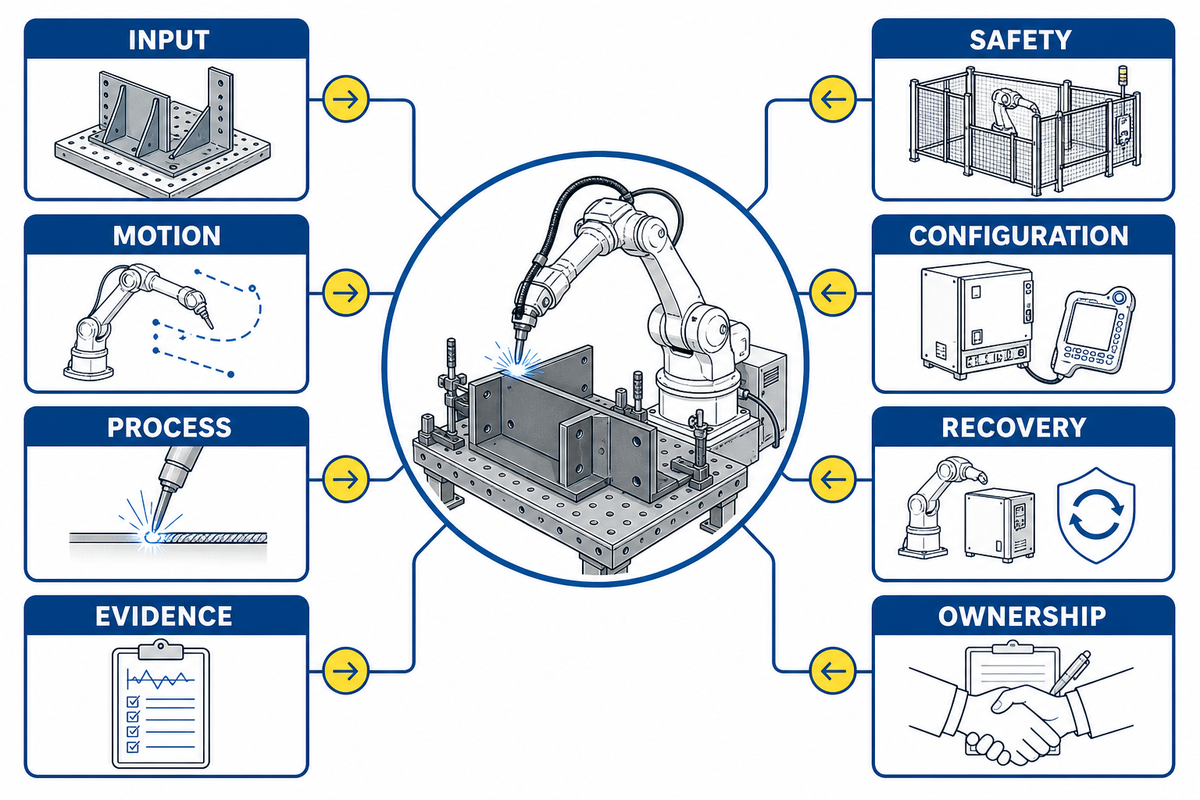
На неделе 3 подтверждают, что установленная ячейка может выполнять применимую процедуру сварки на деталях, отражающих реальную сложность производства. Повторяемость работы робота не заменяет WPS, подтверждение квалификации, требования к сварочному персоналу, контроль сборки под сварку, контроль расходных материалов, план контроля или критерии приёмки проекта.
Выбирайте репрезентативные испытания с учётом рисков, а не удобства. Включите детали, соединения, положения, радиус действия, последовательность нагрева, состояние прихваток, диапазон сборочных зазоров, закрепление, доступ и условия сенсорного контроля, которые с наибольшей вероятностью выявят ограничения ячейки. Плоский образец может помочь настроить начальную дугу, но он не подтверждает соответствие семейства деталей, если сложный производственный шов находится у предела радиуса действия или смещается при нагреве.
| Уровень проверки | Что фиксировать | Причина возврата к проверке |
|---|---|---|
| Исходные данные | Материал, соединение, сборочный зазор, расходный материал, газ, подготовка, состояние приспособления | Исходные данные за пределами утверждённого диапазона |
| Перемещения | Системы координат, угол сварочной горелки, вылет электрода, траектория, скорость, колебания, поведение при касании/сенсорном контроле | Изменение системы координат или доступа |
| Процесс | Утверждённые параметры процедуры и версия рецептуры | Параметр вышел за допустимые пределы |
| Подтверждения | Результаты визуального и необходимого дополнительного контроля, связанные с деталью и программой | Брак, необъяснимый разброс результатов или пробел в прослеживаемости |
| Безопасность | Актуальные подтверждения работы защитных устройств и контроля опасностей процесса сварки | Изменение состояния защитного устройства или средства контроля процесса |
| Конфигурация | Резервные копии контроллера, PLC, источника сварочного тока и рецептур с контролем версий | Неконтролируемое изменение кода, параметра или рецептуры |
| Восстановление | Отработка ограниченных по последствиям неисправностей и документированный результат восстановления | Восстановление невозможно, небезопасно или не разрешено |
| Ответственность | Назначенные свидетели, технические эксперты и ответственный за решение | Неясны полномочия на приёмку или порядок эскалации |
Применимые нормы и требования проекта определяют, что считается приемлемым сварным соединением. Используйте имеющееся на площадке руководство по WPS и PQR для понимания процедуры и руководство по контролю сварных соединений для выбора методов контроля. При пусконаладке эти документы связывают с программой робота и репрезентативной деталью, но не переписывают содержание руководств.
Испытание контрольного этапа Northline, сценарий 2 (пример): Три образца проходят визуальный контроль, но производственная сборка включает более длинный неподдерживаемый шов и отличается закреплением при нагреве. Специалисты по пусконаладке не переносят результат проверки образцов на приёмку всего семейства деталей. Они возвращаются к проверке приспособления, траектории и процедуры, а затем фиксируют репрезентативное испытание, связанное с версией производственной программы.
Неделя 4: проведение приёмочных испытаний на площадке
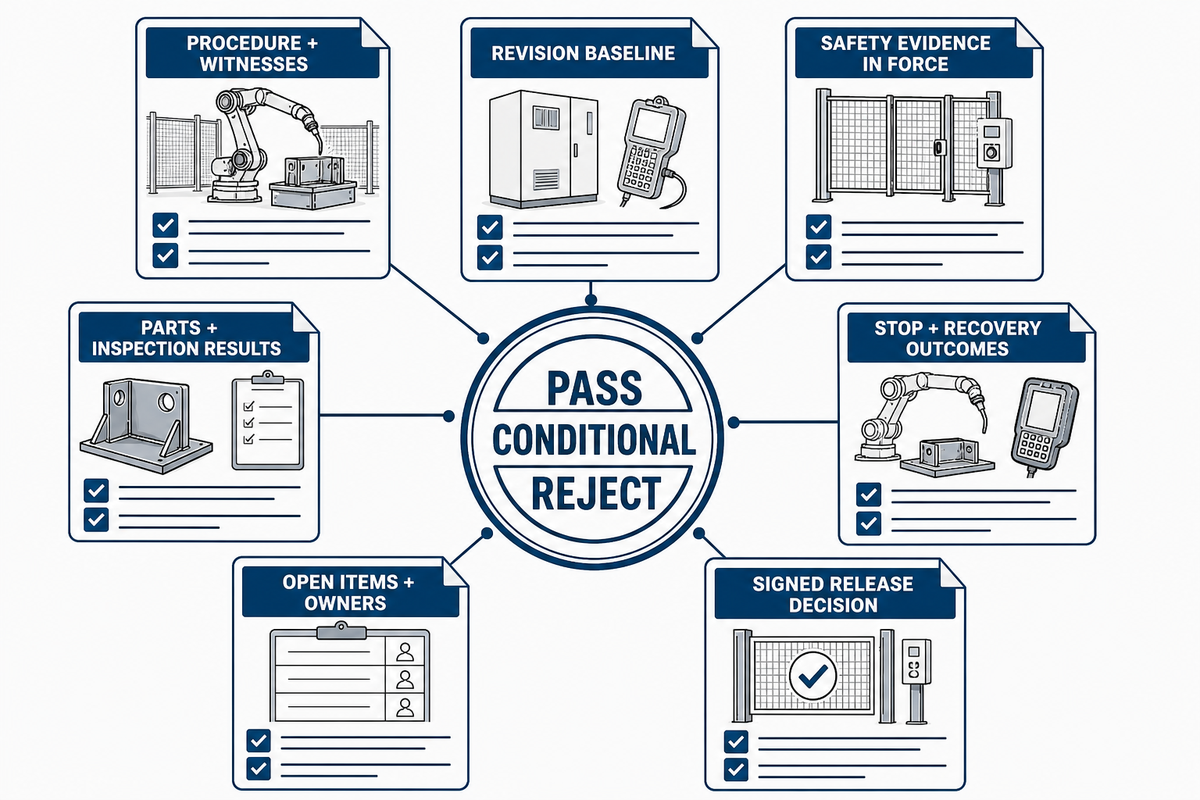
На неделе 4 проводят согласованные приёмочные испытания на площадке в заданных условиях и составляют протокол с результатами «пройдено/не пройдено». До начала испытаний в SAT следует указать деталь или демонстрационный образец, режим работы, метод контроля, продолжительность или порядок отбора образцов, ответственного за приёмку, документацию и порядок ведения перечня замечаний.
Опубликованные технические требования к закупке роботов показывают, почему программу SAT необходимо разрабатывать для конкретного проекта: демонстрации, испытания блокировок безопасности, испытания, отчёты о квалификации, обучение и итоговая документация различаются в зависимости от применения. Копирование размеров или количества образцов из другого проекта создаёт ложную точность. Используйте структуру подтверждающих данных, но привязывайте её к договору, утверждённой спецификации, оценке рисков и фактическому семейству деталей.
Комплект подтверждений SAT
- Утверждённая процедура испытаний, предварительные условия, свидетели и измерительные приборы
- Базовая версия установленного оборудования, программного обеспечения и конфигурации
- Действующие подтверждения функций безопасности и контроля процесса сварки
- Репрезентативные детали или демонстрации и прослеживаемые результаты контроля
- Результаты штатного цикла, аварийного останова, перезапуска, восстановления и эскалации
- Незакрытые вопросы с указанием допуска, мер сдерживания, ответственных и сроков
- Подписанное решение о приёмке, условной приёмке или отказе
Условный допуск — это не скрытый отказ. Незначительное косметическое замечание к маркировке может оставаться открытым при наличии ответственного и срока устранения; непроверенная блокировка, отсутствие метода восстановления, неутверждённый результат сварки или неизвестная конфигурация не могут считаться обычными замечаниями из перечня.
Неделя 5: обучение по ролям и передача ответственности за восстановление
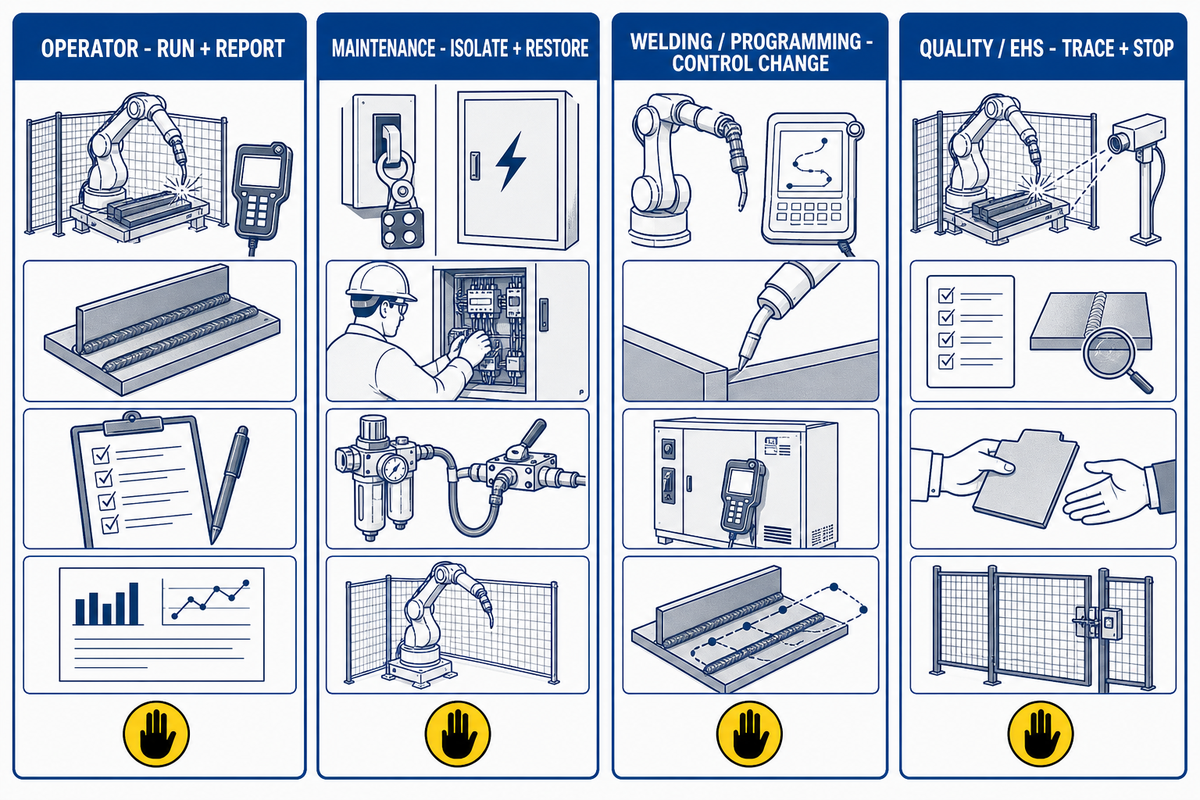
На неделе 5 передают подтверждённую компетентность, а не сертификаты о посещении. Операторам, специалистам по обслуживанию, программистам роботов, сварочному персоналу, специалистам по качеству и охране труда, а также руководителям нужны разные задания, разрешения, границы полномочий при восстановлении и порядок эскалации, прежде чем передача ответственности местной команде станет обоснованной.
| Роль | Что необходимо продемонстрировать | В каких случаях необходимо остановить работу |
|---|---|---|
| Оператор | Проверки перед запуском, выбор правильной рецептуры и детали, штатный цикл, разрешённый перезапуск, сообщение о дефекте и аварийном сигнале | Неисправность защитного устройства, неверная деталь, отклонение процесса, повторный аварийный сигнал |
| Обслуживание | Контроль энергии, диагностика, положение для обслуживания, резервное копирование и восстановление, контролируемый возврат к работе | Неизвестная энергия, отключённая защита, несоответствие конфигурации |
| Сварка/программирование | Разрешённая корректировка программы, пределы параметров, контроль версий, повторная проверка на репрезентативных деталях | Изменение затрагивает квалификацию, приёмку, доступ или безопасность |
| Качество/охрана труда | Прослеживание подтверждений контроля, проверка статуса мер контроля, классификация незакрытых вопросов | Отсутствие прослеживаемости, непринятый риск, неконтролируемое воздействие |
Обучение должно включать отработку ограниченного по последствиям нештатного события, а не только штатного производственного цикла. Попросите ответственного определить состояние системы, выполнить разрешённые действия по восстановлению, сохранить подтверждения и передать вопрос на следующий уровень, когда будет достигнута граница его полномочий. Области сертификации AWS по роботизированной дуговой сварке охватывают настройку, процесс, контроль, безопасность, программирование и логику, процедуры и компоненты ячейки. Этот широкий охват может служить ориентиром для оценки компетенций, но не означает, что каждому оператору нужна одна и та же сертификация.
Неделя 6: постепенный запуск по контролируемым правилам допуска
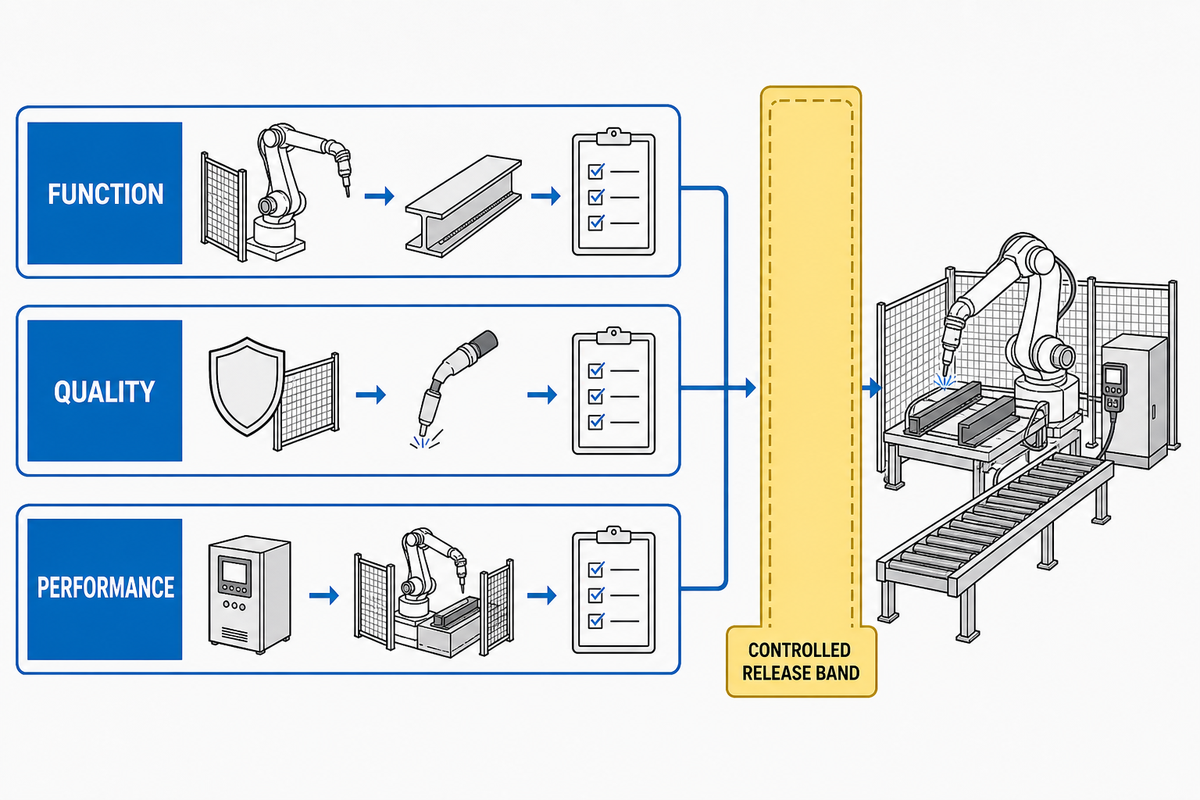
На неделе 6 постепенно увеличивают объём производства, отдельно отслеживая функциональность, качество и производительность как три независимых критерия допуска. Один успешный автоматический цикл или приемлемое сварное соединение подтверждает только конкретный результат, но не обеспечивает повторяемость при работе с разными деталями, в разных сменах, при восстановлении после сбоев, в исключительных ситуациях или на протяжении запланированного производственного интервала.
Комплект подтверждений для допуска к производству
Функциональность
Требуемые режимы, варианты продукции, блокировки, аварийные сигналы, способы восстановления, инженерные сети и интерфейсы работают в рамках утверждённой базовой конфигурации.
Качество
Результаты контроля соответствуют правилам приёмки проекта и прослеживаются до детали, программы, рецептуры и соответствующих исходных данных процесса.
Производительность
Наблюдаемый цикл, прерывания, доработка, причины простоев, состав персонала и время восстановления сравниваются с согласованным диапазоном допуска.
Постепенно увеличивайте объём выпуска в контролируемых пределах — например, по семействам деталей, сменам, группам операторов или утверждённому количеству продукции — в соответствии с определёнными для проекта правилами допуска. Не устанавливайте универсальные целевые значения OEE, брака, времени цикла или размера выборки. В качестве первого полезного показателя можно отдельно учитывать штатную работу, ожидание, плановое вмешательство, восстановление после неисправности, задержку из-за качества и неустановленные потери, не изменяя записи задним числом.
Пример журнала постепенного запуска
Испытание контрольного этапа Northline, сценарий 3 (пример): Этот пример показывает структуру расчёта, а не целевой показатель приёмки. Предположим, что производственный интервал охватывает 2 смены/день по 8 часов/смена, при выпуске 24 детали/смена. В записях указано 48 деталей/день, запланированный перерыв продолжительностью 20 min в каждую смену, 35 min утверждённой наладки, два останова на 12 min и 18 min, медианное время восстановления 9 min, 46 принятых деталей и 2 детали на удержании. По примерному расчёту, за этот интервал принято 95,8 % деталей, незапланированные простои составили 30 min, а выпуск — 19.17 min/деталь за 15 hr 20 min запланированного времени с учётом перерывов. Эти показатели не становятся пределами допуска, пока их не утвердит ответственное лицо проекта.
В этот же пример журнала можно включить исходные инженерные данные, не превращая их в универсальные допуски. Например, при проверке рецептуры могут быть записаны 3 mm сборочного зазора, 8 m/min скорости подачи проволоки, 45 cm/min скорости сварки, 230 A, 24 V, 18 litre/min расхода газа, 9 min/event времени восстановления, 3 детали/ч и 4,2 % деталей на удержании. При второй проверке могут быть зафиксированы 2 mm, 6 m/min, 38 cm/min, 210 A, 23 V, 16 litre/min, 11 min/event, 2 детали/ч и 6,3 %. Это примеры записей в журнале, а не рекомендации по сварке. Для каждого значения должны быть указаны процедура, измерительный прибор, версия рецептуры, деталь и отметка времени.
Продолжение испытания контрольного этапа Northline, сценарий 3: Результаты дневной смены соответствуют требованиям к качеству и времени цикла, но персонал ночной смены не может устранить неисправность подачи проволоки без вызова интегратора. Допуск к производству для этой смены остаётся условным. Корректирующие действия направлены на компетентность и передачу ответственности за восстановление, а не на ещё одну успешную демонстрацию в дневную смену.
Что увеличивает сроки и как восстановить график?
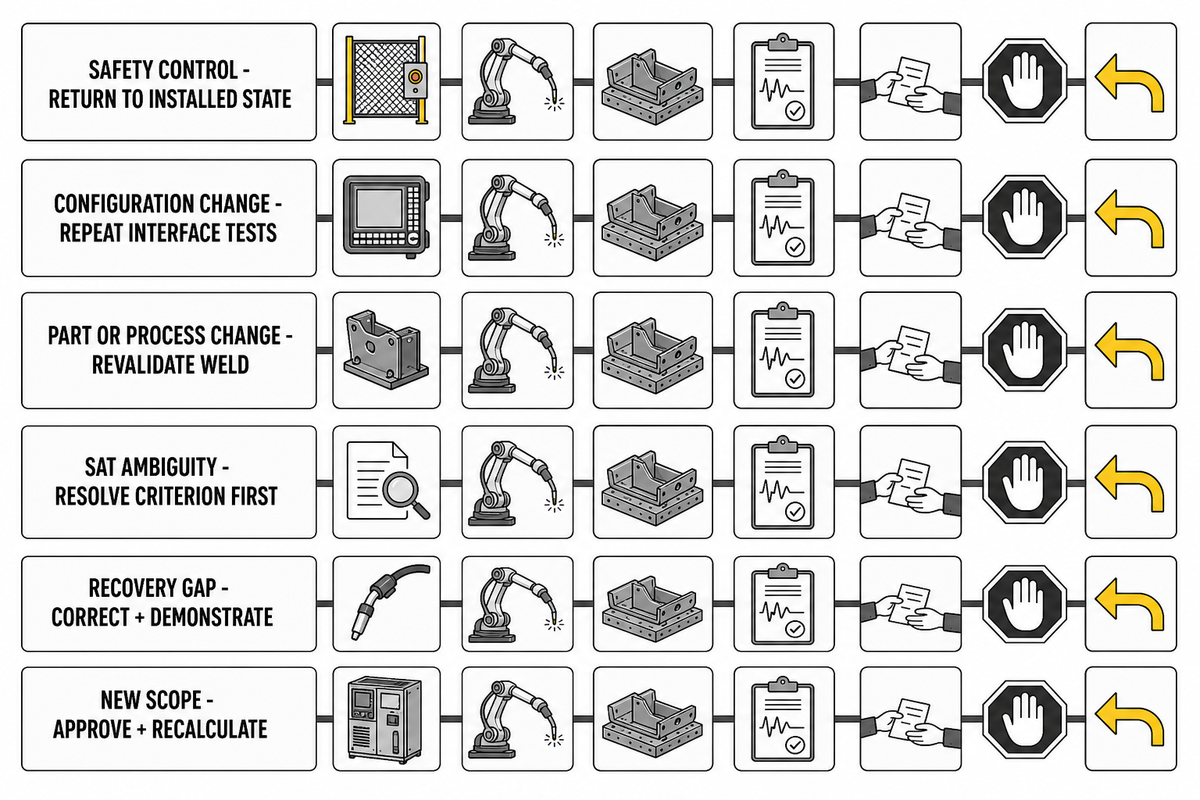
При задержке пусконаладки сначала классифицируйте препятствие, а затем добавляйте дни. Отнесите каждый вопрос к безопасности, площадке, интерфейсам, деталям, процессу, навыкам или объёму работ; определите последнее подтверждённое состояние, ограничьте риск, назначьте одного ответственного за решение и скорректируйте базовый график только для затронутого пути возврата.
Новые или изменённые программы, интерфейсы, рабочие операции и операции по обслуживанию требуют повторной оценки рисков на основе выполняемых задач до начала изменённых работ. Перенос даты не заменяет такую повторную проверку.
Дерево решений для восстановления графика
- Не подтверждено ли управление риском для безопасности или технологической опасностью? Остановите затронутые работы и вернитесь к подтверждённому безопасному состоянию установленного оборудования.
- Изменились ли оборудование, приспособление, рама, логика, состояние сети или конфигурация? Повторите затронутые испытания интерфейсов и соберите подтверждающие данные по последующим этапам.
- Изменились ли деталь, соединение, сборка под сварку, параметр WPS или основание для контроля? Вернитесь к валидации сварки на представительных образцах.
- Выявил ли SAT неоднозначность критериев приёмки? Уточните критерий и полномочия до повторного испытания; не меняйте правила прохождения после того, как увидели результат.
- Не удалось ли устранить проблему на месте? Устраните пробелы в процедуре, разрешениях или компетенциях и подтвердите результат на соответствующей смене.
- Относится ли запрос к новым работам? Отделите его от исправления дефектов, утвердите изменение и пересчитайте график, а не прячьте запрос в перечне замечаний.
Пересмотр базового плана позволяет сохранить исходные обязательства, выявленное состояние, решение об изменениях и новые подтверждающие данные для завершения этапа. Эта запись помогает избежать типичного спора о том, что «программирование заняло слишком много времени», когда настоящей причиной были отсутствие деталей, позднее изменение приспособления, неопределённые критерии приёмки или отсутствие уполномоченного представителя заказчика для принятия решения.
Кто отвечает за каждый этап пусконаладочных работ?

Ни одна сторона не отвечает за все решения по пусконаладочным работам. Интеграторы поставляют согласованную систему и подтверждают её соответствие требованиям; работодатель отвечает за рабочее место и местные программы; специалисты по сварке и качеству — за приёмку технологического процесса; служба охраны труда и промышленной безопасности — за меры контроля рисков на площадке; производственная служба и служба технического обслуживания принимают модель эксплуатации и восстановления.
| Категория этапа | Основные ответственные за решения | Обязательные материалы для передачи |
|---|---|---|
| Готовность к началу | Руководитель проекта, работодатель, интегратор, служба охраны труда и промышленной безопасности, специалисты по сварке и качеству | Подписанный реестр статусов: зелёный/жёлтый/красный |
| Безопасность и энергоснабжение | Работодатель и служба охраны труда и промышленной безопасности на основании материалов интегратора | Проверенные системы управления и утверждённые процедуры |
| Интерфейсы и конфигурация | Интегратор, специалисты по системам управления, служба технического обслуживания, ответственный за доступ на площадку | Протокол испытаний, базовая версия конфигурации, статус резервного копирования и восстановления |
| Процесс сварки | Ответственные специалисты по сварке и качеству | Утверждённые материалы пробной сварки и контроля |
| SAT | Указанные в договоре уполномоченные представители по приёмке | Запись о прохождении, условном прохождении или отклонении |
| Допуск к производству | Производственная служба, служба качества, служба технического обслуживания, служба охраны труда и промышленной безопасности, спонсор проекта | Условия допуска, открытые замечания, порядок эскалации, границы поддержки |
| Управление документацией | Ответственный за проектную документацию совместно с каждым техническим специалистом, наделённым соответствующими полномочиями | Утверждённые руководства, чертежи, процедуры, протоколы испытаний и перечень редакций |
| Изменение объёма работ | Спонсор проекта, ответственный за коммерческую часть, технические специалисты, отвечающие за соответствующие направления | Описание изменения, оценка воздействия, утверждение, пересмотр этапов и графика |
На коммерческой странице интеллектуальной системы для сварки металлоконструкций должны быть описаны конфигурация и возможности оборудования. Подробнее об этом отдельном продукте читайте на странице интеллектуальная система для сварки металлоконструкций. Информацию о компании и её услугах можно найти в разделе О компании ZX Welding Robot. Это руководство по пусконаладочным работам не дублирует технические характеристики, цены, сравнение поставщиков или информацию для запроса коммерческого предложения.
Часто задаваемые вопросы
Можно ли выполнить пусконаладочные работы сварочного робота менее чем за шесть недель?
Ответ
Да, для простой и хорошо подготовленной ячейки необходимые этапы можно завершить быстрее, но сама дата не подтверждает готовность. Сравните объём работ, начальный этап, сменность, варианты деталей, проверку безопасности, результаты сварки на представительных образцах, SAT, обучение и допуск к поэтапному наращиванию производства. Указанные в этом руководстве шесть недель — это плановый цикл после подтверждения готовности, а не минимальный или максимальный срок, средний показатель по отрасли или договорное обязательство.
Чем отличаются FAT и SAT сварочного робота?
Ответ
При заводских приёмочных испытаниях FAT согласованную систему проверяют у поставщика или интегратора до отгрузки; при приёмочных испытаниях на площадке SAT — после установки в реальных условиях производства. Поэтому SAT должны охватывать местные инженерные сети, фундаменты, интерфейсы, защитные устройства, вентиляцию, детали, персонал, конфигурацию и условия эксплуатации. Результаты FAT служат ценными исходными данными, но не заменяют проверку установленной ячейки.
Когда сварочный робот готов к производству?
Ответ
Ячейка готова, когда указанные ответственные лица принимают требуемые данные о безопасности, процессе, интерфейсах, качестве, компетенциях, восстановлении, конфигурации и производительности для определённых условий допуска. Одного качественного сварного соединения недостаточно. В записях о допуске также следует указать контролируемые открытые замечания, ограничения поддержки, порядок эскалации, резервные копии и условия, при которых необходимо вернуться к предыдущему этапу. Допуск может распространяться только на определённое семейство деталей, смену, группу операторов или объём производства. Последующее изменение приспособлений, кода, процедуры, материала, доступа или условий эксплуатации может лишить силы затронутые подтверждения и потребовать повторного прохождения предыдущего этапа. Поэтому готовность — это контролируемое состояние, а не постоянная отметка, присвоенная после одной успешной пробной сварки.
Кто утверждает безопасность робота при пусконаладочных работах?
Ответ
Официальный порядок утверждения определяется договором и юрисдикцией, но работодатель не может полностью передать интегратору ответственность за рабочее место. Назначьте ответственных за материалы по интеграции, оценку рисков на площадке, местные процедуры контроля энергии, сварочные и другие производственные опасности, обучение, техническое обслуживание и допуск к производству. Зафиксируйте, кто присутствовал при каждом испытании, кто принял его результаты и какие нерешённые вопросы остаются под контролем работодателя.
Должны ли незакрытые замечания блокировать производство?
Ответ
Некоторые ограниченные по объёму замечания можно оставить открытыми при документально оформленном условном допуске, но риски для безопасности, неконтролируемое качество сварки, неизвестная конфигурация, отсутствие процедуры восстановления или непринятые эксплуатационные риски нельзя переименовывать в незначительные недоработки. Каждое открытое замечание требует классификации, мер локализации, ответственного, срока устранения и правила допуска. Пересматривайте условия допуска при изменении замечания, окружающих условий или объёма эксплуатации. Также укажите, какие детали, режимы, смены или виды работ остаются запрещёнными, кто может снять ограничение, какие подтверждающие данные требуются и что произойдёт при пропуске срока. Так перечень замечаний становится контролируемой записью о принятии решения, а не расплывчатым обещанием закончить работу позднее.
Планируйте по подтверждённым данным, а не по надежде
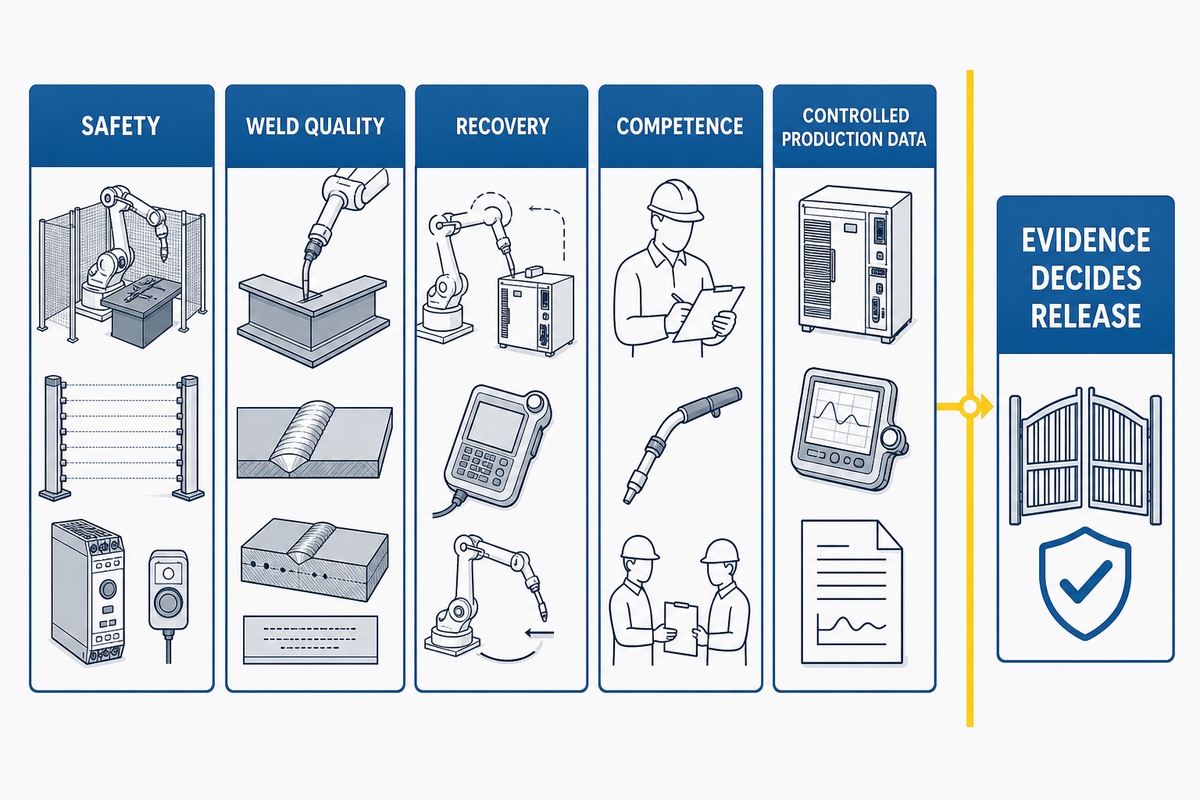
Полезный график пусконаладочных работ сварочного робота служит системой управления производством. В нём определено, когда начинается отсчёт, что должен подтвердить каждый этап, кто принимает подтверждающие данные и на какой этап возвращается проект при изменениях. Используйте шесть недель как наглядный цикл отчётности, а дату допуска определяйте по результатам проверки безопасности, качества сварки, восстановления, компетенций и контролируемым данным производства.
Подготовьте требования к пусконаладочным работам до запроса предложения по системе
Ознакомьтесь с решением ZX для сварки металлоконструкций, чтобы получить представление о продукте, а затем подготовьте для технического обсуждения семейство деталей, критерии приёмки, ограничения по готовности и матрицу ответственных.
Посмотреть систему для сварки металлоконструкцийОбъём требований по безопасности и стандартам:Это руководство — основа для планирования, а не оценка рисков на площадке, юридическое заключение, процедура сварки, норматив приёмки или замена приобретённым стандартам. Фактические требования к проекту определяются применимым законодательством, договором, инструкциями к оборудованию, актуальной оценкой рисков, программой контроля энергии, мерами безопасности при сварке и огневых работах, WPS/PQR, планом контроля и указаниями компетентных специалистов.
Источники и материалы
- ISO 10218-2:2025, Применение промышленных роботов и роботизированные ячейки Международная организация по стандартизации
- Безопасность роботизированных систем Управление по охране труда США
- 29 CFR 1910.147, Контроль опасной энергии Управление по охране труда США
- Сварка, резка и пайка твёрдым припоем Управление по охране труда США
- Объявление о пересмотре ANSI/A3 R15.06-2025 Ассоциация развития автоматизации
- Комитет D16 по роботизированной и автоматической сварке Американское общество сварщиков
- Каталожная запись AWS B2.1/B2.1M:2026 Американское общество сварщиков
- Направления сертификации по роботизированной дуговой сварке Американское общество сварщиков
- Подход к оценке эффективности в период наращивания производства Европейский журнал исследований операций