Свяжитесь с Zhouxiang

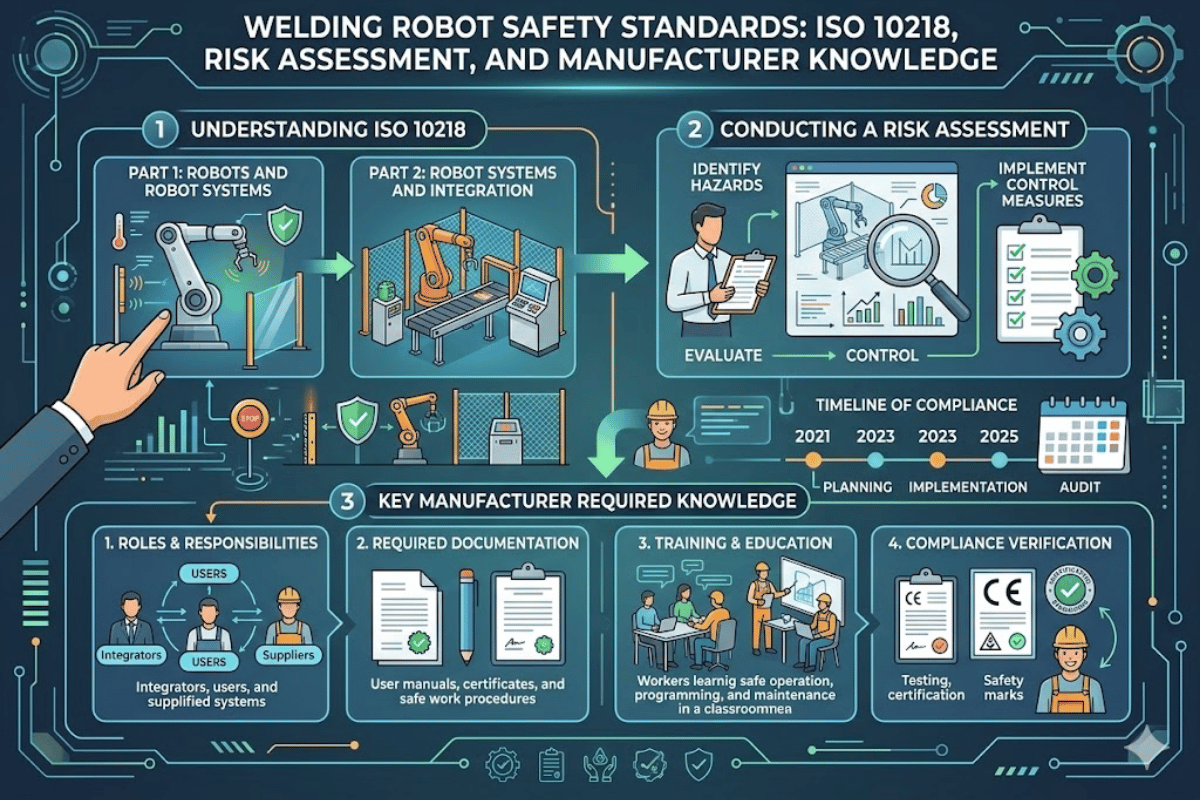
Стандарты безопасности сварочных роботов: ISO 10218, оценка рисков и что нужно знать каждому производителю
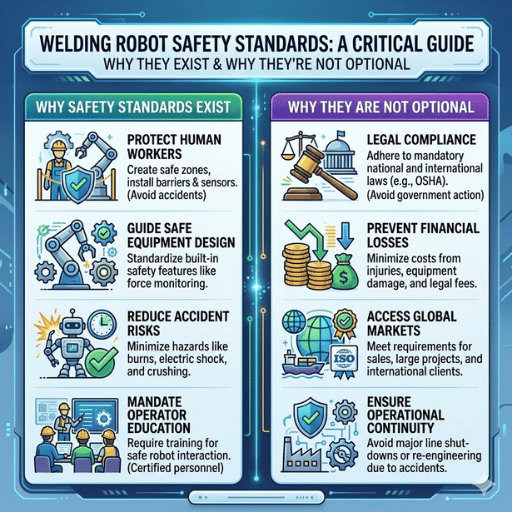
Стандарты безопасности сварочных роботов — это совокупность международных и национальных требований к проектированию, интеграции систем и эксплуатации промышленных робототехнических комплексов для сварки. К таким стандартам относятся ISO 10218, ANSI/A3 R15.06 и AWS D16.1. Они необходимы потому, что роботизированные сварочные ячейки всё чаще работают вместе с высокоскоростным оборудованием и создают опасности: яркое излучение дуги, вспышки ультрафиолета, искры, поражение электрическим током и потенциально смертельно опасные пары. Сочетание этих факторов уже привело к десяткам смертельных случаев на производстве и сотням тяжёлых травм в Северной Америке. В этом руководстве кратко изложены применимые требования безопасности, объясняется, как проводить анализ рисков, описаны необходимые защитные меры для вашей ячейки со сварочным роботом и указаны распространённые ошибки отрасли.Зачем нужны стандарты безопасности сварочных роботов и почему их нельзя игнорировать
 Все роботизированные сварочные ячейки, которые мы производим в Zhouxiang, поставляются с анализом рисков и отчётом о валидации. Мы делаем это по собственной инициативе и для соблюдения международных и национальных стандартов, а также для защиты сотрудников и клиентов. Статистика несчастных случаев с роботизированными сварочными системами, если риски не устранены, вызывает тревогу:
В исследовании NIOSH, опубликованном в журнале American Journal of Industrial Medicine (2023), выявлен 41 смертельный случай, связанный с промышленными роботами, за период с 1992 по 2017 год. В 83 % случаев участвовали стационарные роботы — такие же, как применяемые для сварки, — а в 78 % роботизированный инструмент ударил работника во время штатной работы. В отдельном анализе отчётов OSHA о тяжёлых травмах за 2024 год выявлено 77 происшествий с роботами в период с 2015 по 2022 год. Инциденты со стационарными роботами чаще всего приводили к ампутациям пальцев и переломам головы и туловища.
Все роботизированные сварочные ячейки, которые мы производим в Zhouxiang, поставляются с анализом рисков и отчётом о валидации. Мы делаем это по собственной инициативе и для соблюдения международных и национальных стандартов, а также для защиты сотрудников и клиентов. Статистика несчастных случаев с роботизированными сварочными системами, если риски не устранены, вызывает тревогу:
В исследовании NIOSH, опубликованном в журнале American Journal of Industrial Medicine (2023), выявлен 41 смертельный случай, связанный с промышленными роботами, за период с 1992 по 2017 год. В 83 % случаев участвовали стационарные роботы — такие же, как применяемые для сварки, — а в 78 % роботизированный инструмент ударил работника во время штатной работы. В отдельном анализе отчётов OSHA о тяжёлых травмах за 2024 год выявлено 77 происшествий с роботами в период с 2015 по 2022 год. Инциденты со стационарными роботами чаще всего приводили к ампутациям пальцев и переломам головы и туловища.
41
смертельные случаи, связанные с роботами (1992–2017, NIOSH)
$165,514
максимальный штраф OSHA за умышленное нарушение (2025)
$125,058
средняя компенсация работнику по иску об ампутации
⚠️ Важно
Блокировка и маркировка источников энергии (1910.147) стабильно входит в топ-10 нарушений OSHA. В 2022–2023 годах OSHA выписала 2 532 предписания LOTO по итогам 1 368 проверок только в производственном секторе — общая сумма штрафов составила $20,7 млн. Большинство смертельных случаев с участием роботов происходит во время технического обслуживания.
ISO 10218: глобальная система требований безопасности для сварочных роботов
 ISO 10218 — международный стандарт безопасности, состоящий из двух частей и устанавливающий требования к промышленным роботам и робототехническим системам. Часть 1 определяет требования к проектированию и изготовлению робота; часть 2 охватывает интеграцию системы и её применение. В феврале 2025 года обе части подверглись масштабному пересмотру — это первое крупное обновление требований безопасности для промышленных роботов за 14 лет и самое значительное за более чем десятилетие.
| Аспект | ISO 10218-1:2025 (проектирование робота) | ISO 10218-2:2025 (интеграция системы) |
|---|---|---|
| Область применения | Требования безопасности к проектированию и изготовлению роботов | Требования безопасности при интеграции роботов в ячейки и производственные процессы |
| Кто обязан соблюдать | Производители роботов (FANUC, ABB, KUKA, Yaskawa и др.) | Системные интеграторы, конечные пользователи и OEM-производители роботизированных ячеек |
| Количество страниц | 95 страниц (по сравнению с 50 в 2011 году) | 223 страницы (по сравнению с 72 в 2011 году) |
| Основные изменения 2025 года | Классификация роботов на классы I/II; требования к кибербезопасности; уровни эффективности для каждой функции | Включены требования к коботам из ISO/TS 15066; динамические защитные зоны; расширенная оценка рисков |
| Функциональная безопасность | Вместо общего требования PL d / Cat 3 введены конкретные уровни эффективности для каждой функции | Ограничения контактного усилия PFL с порогами для квазистатической и кратковременной нагрузки |
Оценка рисков для роботизированных сварочных ячеек
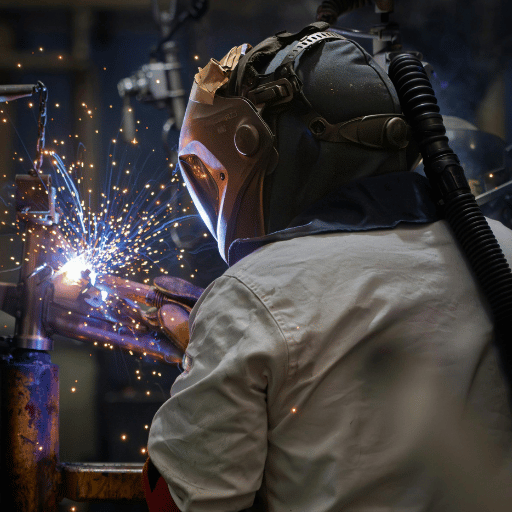 Оценка рисков — основа каждой соответствующей требованиям роботизированной сварочной ячейки. ISO 10218-2 и ANSI/A3 R15.06 требуют, чтобы интегратор провёл и задокументировал оценку рисков до запуска ячейки в производство. Если пропустить этот этап, обоснование всех остальных установленных мер безопасности останется недокументированным.
Методика оценки рисков основана на ISO 12100:2010 — базовом стандарте типа A по безопасности машин, который определяет три этапа: установить границы применения оборудования (назначение, предсказуемое неправильное использование и все этапы жизненного цикла), систематически выявить все опасности, а затем оценить каждый риск. В дополнительном стандарте RIA TR R15.306-2016 используется подход, ориентированный на задачи и специально разработанный для роботизированных ячеек: необходимо разобрать каждое действие человека рядом с роботом — программирование, обучение, обслуживание, загрузку, устранение неисправностей и очистку — и отдельно оценить опасности для каждой задачи.
На производственной площадке Zhouxiang мы быстро поняли, что главные ошибки при оценке рисков возникают, когда робот рассматривают как единственный источник опасности, вместо того чтобы анализировать каждую задачу человека рядом с ним. Оператор, который во время работы робота на сниженной скорости управляет им с пульта обучения, сталкивается с другими опасностями, чем техник, устраняющий заклинивание при открытых ограждениях. Для каждого сценария нужны свои меры безопасности и документация.
Оценка рисков — основа каждой соответствующей требованиям роботизированной сварочной ячейки. ISO 10218-2 и ANSI/A3 R15.06 требуют, чтобы интегратор провёл и задокументировал оценку рисков до запуска ячейки в производство. Если пропустить этот этап, обоснование всех остальных установленных мер безопасности останется недокументированным.
Методика оценки рисков основана на ISO 12100:2010 — базовом стандарте типа A по безопасности машин, который определяет три этапа: установить границы применения оборудования (назначение, предсказуемое неправильное использование и все этапы жизненного цикла), систематически выявить все опасности, а затем оценить каждый риск. В дополнительном стандарте RIA TR R15.306-2016 используется подход, ориентированный на задачи и специально разработанный для роботизированных ячеек: необходимо разобрать каждое действие человека рядом с роботом — программирование, обучение, обслуживание, загрузку, устранение неисправностей и очистку — и отдельно оценить опасности для каждой задачи.
На производственной площадке Zhouxiang мы быстро поняли, что главные ошибки при оценке рисков возникают, когда робот рассматривают как единственный источник опасности, вместо того чтобы анализировать каждую задачу человека рядом с ним. Оператор, который во время работы робота на сниженной скорости управляет им с пульта обучения, сталкивается с другими опасностями, чем техник, устраняющий заклинивание при открытых ограждениях. Для каждого сценария нужны свои меры безопасности и документация.
Категории опасностей в роботизированной сварочной ячейке
- Механические опасности — раздавливание и защемление между манипулятором робота и сварочными приспособлениями, удар при неожиданном движении, опасность застревания, разлёт брызг металла
- Электрические опасности — воздействие сварочного тока и электромагнитных полей, запасённая энергия в конденсаторах и пневматических системах, поражение электрическим током от открытых токоведущих частей
- Термические опасности — ожоги от излучения дуги, горячие поверхности сварочной горелки и свариваемого изделия, контакт с расплавленным металлом
- Излучение сварочной дуги — воздействие ультрафиолета вызывает фотоофтальмию (ожог роговицы); примерно половина травм глаз от дуги приходится на коллег, которые сами не выполняют сварку
- Вдыхание сварочных аэрозолей — в их состав входят марганец, шестивалентный хром (Cr VI), оксид цинка и другие токсичные соединения
- Шум — шум дуговой сварки, перемещения робота и вспомогательного оборудования
Иерархия мер по снижению рисков (ISO 12100)
В отличие от ручной сварки, для роботизированной сварки установлены требования к защитным зонам, контролю скорости робота и надёжности блокировок. ISO 10218-2 устанавливает требования для каждого этапа жизненного цикла ячейки — от первоначального проектирования до вывода из эксплуатации.
- Безопасность, заложенная в конструкцию — устранить опасность или снизить её у источника (увеличить зазоры, уменьшить скорость робота, выбрать способ сварки с меньшим образованием вредных аэрозолей)
- Защитные меры и инженерные средства управления — физические ограждения, блокируемые калитки, световые завесы, системы вытяжки сварочных аэрозолей
- Информация для безопасного использования — обучение, предупреждающие знаки и СИЗ. Это наименее эффективный уровень защиты, который не заменяет инженерные меры
Защитные меры для роботизированных сварочных ячеек: физические и электронные
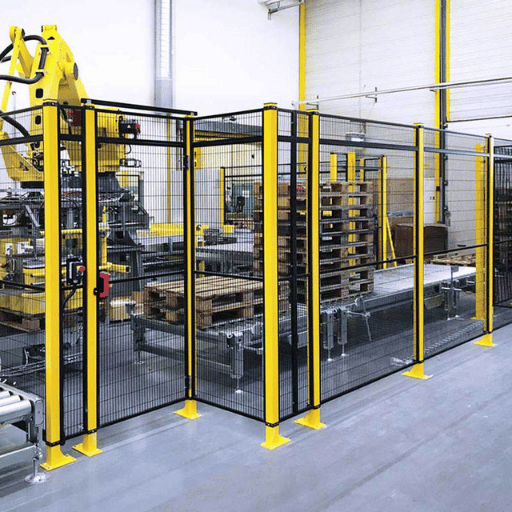 После того как оценка рисков выявила опасности, которые невозможно устранить, следующим шагом становится внедрение защитных мер для роботизированной сварочной ячейки. В эффективной ячейке предусмотрена многоуровневая защита: физические ограждения обеспечивают первичную защиту, электронные средства служат дополнительным уровнем, а система аварийной остановки — последним рубежом.
| Тип защитного устройства | Применение | Ссылка на стандарт |
|---|---|---|
| Ограждение по периметру (стационарные ограждения) | Основное ограждение рабочей зоны робота; минимальная высота 1 400 мм | ISO 14120, ISO 13857 |
| Блокируемые калитки доступа | Точки доступа с электромеханическими, кодируемыми RFID или механическими блокировками с ключом | ISO 14119:2024 |
| Световые завесы (ESPE типа 4) | Активное оптоэлектронное обнаружение в проёмах для загрузки и выгрузки; уровень безопасности до PLe/SIL3 | IEC 61496 |
| Лазерные сканеры безопасности | Зональное обнаружение с настраиваемыми предупредительной и защитной зонами (дальность до 5.5 м) | IEC 61496-3 |
| Защитные маты (с датчиками давления) | Дополнительное обнаружение на уровне пола внутри ограждённой зоны | ISO 13856-1 |
| Кнопки аварийной остановки | Красный приводной элемент на жёлтом фоне; фиксируется до ручного сброса; всегда должен быть в пределах досягаемости | ISO 13850:2015 |
⚠️ Важно
Аварийная остановка сама по себе никогда не является достаточной мерой безопасности для роботизированной сварочной ячейки. ISO 13850 требует применять аварийные остановки как дополнение к другим системам защиты, а не вместо них. Защита должна включать основные средства ограждения (ограждения по периметру, световые завесы, зональные сканеры), которые не допускают доступа в опасную зону. Для обнаружения присутствия могут применяться промышленные датчики безопасности от CCH; их пригодность для конкретного применения и подтверждения возможности интеграции проверяются отдельно от каталога продукции.
Безопасность коллаборативных роботов при сварке
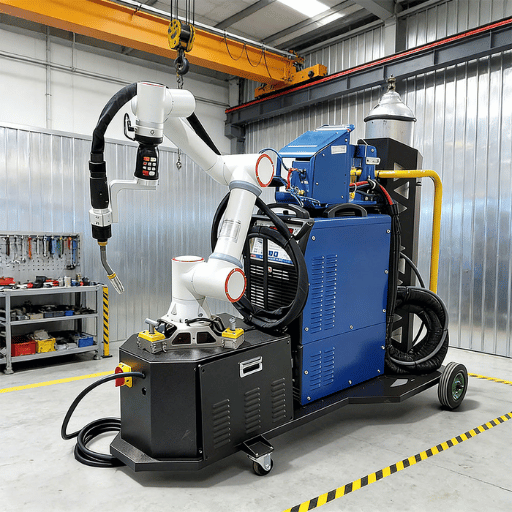 Коллаборативные роботы всё шире применяются в сварке, и техническая терминология тоже меняется. В ISO 10218:2025 теперь используется термин «коллаборативные применения» вместо «коллаборативные роботы». Почему? Классификация робота как коллаборативного зависит от сценария применения, а не от его инструмента. Если инструмент сварочного робота ограничивает усилие, но сам процесс сварки — нет, такая система не считается коллаборативной.
В ISO/TS 15066, требования которого развиваются в рамках ISO 10218-2:2025, указаны четыре режима работы, которые относятся к коллаборативным:
Коллаборативные роботы всё шире применяются в сварке, и техническая терминология тоже меняется. В ISO 10218:2025 теперь используется термин «коллаборативные применения» вместо «коллаборативные роботы». Почему? Классификация робота как коллаборативного зависит от сценария применения, а не от его инструмента. Если инструмент сварочного робота ограничивает усилие, но сам процесс сварки — нет, такая система не считается коллаборативной.
В ISO/TS 15066, требования которого развиваются в рамках ISO 10218-2:2025, указаны четыре режима работы, которые относятся к коллаборативным:
- Контролируемая остановка с контролем безопасности; робот не движется, пока человек не войдёт в зону или не покинет опасную зону; при отсутствии человека робот работает на полной скорости.
- Ручное управление; пользователь непосредственно перемещает робота с помощью ручного устройства, расположенного рядом с концевым звеном. (Обучение траектории)
- Контроль скорости и расстояния; робот и пользователь находятся в общей рабочей зоне, а датчики постоянно поддерживают безопасное расстояние между ними.
- Ограничение мощности и усилия (PFL); контакт допускается, но масса полезной нагрузки, скорость и инерция ограничиваются так, чтобы усилия не превышали биомеханические пороги возникновения боли — обычно не более 250 мм/с
💡 Алгоритм принятия решения: нужны ли вашему сварочному коботу ограждения?
Даже если манипулятор коллаборативного робота соответствует требованиям PFL, опасности дуговой сварки сохраняются, и их невозможно полностью устранить ограничением усилия. Например, невозможно ограничить ультрафиолетовое излучение, вспышки дуги, вредные пары, брызги расплавленного металла и лучистое тепло. На практике в большинстве роботизированных ячеек для сварки коботом всё равно устанавливают ограждение по трём сторонам с защитными шторами от излучения дуги. Доступ организуют через единственную открытую сторону для загрузки, защищённую световыми завесами или зональными сканерами. Ограждение обычно составляет лишь небольшую часть — около 20 процентов — общей стоимости роботизированного сварочного поста.
Обучение операторов, СИЗ и культура безопасности
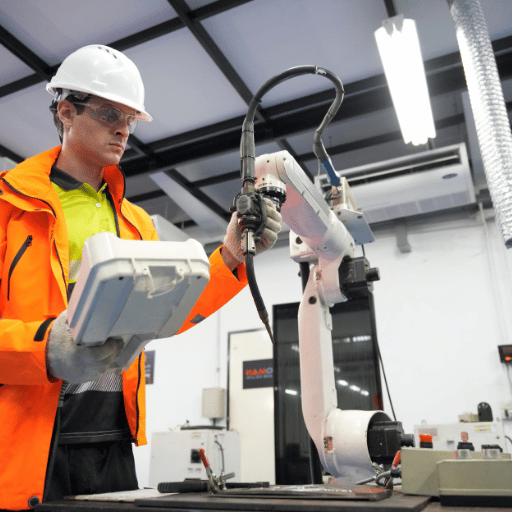 Инженерные меры и защитные устройства составляют первые два уровня иерархии снижения рисков в системах роботизированной сварки. Обучение, СИЗ и административные меры — третий уровень — помогают устранить пробелы, которые невозможно закрыть оборудованием.
OSHA 29 CFR 1910.252 устанавливает требования к защите зрения сварщика и его помощника. Для GMAW — распространённого способа роботизированной сварки — автоматические сварочные маски должны иметь степень затемнения от 10 до 13 в зависимости от силы тока (степень 11 при 60-160 Amps, 12 при 160-250 Amps, 14 при 250-500 Amps согласно ANSI/AWS). Даже операторам, наблюдающим за роботизированной сваркой через смотровые окна, нужна защита с соответствующей степенью затемнения: дуга не различает ручного сварщика и наблюдателя. Помимо сварочных масок, вне зоны дуги следует носить защитные очки с боковыми щитками, чтобы защититься от летящих частиц и отражённого ультрафиолета в зоне сварки.
Улавливание и удаление сварочных аэрозолей не менее важны. OSHA требует механической вентиляции, если объём рабочего пространства составляет менее 10 000 кубических футов на сварщика или высота потолка — менее 16 футов, а также производительности не менее 2 000 CFM на сварщика. ACGIH устанавливает предельно допустимое значение для сварочных аэрозолей общего состава на уровне 5 мг/м³ (средневзвешенное значение за 8-часовую смену), однако для отдельных компонентов нормы значительно ниже: 0.02 мг/м³ для марганца и 0.01 мг/м³ для шестивалентного хрома. При сварке нержавеющих сталей и сплавов с высоким содержанием марганца СИЗ не могут заменить надлежащую вентиляцию.
Инженерные меры и защитные устройства составляют первые два уровня иерархии снижения рисков в системах роботизированной сварки. Обучение, СИЗ и административные меры — третий уровень — помогают устранить пробелы, которые невозможно закрыть оборудованием.
OSHA 29 CFR 1910.252 устанавливает требования к защите зрения сварщика и его помощника. Для GMAW — распространённого способа роботизированной сварки — автоматические сварочные маски должны иметь степень затемнения от 10 до 13 в зависимости от силы тока (степень 11 при 60-160 Amps, 12 при 160-250 Amps, 14 при 250-500 Amps согласно ANSI/AWS). Даже операторам, наблюдающим за роботизированной сваркой через смотровые окна, нужна защита с соответствующей степенью затемнения: дуга не различает ручного сварщика и наблюдателя. Помимо сварочных масок, вне зоны дуги следует носить защитные очки с боковыми щитками, чтобы защититься от летящих частиц и отражённого ультрафиолета в зоне сварки.
Улавливание и удаление сварочных аэрозолей не менее важны. OSHA требует механической вентиляции, если объём рабочего пространства составляет менее 10 000 кубических футов на сварщика или высота потолка — менее 16 футов, а также производительности не менее 2 000 CFM на сварщика. ACGIH устанавливает предельно допустимое значение для сварочных аэрозолей общего состава на уровне 5 мг/м³ (средневзвешенное значение за 8-часовую смену), однако для отдельных компонентов нормы значительно ниже: 0.02 мг/м³ для марганца и 0.01 мг/м³ для шестивалентного хрома. При сварке нержавеющих сталей и сплавов с высоким содержанием марганца СИЗ не могут заменить надлежащую вентиляцию.
Контрольный список обучения операторов сварочных роботов
- ✔ Блокировка и маркировка источников энергии (29 CFR 1910.147) — для уполномоченных работников и работников, на которых влияет процедура
- ✔ Работа с пультом обучения на сниженной скорости с использованием устройства разрешения движения
- ✔ Расположение и включение аварийной остановки на каждой станции
- ✔ Выбор и проверка СИЗ — контроль степени затемнения маски, средств защиты органов дыхания и огнестойкой одежды
- ✔ Распознавание опасностей дуговой сварки — воздействие ультрафиолета, риски от сварочных аэрозолей, ожоги брызгами металла
- ✔ Проверка программы пробным прогоном (согласно AWS D16.1) до начала сварки
- ✔ Порядок сообщения о потенциально опасных происшествиях и участие в формировании культуры безопасности
Распространённые ошибки при соблюдении требований безопасности и способы их избежать
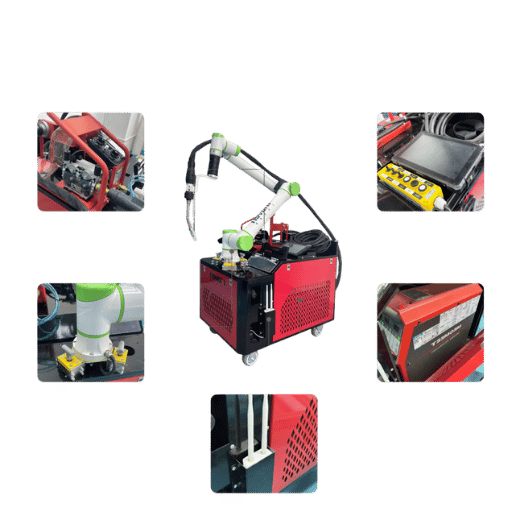 Во время аудитов интеграции мы постоянно наблюдаем одну и ту же ошибку: предполагается, что покупка робота с маркировкой CE автоматически обеспечивает соответствие всей ячейки требованиям. Это не так. Испытания производителя робота охватывают только сам робот — ISO 10218-1. За безопасность на уровне ячейки — анализ опасностей, документацию по валидации и защитные меры — отвечают конечный пользователь и системный интегратор (ISO 10218-2).
| Ошибка | Последствие | Как исправить |
|---|---|---|
| Неполная оценка рисков — оценивается «робот», а не каждая задача человека | Опасности при обслуживании ячейки, устранении заклиниваний и обучении остаются без внимания, хотя на эти этапы приходится большинство травм | Применять методику, основанную на задачах (RIA TR R15.306); документировать каждое взаимодействие человека с ячейкой |
| Обход защитных устройств и злоупотребление режимом обслуживания | Операторы отключают блокировки, чтобы быстрее устранить заклинивание; режим обслуживания остаётся включённым во время производства | Установить блокировки с кодированием RFID (ISO 14119:2024); разработать порядок обслуживания, не требующий повсеместного обхода блокировок |
| Изменения ячейки без документации | Новый захват, обновление ПО или изменение рабочей зоны делают первоначальный рейтинг безопасности и оценку рисков недействительными | Регистрировать каждое изменение в CMMS; при каждом изменении проводить повторную оценку рисков |
| Проверка без валидации | Документация выглядит безупречно, но установленные защитные устройства никогда не проходят функциональные испытания | После монтажа проверить все функции безопасности аналитическими и функциональными испытаниями — убедиться, что робот останавливается до того, как достигает опасной зоны |
| Нет графика проверок безопасности после монтажа | Со временем соблюдение протоколов безопасности ухудшается; бумажные контрольные списки в папках оставляют пробелы при аудите | Перевести проверки безопасности в цифровой формат; планировать периодические повторные оценки с учётом износа, поломок и незадокументированных изменений |
Часто задаваемые вопросы
В: Какой стандарт регулирует роботизированную сварку?
Посмотреть ответ
ISO 10218-1 и ISO 10218-2 (пересмотренные в 2025 году) устанавливают требования к оборудованию робота и интеграции системы. ANSI/A3 R15.06-2025 является национальной версией стандарта в США. AWS D16.1M/D16.1:2018 устанавливает дополнительные правила для процессов GMAW и FCAW.
В: Что такое ISO 10218 и как он применяется к сварочным роботам?
Посмотреть ответ
ISO 10218 — международный стандарт безопасности промышленных роботов, состоящий из двух документов. Часть 1 (требования к проектированию и изготовлению роботов) относится к производителям роботов; часть 2 (интеграция робототехнической системы, защитные меры и безопасность на уровне применения) распространяется на системных интеграторов и конечных пользователей. Стандарт не зависит от сферы применения и распространяется на все виды робототехники, включая сварку.
Версия 2025 года включает требования безопасности для коллаборативных применений, требования к кибербезопасности интеллектуальных устройств и динамические защитные зоны.
В: Какие требования безопасности предъявляются к сварочному оборудованию?
Посмотреть ответ
Требования безопасности при работе со сварочным оборудованием устанавливаются несколькими взаимодополняющими стандартами. OSHA 29 CFR 1910.252 определяет основные требования к работодателям в отношении СИЗ, вентиляции и пожарной безопасности при всех сварочных работах. NFPA 51B устанавливает требования пожарной безопасности при сварке и резке.
AWS Z49.1 регулирует безопасность при сварке, резке и других огневых работах. В совокупности эти стандарты требуют: использовать переносную механическую вентиляцию, обеспечивающую подачу не менее 2, 000 CFM свежего воздуха на каждого сварщика в замкнутом пространстве; применять одобренные светофильтры с уровнем затемнения, соответствующим силе тока и способу сварки; выставлять пожарный пост в пределах 35 футов от места огневых работ; соблюдать различные меры электробезопасности для предотвращения поражения током; а также документально подтверждать подготовку каждого оператора до его допуска к огневым работам.
В: Что такое ANSI/RIA R15.08?
Посмотреть ответ
ANSI/RIA R15.08 — американский стандарт безопасности, устанавливающий классификацию промышленных мобильных роботов (IMR). Это автономные мобильные роботы, используемые в промышленных условиях. Стандарт рассматривает 3 типа IMR: сами роботы (часть 1-2020), интеграцию системы (часть 2-2023) и обязанности пользователей (часть 3 — будущая часть).
IMR делятся на 3 типа: A (автономный IMR), B (IMR с пассивной или активной полезной нагрузкой) и C (IMR с манипуляторами — например, когда мобильная платформа несёт сварочный кобот).
В: Нужны ли коллаборативным сварочным роботам защитные ограждения?
Посмотреть ответ
В значительной степени — да. Хотя манипулятор коллаборативного робота может соответствовать требованиям по ограничению мощности и силы (PFL), опасности, присущие дуговой сварке, включая ультрафиолетовое излучение, вспышку дуги, токсичные сварочные аэрозоли, брызги расплавленного металла и источники теплового излучения, невозможно устранить с помощью технологии PFL. В большинстве роботизированных сварочных ячеек с коботами по трём сторонам установлены периметральные ограждения с защитными шторами от излучения дуги, а единственная открытая сторона для загрузки защищена световыми завесами или лазерными сканерами.
Конкретные меры защиты для каждого применения определяются по результатам оценки рисков.
В: Какие опасности представляют наибольший риск при роботизированной сварке?
Посмотреть ответ
К основным 6 рискам при роботизированной сварке относятся: 1) вспышка дуги и ультрафиолетовое излучение, вызывающие ожоги глаз и кожи; 2) травмы от сдавливания и ударов движущимся манипулятором робота при неожиданном перемещении; 3) поражение электрическим током от сварочного оборудования и/или изолированных либо оголённых проводников; 4) вдыхание сварочных аэрозолей, содержащих марганец, шестивалентный хром и другие канцерогены; 5) травмы в точках защемления, где движущиеся части робота могут застрять между неподвижными деталями; 6) ожоги от расплавленного металла и горячих поверхностей.
Нужна роботизированная сварочная ячейка, соответствующая стандартам?
Zhouxiang проектирует и производит сварочные роботизированные комплексы с документированной оценкой рисков, проверенными средствами защиты и полным комплектом документов о соответствии. Ознакомьтесь с нашими решениями на базе сварочных роботов или запросите консультацию.
Запросить предложение →Ссылки и источники
- Смертельные случаи на производстве, связанные с роботами, в United States, 1992–2017 — NIOSH / American Journal of Industrial Medicine (2023)
- Травмы на рабочем месте, связанные с роботами: анализ отчётов OSHA о тяжёлых травмах — Applied Ergonomics (2024)
- Стандарты OSHA в области робототехники — Министерство труда США
- Штрафы OSHA — Министерство труда США
- ANSI/A3 R15.06-2025: стандарт безопасности роботов — ANSI Blog
- AWS D16.1M/D16.1:2018: безопасность роботизированной дуговой сварки — ANSI Blog
- ISO 12100:2010: безопасность машин. Оценка рисков — International Organization for Standardization
- 29 CFR 1910.252: общие требования (сварка, резка, пайка) — Министерство труда США
- Разъяснение ISO/TS 15066 — Association for Advancing Automation (A3)
- Проверки безопасности роботизированных систем и соответствие требованиям для производственных объектов — OxMaint