Get in Touch with Zhouxiang

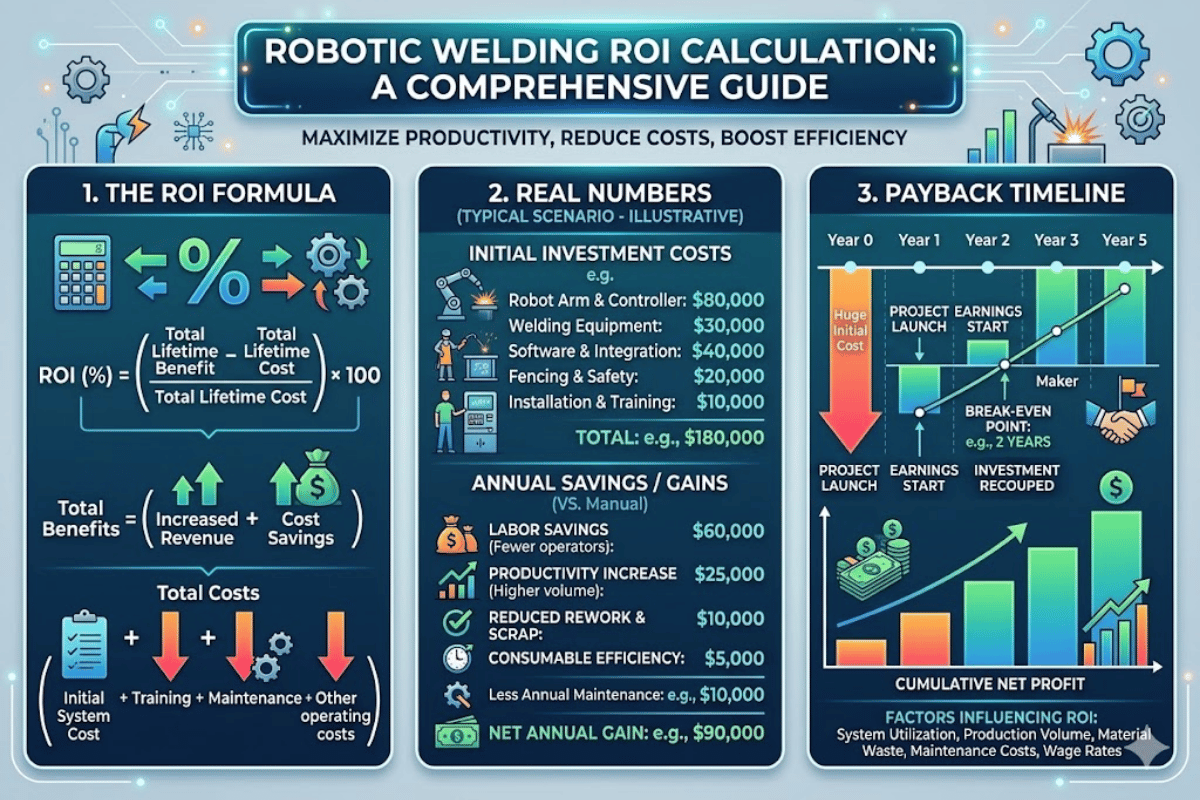
Robotic Welding ROI Calculation: Formula, Real Numbers & Payback Timeline
With over 330,000 welding positions projected to be lost by 2028 by the American Welding Society and manual welders averaging only 20 percent arc-on time per shift, manufacturers can no longer afford to skip the math. An accurate robotic welding ROI calculation distinguishes shops that sail and those that fail, and the real numbers are more attainable than most production managers hope – please allow us to show you how. This article delivers a step-by-step framework, complete with real cost data, worked examples, and the subtle factors that make or break your business case.
What Does a Robotic Welding System Actually Cost?
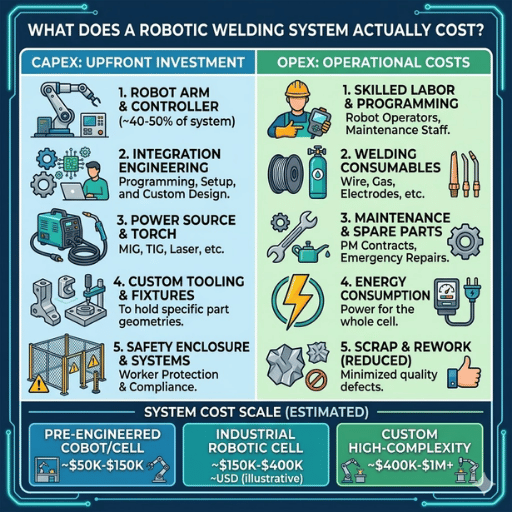
Before you can calculate ROI, you need an entirely realistic impression of the total investment in a welding system. The IFR 2025 World Robotics Report indicates 542,000 industrial robots were installed worldwide in 2024 – and welding remains one of its top three applications. Consider what these systems cost, broken down by component.
| Component | Typical Cost Range |
|---|---|
| Robot arm (6-axis) | $25,000–$60,000 |
| Welding power source | $5,000–$15,000 |
| Positioner / fixture | $8,000–$25,000 |
| Safety enclosure | $5,000–$15,000 |
| Integration & programming | $10,000–$30,000 |
| Installation & training | $5,000–$15,000 |
| System Tier | Total Investment |
|---|---|
| Entry-level single station | $50,000–$85,000 |
| Mid-range production cell | $85,000–$150,000 |
| Full production line | $150,000–$300,000+ |
| Annual maintenance | $2,000–$5,000 |
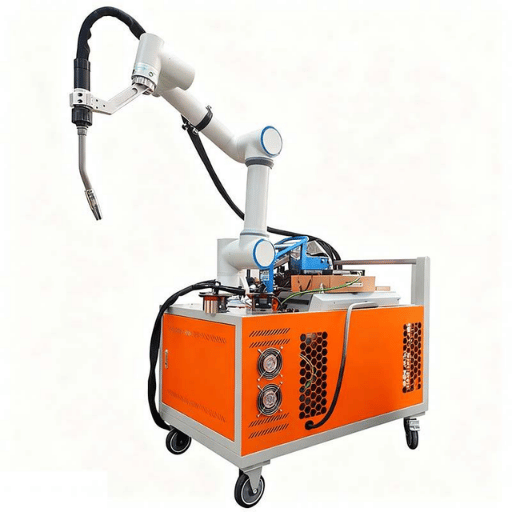
“Our single robot welding workstation systems — built around 6-axis robots with 2,010 mm reach and ±0.05 mm repeatability — start around $45,000 for shops running standard MIG on structural steel.” — Zhouxiang Engineering Team
This is the base cost of the welding system – now you must calculate how much you are paying now.
The True Cost of Manual Welding (What Most Shops Overlook)
Per the Bureau of Labor Statistics (May 2024), the median annual wage for a welder in the U.S. sits around $51,000. That number alone is misleading.
Burden rate multipliers – including benefits coverage, workers’ compensation, health insurance, payroll taxes – range from 1.3 to 1.4. This brings the true labor cost to approximately $66,300-$71,400 per welder per year. But this cost does not take into account overtime.
Numbers tell an even more brutal story. The average welder today is 55 years of age. According to AWS reports, for every five welders leaving the trade, only two arrive. Overtime burden rates of $75-$100 per hour are the new expectation when you cannot attract talent. The cost of training a new employee costs $5,000-$10,000 before production begins. And manual welding variability causes between 3 and 8 percent rework rates across typical structural fabrication shops.
Costs do not stop there. OSHA regulates welding fume concentration – the IARC classifies welding fumes as a Group 1 carcinogen. Monitoring programs, PPE, ventilation, and possible workers’ compensation claims all push the bottom line northward.
$66,300+
True Annual Cost per Welder
20%
Manual Arc-On Time
3–8%
Typical Rework Rate
Tip: the majority of ROI calculators are calculated on base salary. The real competitive picture starts with fully burdened labor cost – including salary, insurance, and overtime pay.
The ROI Calculation Formula (Step by Step)
An accurate robotic welding ROI calculation considers three diverse layers of savings. Overlooking any one of them miscalculates your return on investment.
Tier 1: Direct Labor Savings
Direct Labor Savings = (Manual labor cost × welders replaced) − Robot operating cost
robotic system operating cost includes the operator wage, yearly maintenance, costs of consumables and electricity. Collectively, it costs $30,000-$40,000 per annum for most single-station cells.
Tier 2: Quality Gains
Quality Gains = (Current scrap % − Robot scrap %) × Annual production value + Rework elimination
Inline monitoring on state-of-the art robotic welding cells can drive weld quality to defect rates below 1%. If your shop currently scrap 5% of output, alone, this quality improvement can generate six figures of value annually.
Tier 3: Throughput Gains
Throughput Gains = Additional units from 85% arc-on time × unit margin
Upside potential is stunning. A robot that runs at 85% arc-on time versus a manual welder at 20% creates 3-4X the number of welds per shift. That increased production should result in added revenue if you have orders waiting.
Full Formula
ROI = [(Tier 1 + Tier 2 + Tier 3) − Total Investment] / Total Investment × 100
Payback Period = Total Investment / (Annual Tier 1 + Tier 2 + Tier 3 savings)
Worked Example: Mid-Range Single Station
Scenario: Shop running 2 shifts, replacing 3 manual welders
- Annual manual labor cost: 3 × $66,300 = $198,900
- Robot system cost (total investment): $120,000
- robot annual operating cost (1 operator + Maintenance + Consumables): $35,000
Tier 1: $198,900 − $35,000 = $163,900
Tier 2: Scrap drops from 5% to 1% on $2 million/year production = $80,000
Tier 3: 85% vs 20% arc-on time = Roughly 3X throughput capacity, Potential additional billable capacity = $150,000
Total annual benefit: $393,900
ROI: ($393,900 − $120,000) / $120,000 × 100 = 228%
Payback: $120,000 / $393,900 = 3.7 months
Even if you cut down the upside throughput gains by 50% to err on the side of caution, The welding robot payback period still falls under 6 months. That is the sort of return on investment that can justify a capital expenditure.
Looking to run these figures on Zhouxiang’s entry-level welding robot systems? Begin with your Burdened labor cost and current scrap rate – these two numbers influence most of the calculation.
💡 Checklist — Input Variables for Your ROI Calculation:
- Fully burdened annual labor cost per welder
- Number of welders on target application
- Number of shifts per day
- Current scrap and rework percentage
- Annual production value of welded assemblies
- Backlog / unfilled order volume
- Total system quote (including fixture, integration, training)
Hidden Savings That Multiply Your ROI
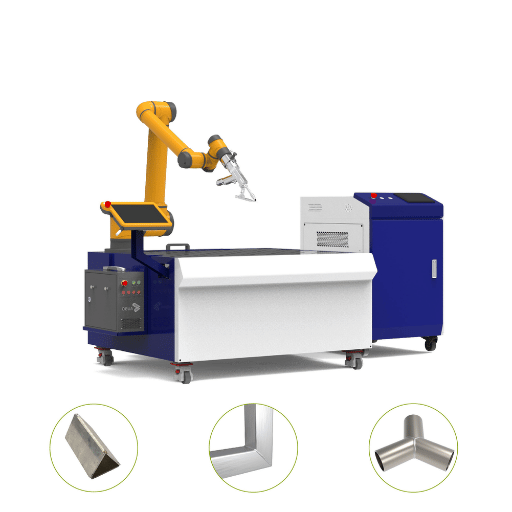
Most of this three-tier formula focuses on the can-make numbers. But multiple secondary throughput gains and cost savings compound over several years and drive your real ROI well above initial forecasts.
85%
Robotic Arc-On Time vs 20% Manual
25%
Average Defect Rate Reduction
15–20%
Consumable Savings
Consumable reduction. Each robotic welding process controls wire feed speed, travel speed, and gas flow with precision that manual welder cannot match. Wire waste drops significantly, and shielding gas use usually declines 15-20% due to steady torch angles and travel speed.
Rework and scrap reduction. According to Therness, inline monitoring on robotic arc welding cells attains defect rates below 1%. Caterpillar has indicated a 15% scrap decline following welding automation implementation on heavy equipment production. Less scrap means fewer re-welds, less material wasted, and more rapid throughput through final inspection.
Overtime elimination. A robot accumulates no overtime. It runs second and third shifts without any hourly cost increase. For shops now incurring $75-$100/hr in overload payment, converting that throughput to a robotic welding cell is a great tradeoff.
Insurance and safety. Keeping operators away from open tube process fires reduces OSHA compliance expense and minimizes workers’ compensation premiums over time. Worker productivity gains from fewer lost-time injuries are less tangible but very real.
Floor space. A single robotic cell with positioning device replaces 3-4 manual welding stations and their related ventilation, tooling, and staging areas. That unused square footage should be available for extra production or storage.
According to the IFR, there are now 4.66 million robots worldwide working in factories—manufacturers are voting with their budgets, and welding automation leads the pack.
Payback Period — When Does a Welding Robot Pay for Itself?
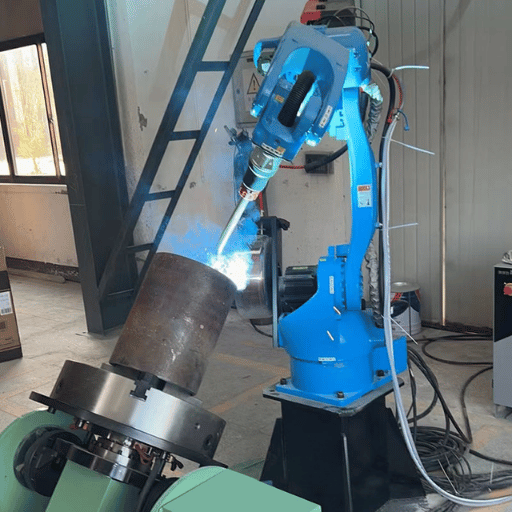
Shift time is the single most significant variable in your welding robot payback – a robot sitting idly on a Saturday, Sunday and holidays depreciates in value. Operating two or three shifts turns it into a money-printing machine. Here’s how the math works out, depending on the operating scenario—and based on the BLS labor data and typical production volumes.
| Factor | 1-Shift Operation | 2-Shift Operation | 3-Shift Operation |
|---|---|---|---|
| System Cost | $120,000 | $120,000 | $120,000 |
| Manual Welders Replaced | 1.5 | 3 | 4.5 |
| Annual Labor Savings | $99,450 | $198,900 | $298,350 |
| Quality + Throughput Gains | $50,000 | $230,000 | $380,000 |
| Payback Period | ~8 months | ~4 months | ~2.5 months |
One pattern is quite obvious: shift time is the number one payback accelerant. Two-shift operation shaves your payback period in half – with no changes to the robot, the fixture or the weld program.
…within a year and a half, 2-shift structural steel fabrication shops have achieved full payback—this includes the ramp-up period, when operators are learning how to work the program.”——Zhouxiang Applications Engineering
If your robotic welding workstation is running even a partial second shift, the economics tilt heavily in automation’s favor.
Common Mistakes That Destroy Your ROI Projection
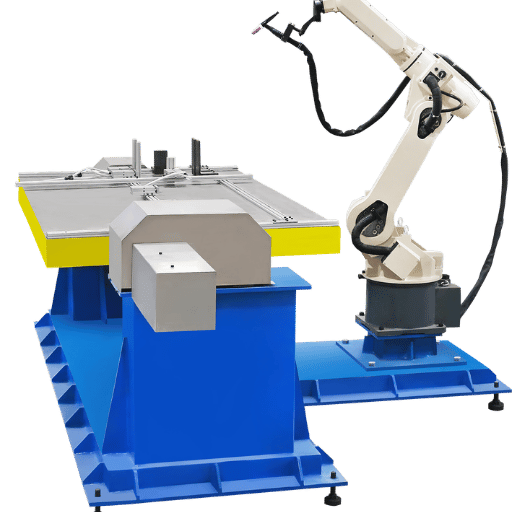
A bad estimate is worse than no estimate—this misleads clients and damages your credibility when the theory is put to the test. Here are the five common mistakes we find manufacturers make when estimating a welding automation project.
Mistake #1: Using base salary instead of burdened labor cost. This single error understates savings by 30–40%. Always use the fully loaded wage — including benefits, workers’ comp, payroll taxes, and overtime premiums — when calculating the manual welding cost reduction you expect.
Mistake #2: Overlooking fixture and tooling costs. Robot arms get the headline price, but custom fixtures and tooling can add $10,000–$25,000 to your total investment. If your parts need multi-position welding, the positioner and fixture budget belongs in the estimate from day one.
Mistake #3: Presuming full utilization from the word go. Every robotic welding cell experiences a ramp-up period. Realistic time frame: 3-6 months to reach full throughput. Your ROI calculator should consider the diminished output of programming, validation, and operator training.
Mistake #4: Neglecting annual service and replacement budget. Contact nozzles, tips, liners, wires, and maintenance add $2,000-$5,000 annually. This may not be a significant figure, but neglecting it signals unprofessionalism to those reviewing the capital investment.
Mistake #5: Comparing robot-per-hour to welder-per-hour without adjusting for arc-on time. A manual welder spends 80% of the shift on fit-up, positioning, grinding, and breaks. Meanwhile, the robot welds at 85% arc-on time. Without normalizing for this efficiency gap, your cost-per-hour comparison is meaningless.
“In our pre-purchase assessments, the most common error we see is shops comparing the robot’s hourly rate to a welder’s hourly wage — without factoring in that the robot runs at 85% arc-on time versus a manual welder’s 20%.” — Zhouxiang Project Engineering
Is Robotic Welding Worth the Investment for Your Shop?
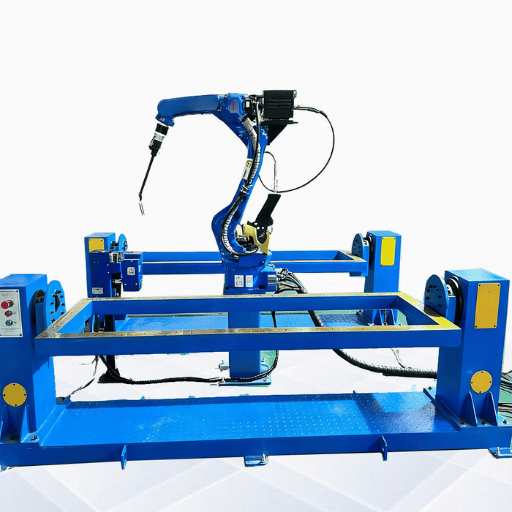
Not every shop is ready for a robot. But the bar is lower than most people imagine. Run through this self-assessment— developed from 1,000+ welding automation projects in 50+ countries.
5-Question Readiness Checklist
- Do you run 4,000 or more welding hours annually?
- Are your parts repeatable enough for fixturing?
- Is your current scrap or rework rate above 3%?
- Are you struggling to hire or retain welders?
- Do you have growing orders you cannot fulfill with current capacity?
If you answered “yes” to 3 or more, your shop is an ideal candidate for welding automation.
💡 Decision Tip: Begin with a single-station cell on your highest-volume part. Demonstrate the ROI on one application before expanding. This reduces downtime risk while giving your team the opportunity to acquire programming skills.
Robotic welding cost reduction on a single high-volume weldment can often lead to expansion—typically a second cell—within 12-18 months. This is how most manufacturers grow—one proven application at a time.
Cobots—collaborative robots—show promise for shop floors with lower volume or mixed-part profiles. While more straightforward to program, cobots require relatively open floor space and are limited by cycle time and payload, making them best suited for lower-duty applications.
Ready to see the numbers for your specific operation?
Our engineers can analyze your production costs and will provide the real numbers—labor savings, quality improvement, and payback period.
Frequently Asked Questions
What is the ROI of a robotic welding system?
View Answer
First-year ROI for a robotic welding system is generally between 150% and 300%, with payback periods falling between 6-18 months for two-shift operations. The ROI timeline varies by your down-blended labor cost, scrap rate, shift utilization, and capacity throughput. Businesses that produce high-volume, repeatable parts using labor are the fastest to see rapid ROI.
How many welders can one robot replace per shift?
View Answer
One welding robot typically removes the need for 3.5 manual welders per shift—just based on arc-on time. Although a manual welder runs at about 20% arc-on time and a robotic system at about 85%, you will still need 1 operator per shift to position parts and monitor the process, as well as tweak programming when required.
How much does welding automation cost?
View Answer
Budget $50,000-$300,000+ estimate depends on cell complexity. Smaller, single-station operations are at the lower end; multi-robot production lines can top $300K.
Is robotic welding worth it for small shops?
View Answer
Yes, if you operate at a minimum of 4,000 welding hours annually and parts are sufficiently repeatable to justify fixturing. Many small producer shops, particularly job shops, prefer a single-station robotic cell on their highest-volume part and invest in a single-station cell. Positive ROI occurs in the first year. Cobot systems sometimes make more financial sense as an incremental entry point for lighter workload applications.
What is the typical payback period for a welding robot?
View Answer
Typical payback period for a welding robot is 4-18 months, varying by level of shift utilization and production volume. Single-shift payback typically fall between 8-14 months, while two-shift shop floors experience payback in 4-8 months. Three-shift operations tend to payback in under 3 months.
What is the true value of adding a welding cobot to your workflow?
View Answer
In addition to the direct use of labor savings, a welding cobot provides consistent weld quality which reduces scrap and rework costs, eliminates operators from fume areas, and allows your most experienced welders to focus on more complex joints that require manual expertise. Cobots provide increased production without staffing increases— an important consideration when hiring certified welders takes 6-12 months. Floor space efficiency is also improved: a single cobot cell can replace 2-3 manual cells along with their ventilation systems.
For many fabricators, these benefits will more than offset the investment in increased cost efficiency, additional operational revenue, and decreased workers’ compensation liability. Start by calculating your burdened labor cost and current scrap rate — those two values will show whether a cobot is cost-effective in your work flow.
About This Analysis
This information was compiled by the Zhouxiang technical team—a group of designers and automation experts with over 30 years of experience in designing robotic welding systems for structural steel, shipbuilding, and heavy equipment industries. This pricing references our 2024-2025 project quotations in 50+ countries and 1000+ automation installations. Although we are a welding robot producer, we hope this article provides a straightforward return on investment analysis guiding you toward the decision that welding automation is best for your applications.
References & Sources
- IFR 2025 World Robotics Report — International Federation of Robotics
- BLS Occupational Outlook: Welders, Cutters, Solderers, and Brazers
- OSHA Welding, Cutting, and Brazing — Hazards and Solutions
- AWS Welding Workforce Data
- IARC Monographs — Welding Fumes classified as Group 1 carcinogen
- Therness: Robotic Arc Welding Monitoring ROI