Get in Touch with Zhouxiang

Shipyard Automation
Shipbuilding Welding Robot — Gantry & Collaborative Systems for Shipyard Automation
Gantry Platforms · Cobots · AI-Driven Seam Tracking
Zhouxiang builds robotic welding systems that actually work on the shop floor — gantry platforms with 3D vision for panel lines, and lightweight cobots that one person can carry into a double hull. AI-driven seam tracking. No complex programming. Built for real shipyard conditions.
3D Vision Guidance
Cobot Ready
No Complex Programming
Request a Quote
→

Product Lineup
Shipbuilding Welding Robots — Our Product Lineup

Zhouxiang Robotics
Intelligent Gantry Welding Robot
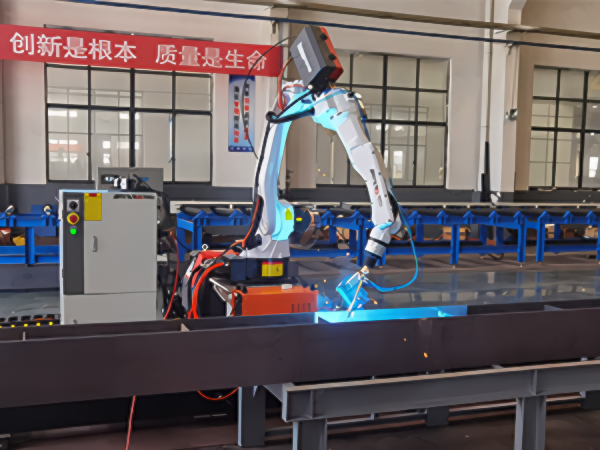
The big one. Portal-frame structure with up to 5-meter welding width — enough to cover standard ship panels in a single setup. Pairs a multi-axis robotic arm with a large-format line-scan 3D vision system. Imports models from Tekla, SOLIDWORKS, or UG… or skip the CAD entirely and let the scanner build a point cloud on the fly.
Handles fillet welds, butt joints, straight-line and curved seam paths — flat and vertical positions. The robot identifies every weld seam automatically, matches parameters, and generates the welding program. No manual teach pendant work. No offline programming headaches.
Best for
panel lines, sub-assembly stations, block construction, stiffener welding
Lightweight Collaborative Welding Robot
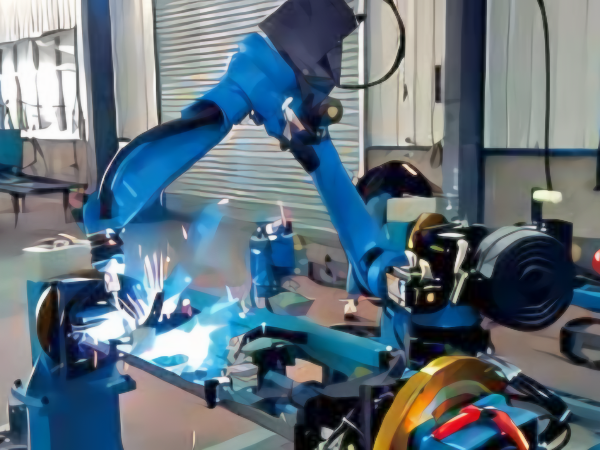
Under 25 kg total. One person picks it up. The magnetic base locks onto any steel surface — deck plates, bulkheads, floor panels — and you’re fixed in seconds. Smooth rollers let you reposition it inside confined hull sections where a gantry can’t reach and a human welder barely fits.
Programming? Drag the arm to your weld path, hit start. The built-in arc tracking corrects deviations in real time during the actual welding, so even if your fit-up isn’t perfect, the robot compensates. One technician runs two to four units at once.
Best for
double-hull sections, confined compartments, outfitting, repair work
Specifications
Technical Specifications & Welding Capacity
Parameter
Gantry-Type Robot
Heavy-Duty Panel System
Collaborative Robot
Lightweight Portable Unit
↔Welding Width / Reach
Up to 5,000 mm span
850 mm arm reach
⚖Robot Weight
System-dependent (gantry-mounted)
< 25 kg (arm only)
⟲Axes
6-axis arm + 3 gantry axes
6-axis collaborative
⚡Welding Process
CO₂ / MAG / MMA
CO₂ / MAG
◎Seam Detection
Line-scan 3D vision + point cloud
Arc tracking (real-time)
⌨Programming
CAD import (Tekla/SW/UG) or drawing-free
Drag-teach (no coding)
〰Weld Types
Fillet, butt, straight, arc, curved
Fillet, butt, tack
⊞Positions
Flat + vertical
All-position (magnetic mount)
⚓Mounting
Fixed gantry rails
Magnetic base (steel surfaces)
⬢AI Features
Auto seam recognition, parameter matching
Real-time deviation correction
????Operator Ratio
1 operator : 1 gantry cell
1 technician : 2–4 robots
????Target Industries
Shipbuilding, steel structure, bridges
Shipbuilding, repair, outfitting
⬡ Gantry-Type
⟡ Collaborative
Welding Width / Reach
Up to 5,000 mm span
850 mm arm reach
Robot Weight
System-dependent (gantry-mounted)
< 25 kg (arm only)
Axes
6-axis arm + 3 gantry axes
6-axis collaborative
Welding Process
CO₂ / MAG / MMA
CO₂ / MAG
Seam Detection
Line-scan 3D vision + point cloud
Arc tracking (real-time)
Programming
CAD import (Tekla/SW/UG) or drawing-free
Drag-teach (no coding)
Weld Types
Fillet, butt, straight, arc, curved
Fillet, butt, tack
Positions
Flat + vertical
All-position (magnetic mount)
Mounting
Fixed gantry rails
Magnetic base (steel surfaces)
AI Features
Auto seam recognition, parameter matching
Real-time deviation correction
Operator Ratio
1 operator : 1 gantry cell
1 technician : 2–4 robots
Target Industries
Shipbuilding, steel structure, bridges
Shipbuilding, repair, outfitting
Wholesale
Wholesale & Fleet Orders for Shipyard Robotics
Not just a price break on units. Actual project-level support.
OEM / ODM
Custom branding, modified software interfaces, integration with your existing MES or production control systems. We’ve done white-label gantry cells for distributors in Europe and Southeast Asia.
Fleet Deployment
Ordering 5+ collaborative robots for yard-wide deployment? We send an applications engineer for on-site commissioning and operator training. Typically 3–5 days to get your team running independently.
Global Logistics
CIF/FOB shipping. We’ve handled container loads to the Middle East, break-bulk to European ports, and air freight for urgent replacement units. Documentation for customs clearance included.
Lead Time Notice
Gantry systems are built to order, so lead time runs 6–10 weeks depending on configuration. Honestly, the sooner you lock in specs, the better your delivery window.
About the Manufacturer
Zhouxiang: Your Shipbuilding Welding Robot Manufacturer & Supplier
30+ Years of Welding Automation Excellence
Based in the industrial city of Wuxi in China, Zhouxiang has been constructing welding and automation facilities since 1991. With 200+ patents and 30 years of experience, Zhouxiang has a developed a strong global presence. Over the years, Zhouxiang has partnered with universities to conduct long-term R&D efforts, focusing on the development of cutting-edge AI and vision systems for demanding shipyard conditions.
Purpose-Built Shipbuilding Welding Robots
Zhouxiang has developed a range of shipbuilding welding robots, including gantry systems for large spaces and smaller collaborative robots for tight areas which are all operated by the company’s proprietary AI. Zhouxiang’s primary strength lies in building automation systems that are capable of functioning in unstructured and chaotic production environments.

Interactive Tools
Shipbuilding Welding Robot — Decision Tools
Three interactive tools to help you choose the right system, calculate ROI, and compare robotic vs manual welding performance.
Which Welding Robot Fits Your Shipyard?
Answer 4 quick questions — we’ll recommend gantry, collaborative, or both.
Shipyard Welding Robot ROI Estimator
Plug in your numbers. See estimated payback, annual savings, and 3-year returns.
Your Current Operation
Manual welders doing the work you’d automate
Salary + benefits + insurance + training
Percentage of welds needing repair
Estimated Returns
Enter your shipyard data
and hit Calculate
and hit Calculate
Robot vs Manual Welding in Shipyards
Side-by-side across 8 key metrics. Toggle between robot types.
FAQ
Frequently Asked Questions
Two main types. The gantry system is for high-volume panel and block welding — think of it as a portal frame that rides on rails over your workpiece, with a 6-axis robot arm hanging from it. Span goes up to 5 meters. Then there's the collaborative robot, which is a completely different animal: lightweight, portable, magnetic-base mounted. That one goes into the spaces where a gantry system physically can't fit. Both use AI for seam detection, but the tech is different — laser 3D scanning on the gantry, arc tracking on the cobot.
Yeah, that's actually the whole point of the product. The arm weighs under 25 kg. The magnetic base grips any steel surface — floor, wall, ceiling, doesn't matter. Rollers let you slide it into position through access openings that would be tight for a person, let alone conventional equipment. We've deployed them in double-hull tanker sections where the working space was barely 800mm wide. Not comfortable, but the robot fits and welds.
The large-format line-scan creates a 3D point cloud of whatever's sitting under the gantry. The AI software analyzes that cloud, identifies each joint and seam, figures out the weld type (fillet, butt, etc.), and generates the full welding program — parameters included. You press start and walk away. Is it as precise as importing a perfect Tekla model? Honestly, it's close. The scanner resolution handles most shipyard tolerances, and the system does a verification pass with a laser sensor before the arc fires. In practice, the drawing-free mode is what most shipyard operators prefer because it skips the whole "model doesn't match reality" headache.
Depends heavily on your labor cost, shift structure, and current rework rate. But ballpark — most yards we've worked with hit payback somewhere between 12 and 18 months. The biggest savings come from three places: reduced rework (that's usually the fastest win), higher throughput per shift, and the ability to run lights-out or skeleton-crew night shifts. One UAE client recovered their gantry system cost in seven months, but they had a particularly bad rework problem to begin with. We can run a rough calculation based on your specific numbers if you share your current welding volumes.
Yes, on both counts. OEM means we can brand the units under your company name, modify the software interface, and adapt the specs to your standard configurations. Wholesale pricing kicks in for fleet orders — typically five or more collaborative units, or multi-gantry line setups. We also handle logistics end to end: CIF, FOB, documentation, the whole package. Lead times vary, but figure 6–10 weeks for gantry systems and 3–4 weeks for collaborative robots once specs are locked.
Both handle CO2/MAG on carbon steel, which covers 90%+ of shipbuilding welding tasks. The gantry unit also supports MMA for specific joint types. Welding positions: the gantry does flat and vertical; the collaborative robot mounts in any orientation, so it handles all positions including overhead — which, frankly, is where it saves the most human misery. Arc parameters (voltage, wire speed, travel speed, oscillation pattern) are either preset in the process library or auto-adjusted by the AI based on seam geometry.