Get in Touch with Zhouxiang

★★★★★
Trusted by Industry Leaders
ISO 9001
200+ Patents
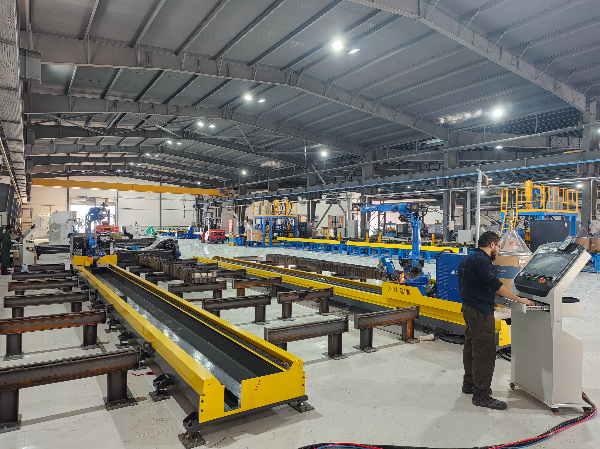
Intelligent Steel Structure Welding System
Robotic Welding for Steel Structure: Intelligent Robot Weld Structural Steel
A teach-free welding robot system built specifically for structural steel — from H-beams to box columns. Full automation from Tekla model to finished weld.
One Operator
Streamlined workflow requires minimal human oversight.
Zero Teach Pendant
No manual programming. Auto-path generation.
Full Automation
Direct integration from Tekla 3D models.
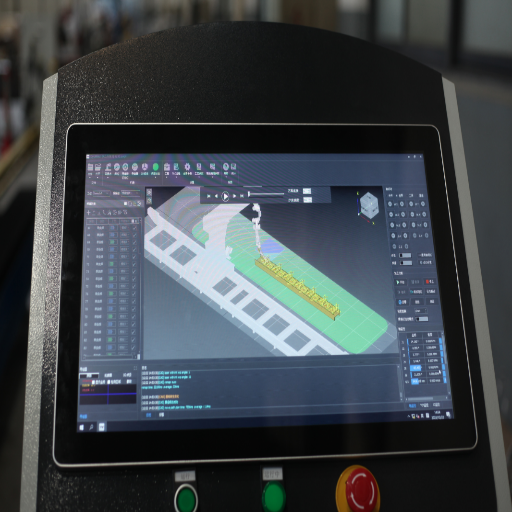
Intelligent Steel Structure Welding System — Core Capabilities
Seven “one-click” functions that take your steel beam from raw Tekla model to finished weld without a teach pendant.
-
01
One-Click Drawing Disassembly
Import Tekla or SolidWorks models. The design software breaks down full steel structure assemblies into individual components — crane beams, stiffener plates, purlin brackets, cow legs — and pushes each to the welding robot queue. No manual drawing interpretation needed.
-
02
One-Click 3D Model Generation
Got no CAD file? The system uses a large-field 3D vision camera to scan the workpiece and auto-generate a reverse-engineered model. Works for retrofit jobs and legacy steel components where original drawings went missing years ago.
-
03
Automatic Weld Seam & Process Matching
The welding system reads plate thickness, joint geometry, and position, then pulls from an internal weld process database to auto-assign arc welding parameters. Multi-pass welding on heavy plate? The robot builds the sequence layer by layer — no manual programming required.
-
04
Trajectory Planning & Collision Detection
Automatic generation of the welding path follows shortest-travel logic while avoiding fixtures, clamps, and the steel structure itself. Collision detection runs in simulation before the torch ever fires. The robot picks its own torch angles and avoids singularity points — all hands-free.
-
05
One-Click Positioning with 3D Vision
Two-stage positioning: a high-altitude fast scan locks the workpiece location and auto-identifies A/B faces and head/tail orientation. Then the system matches the physical steel beam against the digital model. Adaptive correction handles real-world fit-up variation every single time.
-
06
One-Click Welding & Precision Correction
After initial positioning, the robot remaps all weld seams at close range for precision correction, then begins automatic welding. Built-in torch cleaning cycles run on configurable intervals. The welding process adapts in real-time to actual seam conditions — not just the theoretical model.
-
07
Digital Twin & Smart Connectivity
Digital twin technology shows live robot trajectory, weld current, voltage, and travel speed on a dashboard. A phone app lets supervisors monitor from anywhere. MES integration pushes task orders to the workstation and pulls production progress back — full data chain from schedule to shop floor.
Bonus Feature
Auto TCP & Camera Calibration
The control system handles robot TCP calibration and camera hand-eye calibration automatically. No specialist technician needed for routine maintenance. Reducing setup time from hours to minutes — that matters when you are running multiple shifts.
Seamless Integration
Tekla & SolidWorks Compatible
The system reads native models from major design software platforms. Structural steel manufacturers do not need to export to intermediate formats or clean up files. What your engineers draw is what the welding robot welds. That direct link kills the data gap between office and shop floor.
How the Intelligent Steel Structure Welding System Works
No sales fluff. From “I have a CAD model” to “finished weld” — here is the actual robotics workflow applied to structural steel.
01
Import 3D Model / Quick Scan
Directly reads Tekla or SolidWorks models without conversion. Breaks assemblies into individual components. No CAD? Built-in 3D vision reverse-engineers the part in ~90 seconds.
02
Auto-Detect & Process Assignment
Software identifies every joint type (fillet, groove, butt) and pulls matching WPS from the database. Automatically generates multi-layer, multi-pass sequences for heavy plates. No human input needed.
03
Path Planning & Collision Sim
Generates torch angles and travel paths, then runs a full digital dry run. Checks for collisions between arm, torch, clamps, and workpiece. Resolves singularity points automatically.
04
Load & 3D Vision Alignment
Load via overhead crane—no precision fixturing required. Wide-angle 3D scan locates the part and matches physical reality to the digital model, compensating for fit-up variation.
05
Precision Seam Correction
Before arcing, the robot performs a close-range laser seam tracking scan. It detects sub-millimeter gap variations and misalignments, correcting the path logic before a single bead is laid.
06
Automatic Welding (Hands Off)
Real-time parameter adjustment based on sensor feedback. Includes auto torch cleaning. Achieves 80-85% arc-on duty cycle (vs. 30% manual). Operators typically manage two cells.
07
Real-Time Digital Twin Monitoring
Streams live parameters (voltage, current, speed) to a dashboard. Tags quality logs to specific joints for 100% traceability. MES/ERP integration pushes data back automatically.
Total setup time for a new part: 20-30 mins. Repeat parts: Instant.
Technical Specifications —Intelligent Steel Structure Welding
Real parameters. We do not pad spec sheets — these numbers come from production systems running in customer shops.
Core Robot Mechanics
Robot Payload
6–20 kg (torch + sensor)
Varies by arm configuration
Reach
1,400–3,100 mm
Extended reach for long beams
Positioning Accuracy
±0.05 mm
Per robot manufacturer spec
Control System
Proprietary + Standard
FANUC / ABB / KUKA compatible
Welding Capabilities
Supported Weld Types
Fillet, groove, butt, multi-pass
Covers 95%+ of applications
Material Thickness
4 mm – 60 mm
Heavy plate capability
Beam Dimensions
100–2,000 mm H / 15m L
Accommodates standard profiles
Workpiece Weight
Up to 5,000 kg / side
Crane-free forklift loading
Welding Process
GMAW (MIG/MAG), FCAW
Compatible with major brands
Vision & Intelligence
Vision System
3D Camera + Laser Tracking
Dual-stage precision scan
Programming Mode
Teach-free / Offline
No manual programming needed
Software Integration
Tekla, SolidWorks, STEP
Direct model import
Digital Twin
Real-time MES / App
Parameter logging for QC
Production Performance
Arc-On Duty Cycle
Up to 85%
vs. 25-35% for manual welding
Tonnage Throughput
3–8 tons / shift
Single operator workstation
Safety Standards
CE Compliant
Light curtain + area scanner
Power Supply
380V / 50Hz
480V / 60Hz available
What Steel Components Can Our Intelligent Welding System Handle?
Built specifically for the structural steel industry. From long beams to heavy plates, here is what runs through our robotic cells daily.
H-Beams & I-Beams
Flange-to-web fillet welds, stiffener plates, purlin brackets. Heights up to 2,000mm, lengths up to 15m. 60% of our cells run these daily.
Box Columns & Beams
Four-plate box sections with internal diaphragms. The robot welds external seams and accessible internal joints for high-rise frames.
Crane Beams & Girders
Rail mounting plates and heavy stiffeners. Consistent fillet welds across long spans for repetitive, quality-critical work.
Bridge Components
Diaphragm-to-flange joints, web splice plates. Laser seam tracking ensures high UT pass rates on thick plate groove welds.
Trusses & Lattice
Tubular and angle connections on roof trusses. Offline path planning handles complex, multi-angle short welds instantly.
Plates & Assemblies
Gusset plates, shear tabs, moment connections. Dedicated small-part cells can clear 200+ pieces per shift.
ROI Calculator
Welding Automation ROI Calculator
Estimate your payback period and annual savings from switching to robotic welding for steel structure fabrication.
Your Current Operation
Stations doing repetitive structural steel welds
Wages + benefits + overtime per welder per year
Total welded steel output per month
ROI Analysis
Enter your production data
and click Calculate ROI
and click Calculate ROI
Wholesale & OEM — Steel Structure Welding Robot Supplier
Direct from the factory floor in Wuxi. No middlemen. Whether you need one system or a fleet for multiple shop locations, we handle it.
OEM / ODM
Custom branding, modified control system interfaces, and integration with your proprietary software. Proven expertise across Europe and the Middle East.
Moq: 1 Unit
No minimum order wall. Start with a single intelligent welding workstation to pilot ROI—scale up once the productivity numbers speak for themselves.
Global Logistics
FOB Wuxi or CIF to your port. We manage full export documentation, container loading supervision, and coordination with your freight forwarders.
On-site Commissioning
Our engineers travel to your facility for installation, calibration, and 2-4 weeks of operator training. We ensure the cell is production-ready.
Direct from
The Source
The Source
1991
Founded200+
Patents50+
Countries Served4
Iso CertsProblems in Structural Steel Fabrication — And How Our Welding Solution Fixes Them
We hear the same pain points from steel fabricators in Texas, Ontario, and Dubai. Here is what keeps coming up — and what we have done about it.
Skilled Labor Shortage Is Getting Worse
✓ Project Story
A mid-size steel fabricator in Shandong province had 14 manual welding stations running H-beams for a commercial building project. They could not fill 5 of those positions — the skilled labor shortage was delaying shipments by 2 weeks on every batch. We installed two robotic welding workstations. Not going to pretend the transition was instant — the floor crew needed about 10 days to get comfortable with the new workflow. But once they did? Those two cells replaced 6 manual positions, and the remaining welders moved to complex nodes that genuinely needed hand skill. Backlog cleared within a month.Inconsistent Weld Quality & Rework
✓ Project Story
We worked with a bridge steel fabricator in central China — they were failing too many UT inspections on diaphragm-to-flange joints. The root cause was pretty obvious once we looked: manual welders kept drifting off the seam center on long runs, especially toward the end of a 10-hour shift. Installed one robotic welding cell with laser seam tracking. First month, their UT pass rate jumped from 82% to 97%. The quality control manager told us — and this stuck with me — “We stopped arguing about whose weld failed.”Welding Is the Production Bottleneck
✓ Project Story
Here is one that surprised even us. A steel structure manufacturing plant in Jiangsu was doing 800 tons a month across 20 manual welding stations. They bought three of our systems. Six months in, they hit 1,200 tons a month with fewer people on the shop floor. The plant manager’s exact words: “We thought we needed more welders. We needed fewer stations that actually run.” Sounds dramatic, but the math tracked — the robotic steel cells were running 18 hours a day across two shifts while manual stations averaged maybe 6 hours of actual arc-on time per shift.Complex Welding on Thick Plate Joints
Programming Takes Longer Than Welding
On-Site Deployment in Harsh Conditions
Intelligent Steel Structure Welding System: From Purchase Order to Production
This is the part nobody talks about in the brochure. We think it matters more than the spec sheet.
Buying a welding robot is not like buying a drill press. You cannot just drop it on the floor, plug it in, and walk away. The integration process — getting the cell installed, calibrated, tested with your actual parts, and your operators trained — is where most projects either succeed or stall. We have done this enough times to have a system. Here is what it looks like.
Week 1-2
Site Assessment & Cell Design
Our engineering team reviews your shop layout (floor plan, crane access, power supply), your part mix (typical beam sizes, plate thicknesses, monthly volume), and your existing workflow. We produce a 3D cell layout drawing that shows exactly where the robot, rail, positioner, safety fencing, and control cabinet go. If the system needs to integrate with an existing H-beam production line or conveyor, we map that too.
Week 3-10
Manufacturing & Factory Acceptance Test
The cell gets built at our facility in Wuxi. Before it ships, we run a factory acceptance test (FAT) with sample parts — ideally your actual workpieces if you can send them. You can attend the FAT in person or watch via video call. We run the full workflow: model import, scan, plan, weld. If the weld does not pass UT on your test piece at our factory, it does not leave the building.
Week 11-12
Shipping & On-Site Installation
The system ships in custom crating. Depending on your location — domestic China or international — transit takes 1-5 weeks. Our installation team arrives on-site for mechanical installation, electrical hookup, leveling, and alignment. Typical install for a single-cell ground rail system: 5-7 working days. Gantry systems or multi-cell setups take longer, obviously.
Week 12-13
Commissioning & Calibration
TCP calibration, camera hand-eye calibration, positioner alignment — all done by our on-site technicians. Then we run production trials with your real parts. We tune the weld parameters to your specific materials, wire type, and gas mix until the results match your quality standards. This is not a 30-minute demo — it is usually 3-5 days of real production testing and fine-tuning.
Week 13-14
Operator Training
We train your operators on-site. The operator training covers: loading/unloading procedures, software interface (model import, job management, parameter adjustment), daily maintenance (torch cleaning, wire change, nozzle inspection), basic troubleshooting. Most operators are comfortable running the cell independently after 5-7 days. Advanced training for your maintenance team covers deeper system diagnostics, vision calibration, and weld procedure database management.
Ongoing
After-Sales Support & Remote Monitoring
The digital twin is not just for show — it gives our remote support team the ability to see your cell status in real-time. If something goes wrong at 2am on a night shift, our engineer can pull up the dashboard and often diagnose the issue before your operator finishes describing it. Spare parts stock recommendations based on your usage patterns. Software updates deployed remotely. And yeah — we answer the phone. That sounds basic, but we have heard enough complaints about other equipment suppliers to know it is not universal.
Warranty note:
Standard warranty covers the robot arm, vision system, and control hardware. We do not hide wear items in the fine print — we will tell you upfront what is covered and what is consumable. Warranty periods depend on the configuration and region. Ask us directly and we will give you a straight answer.
Intelligent Steel Structure Welding System Tools
Selection Guide
Welding Robot System Selector
Answer 4 questions about your steel structure fabrication needs. We will recommend the right system configuration.
Start Selector →Cost Comparison
Manual Welding vs Robot Welding — Cost Breakdown
Side-by-side annual cost analysis. Enter your numbers and see where the money goes.
Calculate Costs →Intelligent Steel Structure Welding FAQs
The questions structural steel fabricators and steel fabricators actually ask us — not the ones we made up for SEO.
Short version: import a 3D model from Tekla or SolidWorks, scan the real workpiece with the vision system, let the software match model to metal, and hit start. The robot generates its own welding path — trajectory planning, torch angle selection, collision detection — all without someone standing at the teach pendant jogging point by point. We have had operators with zero prior robot experience running production jobs within a week of training. That is not marketing talk. It happened on a crane beam line in Vietnam last year.
Crane beams, H-beams, box columns, purlin brackets, stiffener plates, cow legs (corbels), bridge diaphragms, ship sub-assemblies, roof beams, tower angle sections. Basically — if it is a steel structure welding job that involves attaching plates, brackets, or stiffeners to a main profile, this system was built for it. Beam heights from 100mm to 2,000mm, lengths up to 15 meters standard. Bigger? We have done custom track-mounted setups for 20-meter steel beams. Talk to us.
Yes — the system integrates with standard arc welding power sources and wire feeders. We have installed it alongside Lincoln, Fronius, and domestic Chinese welding machines without issues. It also talks to MES production systems. You keep your existing welding equipment — the robot cell adds to your line, it does not replace everything. That said, if your power sources are ancient (we are talking 20+ years old), there may be some interface work needed. We figure that out during the site survey.
Two-stage scanning. First, a high-altitude camera does a fast sweep to find the workpiece position — where it actually is, not where it theoretically should be. Second, a close-range scan maps the precise seam location and corrects for fit-up gaps, tack weld bumps, and misalignment. The welding robot then welds the real joint, not the ideal one from the CAD model. Is it perfect? No system is. But it catches the kind of drift that human eyes miss at hour 9 of a shift, and that makes a real difference for repeatable weld quality.
That is how we designed it. Load the steel beam by forklift or crane (no overhead crane required for most setups — we specifically designed for forklift loading). Confirm the model match on screen. Press start. Walk to the next station and prep the next workpiece while the robot welds. The system handles everything — trajectory, torch angle, automatic welding sequences, torch cleaning. One person, one button, done.
Depends on your labor costs, shift structure, and part mix — but most structural steel manufacturers we have worked with see payback in 12-24 months. Here is the rough math: one robotic cell replaces 2-4 manual welding positions. In the US, that is $90K-$300K per year in labor savings alone (wages plus benefits plus overtime). Add reduced rework costs, less scrap, and faster throughput… the numbers stack up. We are happy to run a project-specific ROI calculation if you send us your current production data.
Night and day difference. Manual programming ties up the robot — and a skilled robot programmer — while they jog each weld point. For structural steel where every beam has different attachment positions, that could mean hours of downtime per new part. Offline programming happens at a desk. Import the model, auto-generate paths, check for collisions in simulation, push to robot. The robot never stops running. We had one fabricator in Indonesia cut their new-part setup from a full day to under an hour using offline programming. Robot programmers still matter for complex edge cases, but for 80-90% of jobs? The software handles it.
The digital twin mirrors every move the physical robot makes — in real-time. Torch trajectory, welding current, voltage, speed — all visible on a dashboard and a phone app. But the real value is traceability. Every weld gets logged with full parameter data. When an inspector asks for records on a specific steel beam, you pull it up in seconds. MES connectivity means your production scheduler can push job orders and track progress without walking to the shop floor. Sounds like a small thing. It is not — especially when you are managing multiple workstation cells across a large structural steel fabrication shop.