Get in Touch with Zhouxiang


DU
Welding Robot Financing and Leasing: How to Fund Automation Without a Capex Freeze
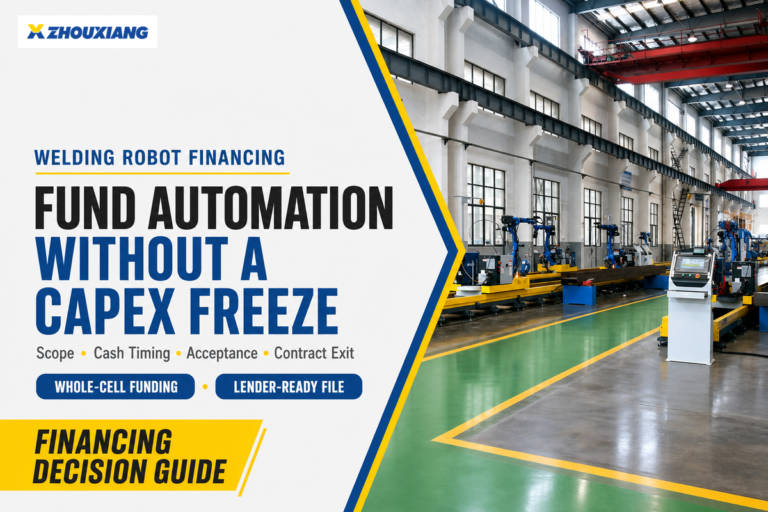
Updated August 2026 Welding robot financing and leasing options are loan, lease, and program structures used to fund a robotic welding deployment while matching supplier cash calls and preserving operating liquidity. Usually, the right answer is not the offer with…
220V/50Hz vs 480V/60Hz: Matching a Welding Robot to Your Country’s Power Grid
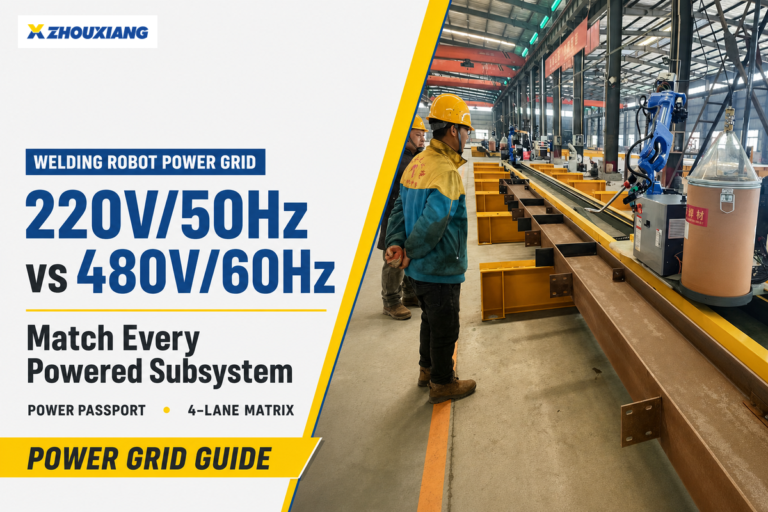
Welding robot voltage frequency compatibility is the verified match between the actual facility supply and every powered part of the cell. Compatibility exists only when the actual supply matches every powered part of the welding cell and the facility network…
Wheeled vs Tracked Welding AGV: Floor, Speed, and Payload Tradeoffs
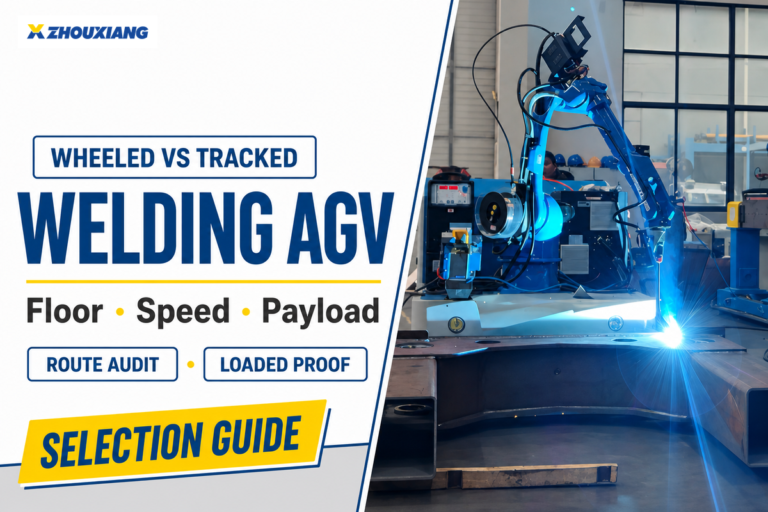
Updated August 2026 A wheeled vs tracked welding robot is a mobile chassis comparison that should be decided from the loaded route, not a vague claim that wheels are fast or tracks are rugged. Wheels normally start ahead on prepared…
Welding Robot Commissioning: Week-by-Week Deployment Roadmap
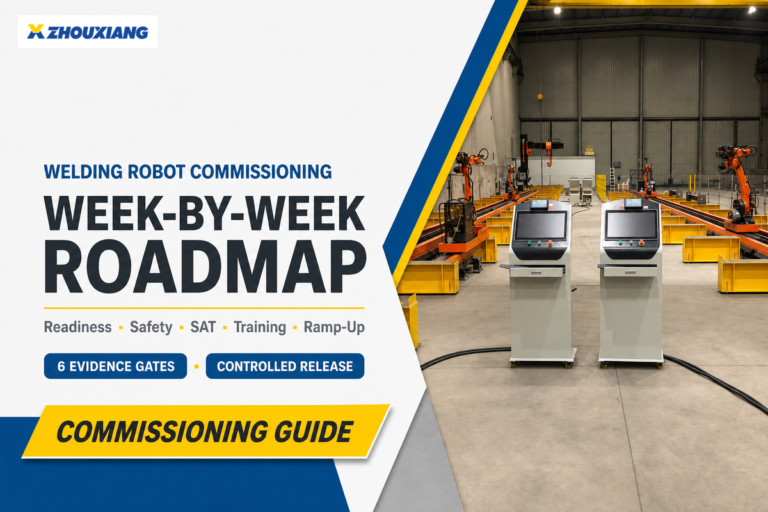
Updated August 2026 · Operational planning guide for welding automation teams A welding robot commissioning timeline is an evidence-gated plan that assigns an owner and release decision to each commissioning state. This six-week roadmap starts after site readiness—not when the…
ISO/TS 15066 Force Limits for Welding Cobots: What the Standard Actually Requires
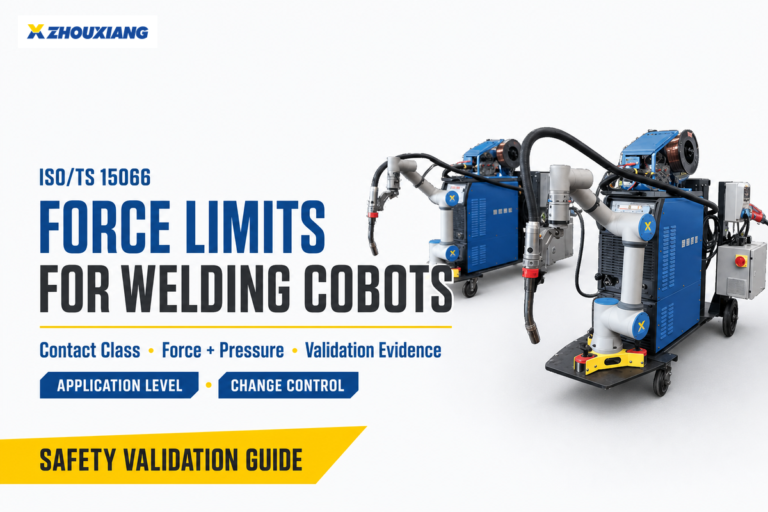
Updated: August 13, 2026 ISO TS 15066 cobot welding safety is not a matter of typing one force number into a robot controller. Defensible welding applications start by identifying every foreseeable contact, classifying the body region and contact type, measuring…
Boiler Tube Sheet Welding: Robotic GMAW vs Manual Tube-to-Header
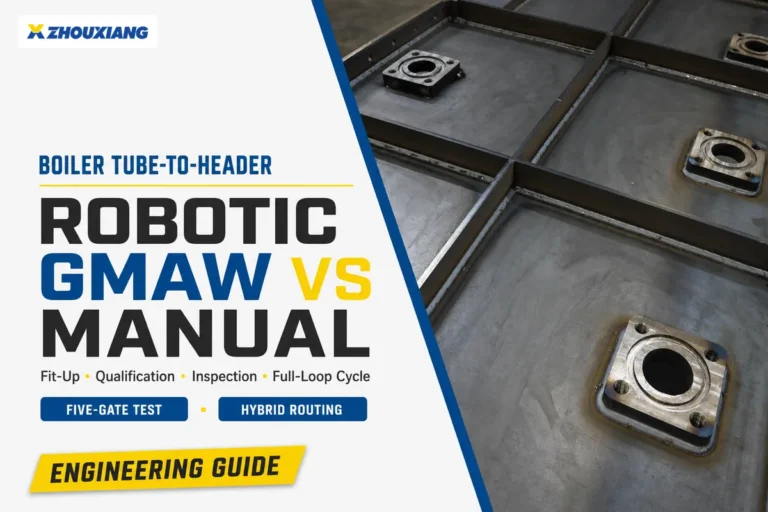
A boiler tube sheet welding robot is worth testing only when the actual tube-to-header joint can be located, welded, reached, inspected, and produced inside controlled limits. Passing those five feasibility gates is necessary, but it does not replace the governing…
Ground Rail vs Cantilever vs Gantry Welding Robot
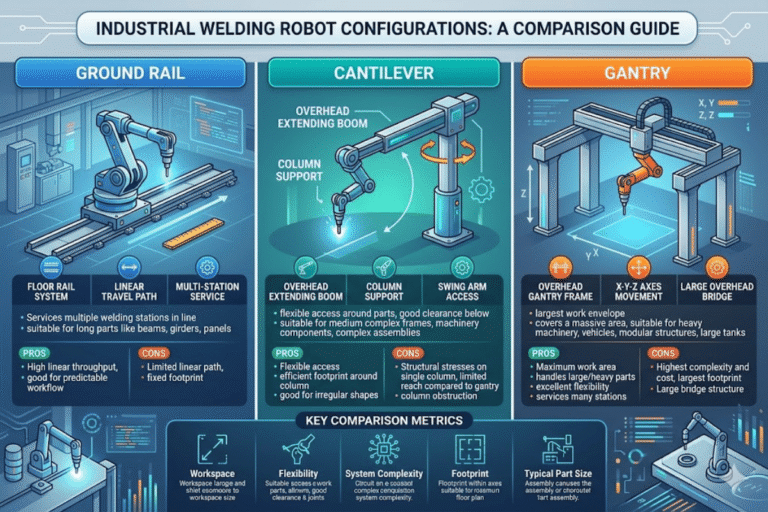
Choosing Between Ground Rail, Cantilever, and Gantry Welding Robots: A Side-by-Side Comparison Steel fabrication shops face a choice that influences throughput, weld quality, and future profitability: which robotic welding station layout suits the work best? Ground rail, cantilever, and gantry…
Robotic Welding vs Manual Welding: Cost, Quality & Speed
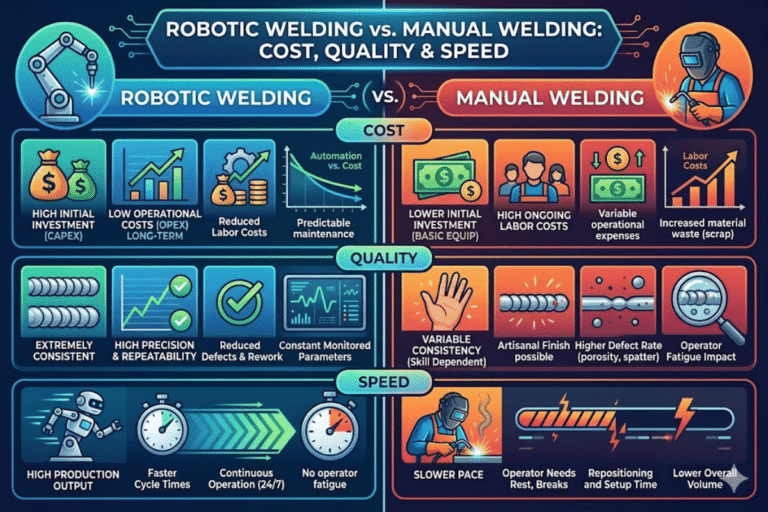
Robotic Welding vs Manual Welding: Which Welding Method Delivers Better Results for Your Fabrication Line? Every metal fabrication manager runs into the same dilemma at some time or another: do we keep the welding under mamad, or do we call…
Robotic Welding for Small Batch Production

How Robotic Welding Makes Small Batch Production Profitable For decades robotic welding was limited to the automotive assembly line – thousands of identical parts, enormous capital budgets, and months of programming before the first arc fired. Small manufacturers producing 10…
Robotic Welding ROI Calculation: Formula, Real Numbers & Payback Timeline
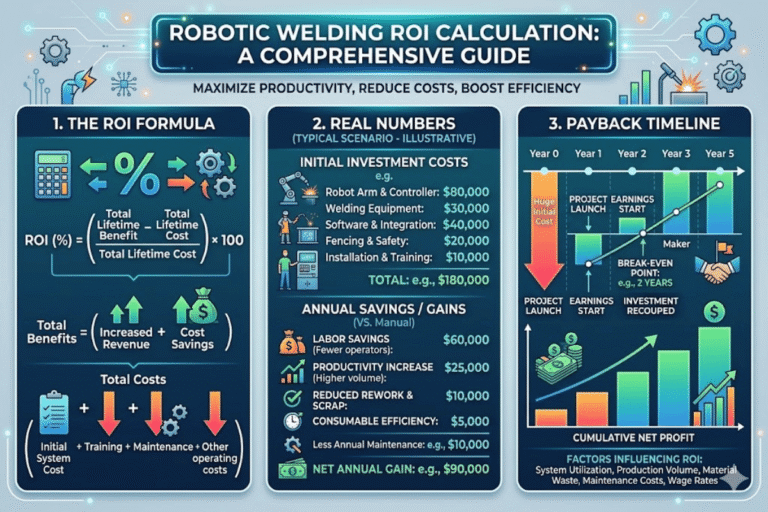
Robotic Welding ROI Calculation: Formula, Real Numbers & Payback Timeline With over 330,000 welding positions projected to be lost by 2028 by the American Welding Society and manual welders averaging only 20 percent arc-on time per shift, manufacturers can no…