Contacte a Zhouxiang

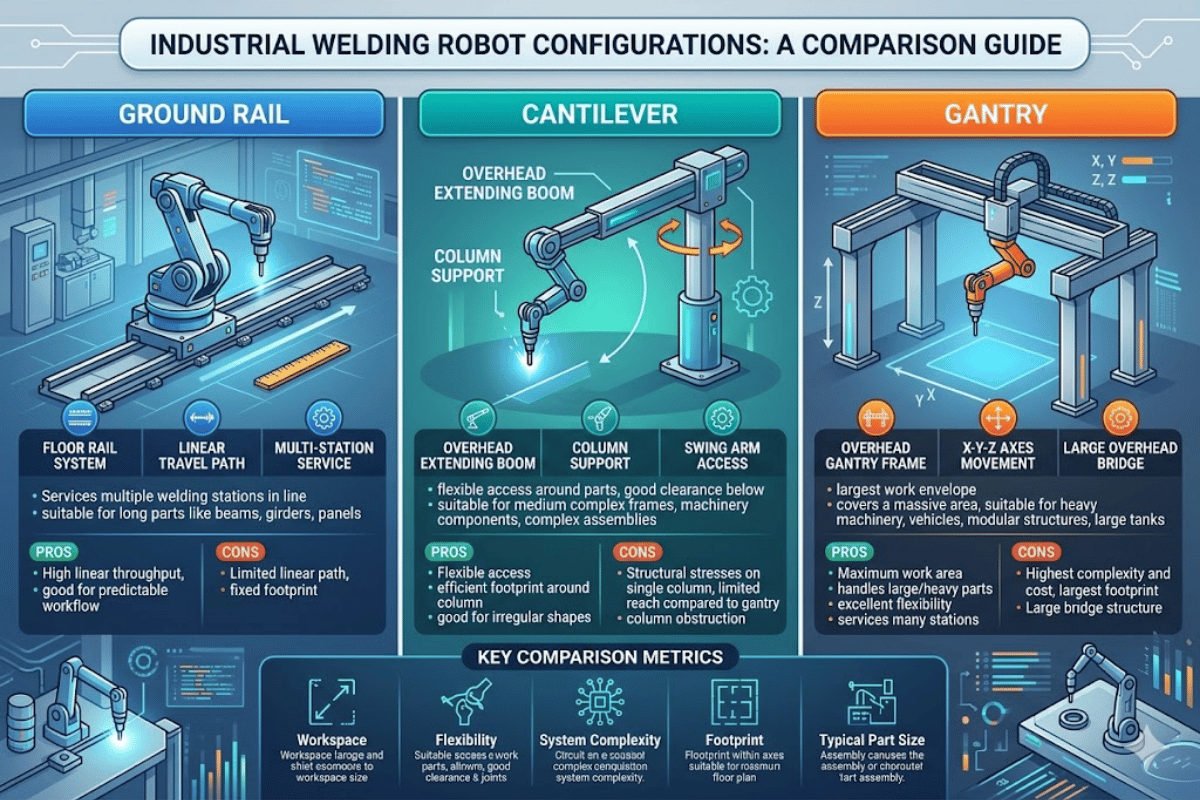
Como escolher entre robôs de soldadura sobre carril no solo, em consola e em pórtico: comparação lado a lado
As empresas de fabrico de estruturas metálicas têm de tomar uma decisão que influencia a taxa de produção, a qualidade da soldadura e a rentabilidade futura: que configuração de estação de soldadura robotizada é mais adequada ao trabalho? As soluções com carril no solo, em consola e em pórtico respondem a necessidades diferentes. Uma escolha errada pode significar mais custos e menos trabalho realizado. Segundo o relatório World Robotics 2025 da IFR, o parque mundial de robôs industriais atingiu 542 000 unidades em 2024 — o dobro do registado uma década antes. A soldadura e a brasagem representaram cerca de 21% de todos os robôs industriais, tornando a automação neste campo uma das áreas de crescimento mais rápido. A procura de robôs sobre carril no solo, em consola e em pórtico também aumentou. Este guia resume as diferenças mecânicas, de espaço de trabalho, custo e aplicação mais adequada entre as configurações de robôs com carril no solo, em consola e em pórtico, com base em especificações de oficinas de fabrico, dados de campo IFC e cálculos lean.Robôs de soldadura sobre carril no solo, em consola e em pórtico: visão geral
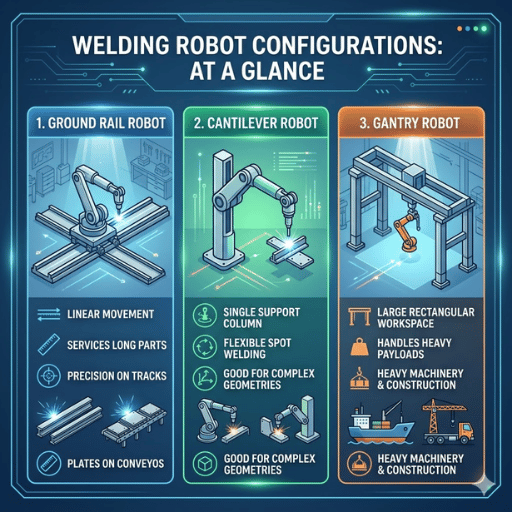 Um robô de soldadura sobre carril no solo utiliza um braço robótico de 6 eixos fixado a um carril linear instalado no chão, por vezes designado por 7.º eixo. Um robô de soldadura em consola inclui uma viga em consola e uma coluna elevatória que alarga o alcance do braço robótico nos eixos Y e Z. Um robô de soldadura em pórtico posiciona um ou dois braços robóticos sobre a zona de trabalho, numa estrutura de ponte suspensa com carris.
Os três sistemas utilizam os mesmos braços robóticos de soldadura de 6 eixos. A diferença está na forma como cada sistema posiciona o braço robótico em relação à peça de trabalho.
Um robô de soldadura sobre carril no solo utiliza um braço robótico de 6 eixos fixado a um carril linear instalado no chão, por vezes designado por 7.º eixo. Um robô de soldadura em consola inclui uma viga em consola e uma coluna elevatória que alarga o alcance do braço robótico nos eixos Y e Z. Um robô de soldadura em pórtico posiciona um ou dois braços robóticos sobre a zona de trabalho, numa estrutura de ponte suspensa com carris.
Os três sistemas utilizam os mesmos braços robóticos de soldadura de 6 eixos. A diferença está na forma como cada sistema posiciona o braço robótico em relação à peça de trabalho.
| Característica | Carril no solo | Consola | Pórtico |
|---|---|---|---|
| Número total de eixos | 6 + 1 (carril no solo) | 6 + 2 (viga Y + coluna Z) | 6 + 3 (ponte X/Y/Z) |
| Comprimento normalizado do carril | 3 m / 6 m / 9 m / 12 m | 6 m / 9 m / 12 m | Até 30 m |
| Altura máxima de soldadura | Limitada pelo alcance do braço robótico (~2,0 m) | ~2,2 m (coluna elevatória) | Ajustável (eixo Z da ponte) |
| Largura de cobertura da peça de trabalho | Apenas de um lado | Até ~3,7 m (extensão da viga) | Até 6 m+ (distância entre carris da ponte) |
| Configuração do robô | Robô único | Robô único | Um ou dois robôs |
| Espaço necessário no chão | Reduzido (ocupação linear) | Moderado | Amplo (dois carris + ponte) |
| Aplicações típicas | Vigas H, colunas, vigas secundárias | Vigas de cobertura, suportes, estruturas mistas | Vigas de pontes, painéis navais, chapas pesadas |
| Custo relativo | $ | $$ | $$$ |
💡 Conclusão principal
As especificações acima correspondem a configurações normalizadas. A maioria dos fornecedores, incluindo Zhouxiang Group, com a sua gama líder de mercado de estações robotizadas com carril no solo, disponibiliza dimensões de carril, configurações de eixos, opções de estação dupla e outras soluções híbridas personalizadas.
Conceção estrutural e sistemas de movimento
 O que distingue as configurações com carril no solo, em consola ou suspensas é a forma como os eixos externos ampliam o alcance do braço robótico. Cada configuração de pórtico ou em consola acrescenta movimento numa direção específica, o que determina a capacidade de soldadura do robô.
Carril no solo: o 7.º eixo
Um robô de soldadura sobre carril no solo monta um braço robótico de 6 eixos num carril linear ao nível do chão. O carril permite o deslocamento ao longo do eixo X, acompanhando o comprimento da peça de trabalho. O acionamento pode ser feito por cremalheira e pinhão ou por fuso de esferas, com servomotores que atingem uma repetibilidade de posicionamento de ±0,05 mm sob carga normal. Os comprimentos normalizados do carril no solo são 3, 6, 9 ou 12 metros, com extensões personalizadas para linhas de produção mais longas. O carro desloca-se sobre guias lineares de precisão fixadas a uma estrutura de base em aço. Como todo o conjunto fica ao nível do chão, a instalação requer apenas uma laje de betão nivelada — sem estruturas suspensas nem poços de fundação.Consola: viga do eixo Y + coluna elevatória do eixo Z
Nos robôs de soldadura em consola, o braço robótico é montado numa estrutura com um eixo Y rotativo que se estende a partir de uma viga horizontal, apoiada numa coluna vertical elevatória do eixo Z. Assim, o braço robótico pode deslocar-se ao longo do eixo X e subir ou descer ao longo do eixo Y, alcançando zonas acima e em redor de peças de trabalho que ficariam fora do alcance de um carril ao nível do chão. A maioria das vigas transversais em consola tem 3.7 metros de largura, e a coluna elevatória permite soldar até 2.2 metros de altura. Esta configuração funciona bem com peças de trabalho de diferentes secções. Permite posicionar o robô a várias alturas ao longo dos cordões de soldadura de vigas H, colunas caixão e conjuntos de suportes, sem reposicionar a peça de trabalho. Uma desvantagem: as estruturas em consola sofrem maior deformação sob carga do que os carris rígidos montados no chão, pelo que o braço robótico compensa através do seguimento da junta.Pórtico: cobertura total em 3D
Um robô de soldadura em pórtico envolve o robô numa estrutura de treliça suspensa com vários carris: duas pontes paralelas ligadas por uma viga transversal. O portal onde o robô está montado desloca-se nos eixos X, Y e Z, criando um espaço de trabalho tridimensional sob o pórtico. Concebidos para as peças de trabalho de maiores dimensões, os sistemas de pórtico podem ter carris de 30 metros. A distância entre os carris da ponte é de 6 metros ou mais. As configurações com dois robôs montam dois robôs de soldadura num único pórtico, permitindo soldar simultaneamente ambos os lados das peças de trabalho. Isto reduz significativamente os efeitos da deformação térmica nas peças pesadas da estrutura da ponte e nas chapas grossas. Um ensaio de campo mostra que uma configuração de pórtico com dois cabeçotes e duas unidades de soldadura, utilizada no fabrico de vigas de pontes de grandes dimensões e estruturas pesadas, poupa até 15 horas de operação.| Parâmetro de movimento | Carril no solo | Consola | Pórtico |
|---|---|---|---|
| Eixos externos | 1 (carril do eixo X) | 2 (viga Y + coluna Z) | 3 (carril X + ponte Y + elevação Z) |
| Sistema de acionamento | Cremalheira e pinhão / fuso de esferas | Servomotor + redutor | Servomotor CA em todos os eixos |
| Velocidade de deslocação | ~15 m/min | ~12 m/min | X: 20 m/min, Y: 12 m/min |
| Rigidez estrutural | Elevada (montagem no chão, braço de alavanca curto) | Moderada (a viga em consola deforma-se) | Muito elevada (estrutura de ponte com dois carris) |
Alcance de soldadura e cobertura do espaço de trabalho
 É no envelope de soldadura efetivo — o volume total ao alcance do braço robótico — que os três tipos mais se distinguem.
Carril no solo: alcance sobretudo em comprimento
As estações com carril no solo são mais eficientes em cordões de soldadura longos e repetitivos, em peças de trabalho orientadas paralelamente ao carril. Um carril de 12 m, combinado com um braço robótico com um alcance de aproximadamente 2 010 mm, proporciona um espaço de trabalho na ordem dos 12 m x 2 m x 2 m. O robô solda do lado esquerdo ou direito do carril, pelo que esta solução é adequada para peças simétricas, como vigas H, em que ambas as juntas podem ser soldadas rodando a peça de trabalho num posicionador. A largura é a limitação. Como o carril se desloca paralelamente ao chão, o robô não consegue cobrir conjuntos largos. As colunas caixão mais largas do que o alcance horizontal do braço robótico têm de ser reposicionadas manualmente ou processadas noutro tipo de estação. As oficinas que trabalham sobretudo com vigas H normalizadas e vigas secundárias com menos de 12 mt consideram que um robô de soldadura sobre carril no solo consegue realizar 80-90% do seu volume diário de trabalho.Consola: flexibilidade em largura e altura
Os robôs de soldadura em consola resolvem o problema da largura. A viga do eixo Y amplia o alcance do robô para os lados, enquanto a coluna elevatória do eixo Z ajusta a altura de soldadura conforme necessário. Uma estação em consola típica permite trabalhar peças de até 3.7 metros de largura por 2.2 metros de altura, incluindo vigas de cobertura, suportes, vigas suspensas e conjuntos estruturais de maiores dimensões que ficam fora do alcance das estações com carril no solo. Esta flexibilidade implica, naturalmente, menor rigidez. Uma viga em consola funciona como um braço de alavanca: quanto maior for a extensão, maior será a deformação na extremidade da ferramenta. Embora as configurações modernas em consola possam incluir seguimento da junta a laser (por exemplo, sensores inteligentes de leitura de linhas CP350V), os fabricantes que trabalham com cordões de soldadura de tolerância apertada devem prever o tempo adicional necessário para a calibração.Pórtico: cobertura total para conjuntos de soldadura de grandes dimensões
Os sistemas de pórtico oferecem o maior alcance de soldadura de todas as configurações. Com carris até 30 metros e uma distância entre carris de 6 metros, o espaço de trabalho suspenso permite soldar conjuntos de grandes dimensões que não seriam alcançáveis por uma estação com carril no solo ou em consola, como vigas nervuradas em U, vigas de pontes com 4 metros de altura e 120 metros de comprimento, painéis de tampas de escotilha e chapas pesadas de aço. Com a ponte suspensa, deixam de existir obstáculos ao nível do chão, o que facilita a carga e a descarga de componentes. As gruas de pórtico podem elevar as peças até à posição de soldadura, acelerando a produção de conjuntos de grandes dimensões em volumes elevados.⚠️ Erro comum
Considere uma estação com carril no solo para conjuntos largos e com vários lados que exijam o alcance lateral de uma verdadeira consola ou o acesso suspenso de um pórtico. Meça as três dimensões da maior peça de trabalho prevista e confirme que o envelope operacional do robô permite alcançar todas as posições de soldadura necessárias.
Qualidade da soldadura e precisão de posicionamento
 Os três tipos têm em comum um robô de soldadura de 6 eixos, adquirido a fornecedores reconhecidos no setor, como FANUC, Yaskawa ou ABB. Um robô industrial normalizado apresenta uma precisão de ISO 9283 de 0,05 mm. As diferenças de precisão de soldadura entre as configurações com carril no solo, em consola e em pórtico resultam dos eixos externos que suportam o robô.
±0,05 mm
Repetibilidade do braço robótico
±0,10 mm
Precisão do carril no solo
3–5×
Tempo de arco ligado vs. soldadura manual
💡 Sugestão técnica
Verifique a folga do acionamento de cremalheira e pinhão dos sistemas com carril no solo a cada 2000 horas de funcionamento. Engrenagens danificadas causam erros de posicionamento que reduzem a uniformidade dos cordões de soldadura — uma falha que o seguimento da junta a laser pode disfarçar, mas não eliminar de forma permanente.
Custo, ROI e custo total de propriedade
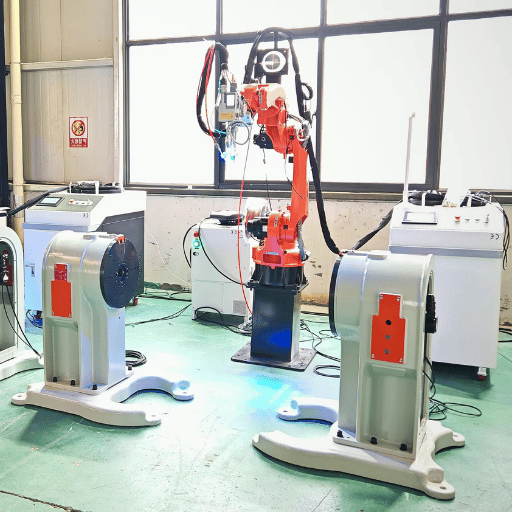 O custo costuma ser o último fator a considerar. O custo de cada robô de soldadura vendido a um novo cliente varia e inclui não só a compra, mas também a instalação, a utilização e a operação contínua. Para comparar o prazo de retorno do investimento, é necessário compreender o verdadeiro impacto financeiro de cada solução.
| Fator de custo | Carril no solo | Consola | Pórtico |
|---|---|---|---|
| Complexidade da instalação | Baixa — chão nivelado + parafusos de ancoragem | Moderada — fundação para a coluna | Elevada — fundações para dois carris + espaço livre suspenso |
| Preparação do local | Mínima | Base da coluna + instalação elétrica | Poços de fundação, acesso para grua e espaço livre até ao teto |
| Plano de manutenção | Limpeza dos carris, inspeção das engrenagens | Verificação do alinhamento da viga, lubrificação da coluna | Manutenção dos acionamentos multieixos, nivelamento da ponte |
| Prazo de ROI típico | 12–18 meses | 15–24 meses | 18–30 meses |
12–24 meses
Prazo típico de retorno do investimento
50–90%
Tempo de arco ligado do robô
Até 50%
Redução dos custos de mão de obra
«A maioria dos nossos clientes recupera o investimento no robô de soldadura sobre carril no solo em 12 a 18 meses. O volume de trabalho costuma ser o fator decisivo: as oficinas que fazem horas extraordinárias obtêm lucros mais cedo, porque o robô trabalha por dois turnos em vez de um.» — Zhouxiang Engineering Team, com base em mais de 30 anos de experiência e num portefólio de mais de 200 patentes em automação da soldadura
Melhores aplicações para cada tipo de robô de soldadura
Escolher a combinação de robôs KOZONOHING adequada às peças de trabalho é fundamental para aumentar ou reduzir a produtividade de uma oficina de fabrico. Os dados reais de campo e os fluxos de produção ajudam a esclarecer as aplicações de cada solução.Robô de soldadura sobre carril no solo: produção normalizada de estruturas metálicas
- Vigas H principais e secundárias (o produto mais comum dos fabricantes de estruturas metálicas)
- Colunas normalizadas com menos de 12 metros
- Vigas para plataformas de equipamento e estruturas de estantes
- Cordões de ângulo repetitivos em peças de trabalho longas e uniformes
- Linhas que produzem 160-220 metros de cordão de soldadura por dia e por estação
Robô de soldadura em consola: estruturas mistas e de dimensão média
- Vigas de cobertura e vigas para gruas suspensas
- Suportes, chapas de ligação e conjuntos de ligação
- Vigas H mais largas e secções caixão montadas (até 3,7 m de largura)
- Cofragens para estruturas metálicas e componentes de construção modular
- Oficinas que trabalham com uma ampla variedade de dimensões de segmentos ao longo das semanas
Robô de soldadura em pórtico: fabrico de grandes dimensões e para serviço pesado
- Vigas de pontes, vigas nervuradas em U e componentes de viadutos
- Painéis de cascos de navios e conjuntos estruturais navais
- Chapas pesadas de aço e conjuntos de soldadura com mais de 4 metros de largura
- Cubas de transformadores e equipamento do setor da energia
- Soldadura com dois robôs para controlar a deformação térmica em juntas de secções espessas
| Tipo de peça de trabalho | Carril no solo | Consola | Pórtico |
|---|---|---|---|
| Vigas H normalizadas (≤12 m) | ✔ Melhor | ✔ Bom | Excessivo |
| Colunas caixão largas (>2 m) | Limitado | ✔ Melhor | ✔ Bom |
| Vigas de pontes / painéis navais | Inadequado | Limitado | ✔ Melhor |
| Suportes / conjuntos mistos | Limitado | ✔ Melhor | ✔ Bom |
| Chapas pesadas (>20 mm de espessura) | Possível | Possível | ✔ Melhor (dois robôs) |
Que configuração de robô de soldadura deve escolher?
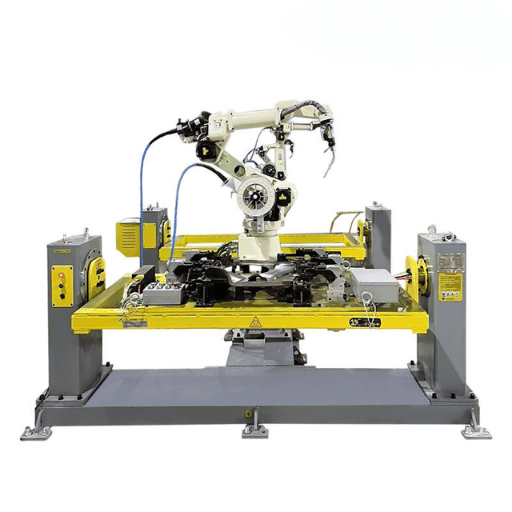 Em vez de começar pelas especificações do robô, deve começar pelas peças de trabalho e pelos requisitos de produção. Quando recomendamos investimentos da Kizokhing a empresas de fabrico, aplicamos uma análise de decisão com quatro perguntas:
- ✔ Quais são as dimensões habituais das suas maiores peças de trabalho? — Se o comprimento for superior a 6 m e a largura inferior a 2 m → carril no solo. Se a largura for superior a 2 m ou a altura superior a 1,5 m → consola. Se ambas excederem esses limites → pórtico.
- ✔ Qual é o seu volume mensal de produção? — Menos de 50 peças/mês com perfis normalizados → o carril no solo oferece uma taxa de produção adequada. Mais de 100 peças/mês ou perfis mistos → a versatilidade da consola compensa. Chapas pesadas ou trabalhos em pontes, qualquer que seja o volume → pórtico.
- ✔ De que espaço dispõe no chão e em altura? — O carril no solo requer menos espaço. A consola precisa de espaço moderado e de área livre em torno da coluna. O pórtico exige mais área no chão e altura suficiente para a ponte passar acima da peça de trabalho mais alta.
- ✔ Qual é o seu orçamento total, incluindo a instalação? — O carril no solo tem o custo total mais baixo. Se o orçamento permitir, a consola oferece maior flexibilidade por cada euro investido. Os sistemas de pórtico exigem o investimento mais elevado, mas permitem trabalhar peças que mais nenhuma solução consegue processar.
Resumo: escolha o robô adequado ao trabalho
- Carril no solo — Ideal para oficinas de estruturas metálicas que realizam soldaduras longitudinais repetitivas em vigas H e colunas. Menor investimento de capital e ROI mais rápido.
- Consola — A solução mais versátil, adequada para oficinas com vários perfis de peças de trabalho, requisitos de largura moderados e necessidade de variar o alcance vertical.
- Pórtico — Ideal para a indústria pesada: pontes, construção naval e setor da energia. Adequado aos conjuntos de soldadura maiores, mais largos e mais pesados. Exige o maior investimento e oferece as maiores capacidades.
Perguntas frequentes
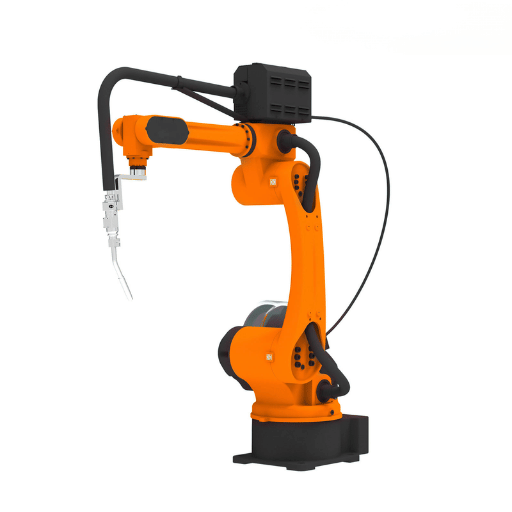
Qual é a diferença entre robôs de soldadura em pórtico e em consola?
Ver resposta
O robô de soldadura em pórtico (soldadura = soldadura) é suportado por uma ponte suspensa que se desloca ao longo de dois carris paralelos. Esta ponte pode deslocar-se nas direções (X,Y,Z) numa ampla área de trabalho e pode ser equipada com braços robóticos duplos para soldadura simultânea. O robô em consola é suportado por uma viga unilateral com uma coluna de elevação.
Esta configuração cobre os eixos de deslocação Y,Z apenas num dos lados da célula de fabrico. Em resumo: o pórtico é adequado para peças maiores e mais pesadas (graças às duas estações robotizadas); a consola ocupa menos espaço, custa menos e é adequada para estruturas metálicas de dimensão média. Ambos os sistemas utilizam braços robóticos consistentes na parte inferior.
A GDA escolhe o braço robótico de 6 eixos com a ferramenta o mais próximo possível da ponta da tocha, eliminando assim a variabilidade da posição da cabeça da tocha no espaço em relação ao KMG. Para além do próprio equipamento, que aumenta o custo total do projeto, as instalações em pórtico também precisam de consideravelmente mais espaço para funcionar, exigem tetos mais altos e requerem uma fundação maior.
Como funciona um robô de soldadura sobre carril no solo?
Ver resposta
Um robô de soldadura sobre carril no solo consiste num braço robótico de 6 eixos instalado num carril linear no chão — frequentemente designado por 7.º eixo. Este carril é acionado por cremalheira e pinhão ou por um fuso de esferas, através de servomotores que posicionam o robô ao longo da peça de trabalho. Os comprimentos de carril disponíveis habitualmente variam entre 3 metros e 12 metros, embora seja possível fabricar comprimentos personalizados.
A soldadura é feita de um dos lados do carril, enquanto a peça de trabalho assenta num posicionador. A peça de trabalho pode ser rodada conforme necessário. Esta configuração é adequada para cordões de soldadura longos e repetitivos em vigas H e colunas.
Quais são os diferentes tipos de robôs de soldadura?
Ver resposta
Para estruturas metálicas: carril de translação no solo (carril no chão), consola (viga e coluna) e pórtico (ponte suspensa). Além destes, os robôs colaborativos e os robôs móveis autónomos de soldadura destinam-se a aplicações de nicho de pequena escala.
Os robôs de soldadura são adequados para pequenas oficinas de fabrico?
Ver resposta
Sim, sobretudo os robôs de soldadura sobre carril no solo. Uma estação robotizada com carril no solo e uma área ocupada por um carril de 6 metros é compacta e pode produzir a essência da soldadura de vigas H, que está no cerne da maioria das oficinas de estruturas metálicas de pequena e média dimensão. Os soldadores manuais conseguem manter o arco ativo apenas durante 10-30% do tempo, face aos 50-90% registados com os sistemas robotizados; por isso, mesmo as oficinas que processam 30-50 vigas por mês podem obter um ROI no prazo de 12-18 meses. O investimento inicial é o mais baixo dos três.
Como calculo o ROI de um sistema de soldadura robotizada?
Ver resposta
Calcule o ROI subtraindo aos custos atuais da soldadura manual (mão de obra, consumíveis, retrabalho, segurança, etc.) as perdas totais que um sistema robotizado poderá evitar (aquisição, instalação, programação, manutenção e operação). O cálculo é: ROI em meses = Custo total do sistema de formação ÷ poupança líquida mensal. Se a sua configuração custar $150 000 e permitir poupar $10 000 por mês em mão de obra e retrabalho (para Kozoihing e outros processos de detalhe), o ROI será de 15 meses. Verificámos que a maioria das operações de estruturas metálicas recupera este investimento num prazo de 12-24 meses, especialmente nas operações com dois turnos, em que um robô trabalha em ambos.
Uma única estação robotizada consegue lidar com as três configurações?
Ver resposta
Não como um único sistema. As oficinas de estruturas metálicas quase sempre combinam os três tipos de estações robotizadas numa linha de produção integrada. As grandes instalações podem usar várias estações com carril de translação no solo para trabalhos de pequena a média dimensão e peso, uma estação em consola para produção de estruturas variadas e reservar um pórtico para peças de grandes dimensões ou trabalhos com chapa pesada. Os mesmos braços robóticos K0133 de 6 eixos que produzem peças pequenas são instalados nos três sistemas de montagem sem adaptação; a capacidade da oficina aumenta através da adição de estações, não da substituição do sistema.
Não sabe que configuração é adequada para a sua oficina?
A nossa equipa de projeto ajuda a analisar os perfis e os volumes de produção para determinar a configuração ideal; a combinação destes três tipos de instalação proporciona frequentemente uma maior taxa de produção e custos finitos mais baixos, bem como margens de segurança superiores.
Solicite uma avaliação gratuita →Sobre esta comparação
Todas as informações desta publicação foram compiladas pela equipa de engenharia de robôs de soldadura da Zhouxiang, com base na nossa experiência histórica no fabrico de estações com carril de translação no solo, em consola e em pórtico para fabricantes de estruturas metálicas em 50+ países. Os dados históricos de desempenho e dimensionais, bem como o gráfico de ROI, baseiam-se nos nossos registos de fabrico e vendas e em fontes do setor, tais como:
Referências e fontes
- Relatório World Robotics 2025 — Instalações de robôs industriais — International Federation of Robotics (IFR)
- Soldadura, corte e brasagem — riscos e soluções — U.S. Occupational Safety and Health Administration (OSHA)
- AWS D1.1:2025 — Alterações ao código de soldadura estrutural – aço — American National Standards Institute (ANSI)
- Ensaios de desempenho ISO 9283 — precisão de posicionamento dos robôs — RoboDK Documentation
- Como utilizar a soldadura dupla em carril de pórtico em projetos de vigas de ponte — EVS Robot
- Como calcular o ROI e o prazo de retorno do investimento no seu robô — Universal Robots