Get in Touch with Zhouxiang

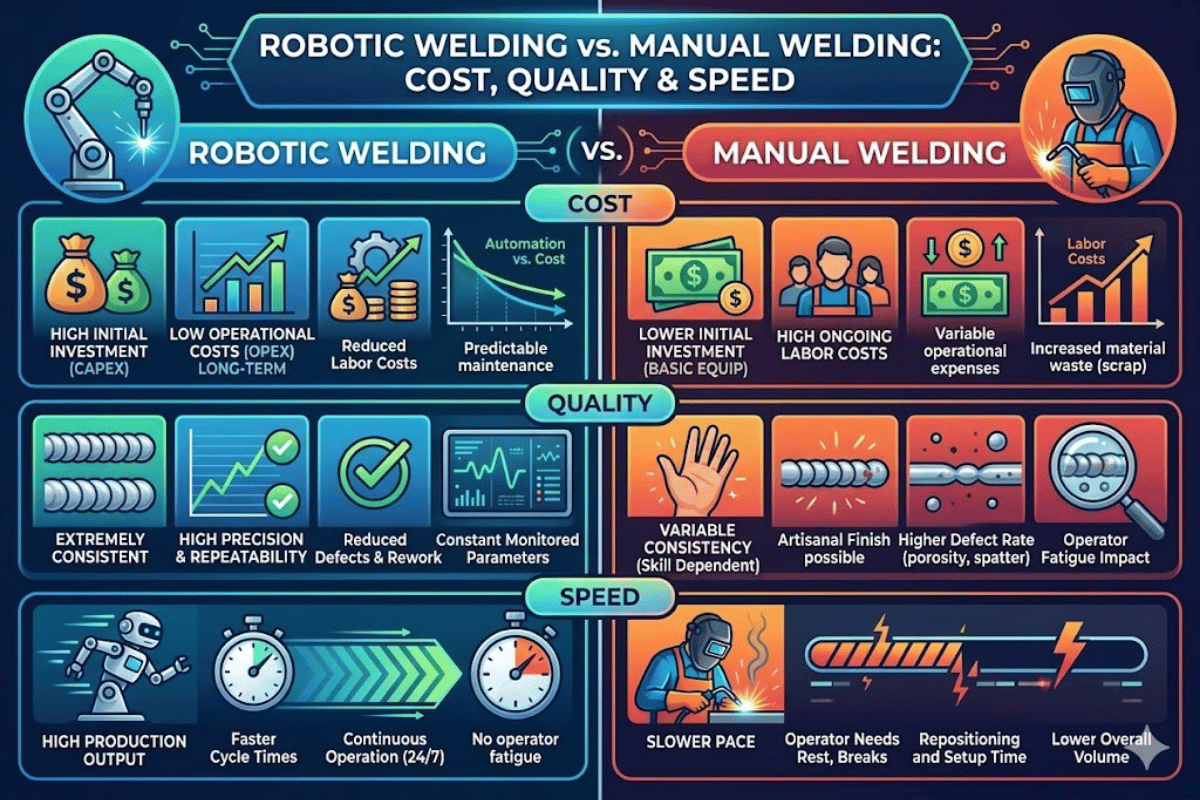
Robotic Welding vs Manual Welding: Which Welding Method Delivers Better Results for Your Fabrication Line?
Every metal fabrication manager runs into the same dilemma at some time or another: do we keep the welding under mamad, or do we call in the robot? The answer has a lot to do with production volume, part mix, budget and access to personnel. In this side-by-side comparison of robotic welding versus manual welding, we’ll take apart the hands-on vs. programmed argument with real-world data on speed, weld quality, cost and safety so you can make an informed decision that’s right for your shop floor. No hype — just a lot of data, tradeoffs, and over 30 years of field experience from ourselves at Zhouxiang.
Table of Contents
- robotic welding versus manual welding in a Nutshell
- What is manual welding, and where does it still make sense?
- How do you do Robot Welding, and how do you use robotic welding systems?
- throughput and productivity: which method of welding wins?
- weld quality and defects: a speed comparison
- Cost and ROI: capital investment, savings in headcount, ROI timeline
- So which to choose? A decision framework
- FAQs in robotic welding versus manual welding
Robotic Welding vs Manual Welding at a Glance
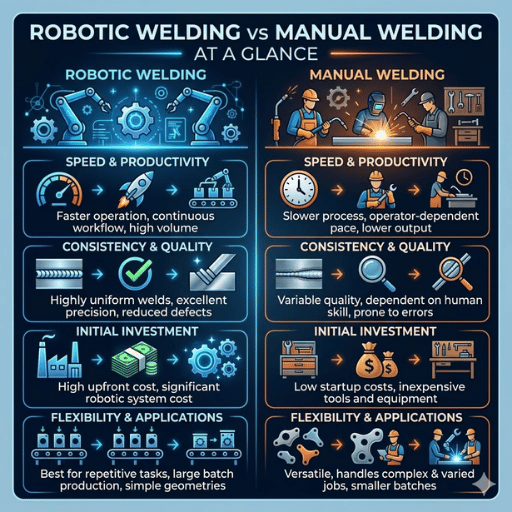
Before we jump in, here’s the big-picture overview. Robotic welding employs programmable robot arms to perform repetitive welding operations round-the-clock in a set path. In contrast, manual welding involves skilled human welder who manually maneuver the torch along the weld line. Every method has its own pros and cons, evident from the comparison table below.
| Feature | Robotic Welding | Manual Welding |
|---|---|---|
| Arc-on Time | 60–90% | 15–30% |
| Defect Rate | <2% | 8–12% |
| Throughput | 3–5× higher | Baseline |
| Upfront Cost | $75K–$250K | $5K–$15K per station |
| Flexibility | Fixed-path, high-volume runs | Adaptive, any geometry |
| Skill Required | Robot programmer / operator | Certified welder |
| Safety Exposure | Operator outside weld zone | Direct fume & UV exposure |
These examples are taken from industry averages and real shop floor data, which we will detail in the following sections. Whether you’re operating a high-volume automotive plant or a small shop dealing in one-off fabrication, these performance figures are the benchmark comparison for the welding vs automation debate.
What Is Manual Welding and Where Does It Still Make Sense?
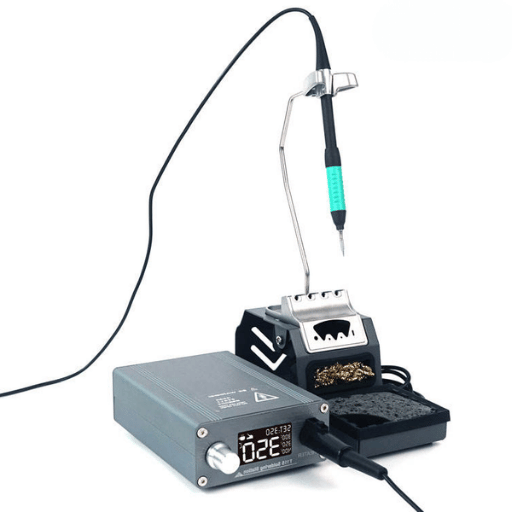
Manual welding requires a skilled welder who manages the torch, travel speed, and arc length value in real time. Typical manual welding techniques include MIG (gas metal arc welding), TIG (gas tungsten arc welding), and stick (shielded metal arc welding). Each welding uses a specific skill set, and each is best suited for different joint types and base metals.
You may read about robotic welding here, but manual welding still remains the preferred method in a number of scenarios:
- Taking care of on-site work and field repairs – fixing pipeline tie-ins, structural fixes, and maintenance outages in places where the robot cannot reach.
- Prototype and batch fabrication – programming a robot for a one-time part is never cost effective.
- Hard-to-reach joints – odd angles, small fit-up, tight corners demand a human welder who can steer mid-pass.
- Short run volume specialization – high end aerospace weldments, pressure vessels, and metal sculptures.
That is a depressing note: the welding workforce is incredibly overstretched. The American Welding Society has forecasted the U.S.’s welders requirement to be 320,500 by 2029, strictly to match demand, while there are over 157,000 skilled welders retiring right now. You lose 2 for every 5 seasoned manual welders going out of the trade and only gain 2 when new welders come in.
320,500
New welders needed by 2029 (AWS)
157,000+
Welders nearing retirement
This shortfall does not suggest manual welding is dead on arrival. It says OEMs must think very hard about where expertise is most needed – and where automation can fill the breach. Manual welding remains permanent in certain applications where no robot can match a skilled welder’s adaptability.
What Is Robot Welding and How Do Robotic Welding Systems Work?
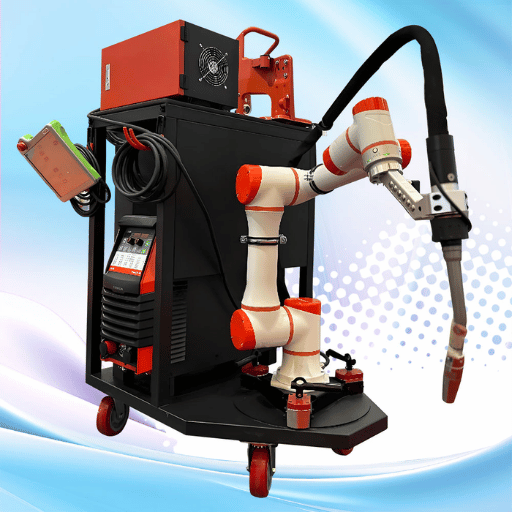
Robotic welding is an automated welding procedure whereby a programmable robot arm engages weld routes with a repeatable level of precision. Each robotic welding system comprises four main parts: the robot arm (most times, a six-axis articulated arm), a welding power source, a controller with a teach pendant, and a fixturing or positioner to hold the work pieces.
These are all bunched together inside a welding cell – an enclosed workstation that contains the robot, fixture, safety fencing, and fume extraction. From our experience at Zhouxiang, we would say it is the least appreciated element in any successful set-up. One good single-robot welding workstation can position the operator, the loading bay, and the welding zone to keep cycle times short.
Types of Robotic Welding Systems
There are two main categories of robotic welder:
- Pre-programmed industrial robots (these run fixed weld orbits at really high speeds) are ubiquitous in the automotive industry and fabrication production lines for high-volume production and heavy steel. Sensor-guided seam tracking allows them to rectify minor part deviations as they happen.
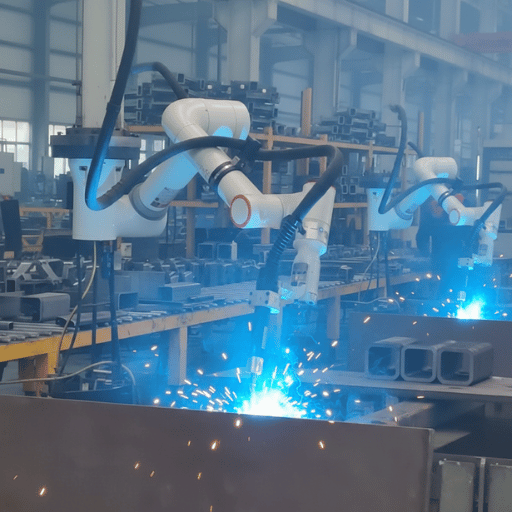
- Collaborative robots (cobots) – lighter, slower, and intended to be used in conjunction with staff in open setting with no safety fencing. Cobots are opening up robotic automation to much smaller companies who would not have been able to justify a full robotic welding cell.
Nowadays welding robots are capable of MIG welding, TIG welding, laser welding, spot welding, and plasma arc welding. Which welding process to use depends entirely on the material, joint and throughput levels needed. It is over 20 years since we set up our first automated welding line in 1993. While programming just one weld path used to take days, now our teach pendant interface will have it in 30 minutes for normal joints.
542,000
Industrial robots installed worldwide in 2024 (IFR 2025)
4.66M
Robots in operational use globally (2024)
Productivity and Throughput: Which Welding Method Wins?
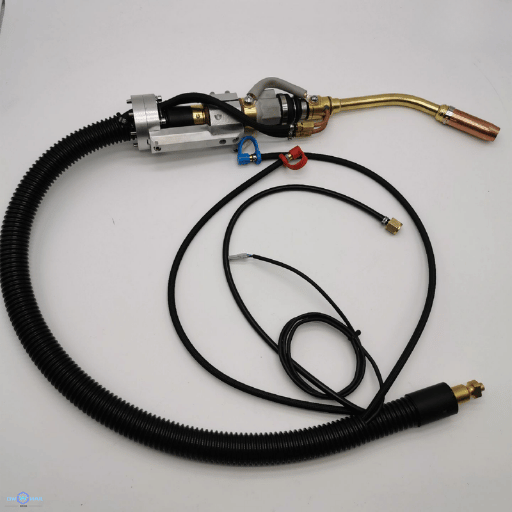
this is the area where the gap bewteen robotic welding and manual welding cannot be understated. One unequivocal indicator is arc-on time – the proportion of your shift where your torch is truly laying weld.
| Metric | Manual Welding | Robotic Welding |
|---|---|---|
| Arc-on Time | 15–30% | 60–90% |
| Cycle Time | Baseline | 39% faster (UND study, 2025) |
| Parts per Shift | 1× | 3–5× |
| Shift Coverage | 1–2 shifts | 24/7 capable |
| Changeover | Minutes (experienced welder) | Minutes (program recall) |
Manual welders have the arc on for anywhere between 15-30% of their shift, but that is not just welding. They are preoccupied with wrenching parts into place, tacking, cleaning, running inspections, and taking breaks. A welding robot in a well-conceived welding system keeps the arc on during the loading/unloading thanks to dual station fixtures and quick-change tooling. Overall production multiplier on the same part form is 3-5.
A University of North Dakota comparative study (Ruprecht, 2025) measured a 39% reduction in cycle time on going from manual to cobot welding in a high-mix, low-volume environment. Coupled with this, the aforementioned comparative study showed that cobotic weldments scored between 13.5 and 37% higher tensile strength across all tested configurations. Our typical clients realize 3-5 output gains in the first quarter of deployment – and you can see the workstation specs and layout we use to do that.
3–5×
Throughput gain with automation
39%
Cycle time reduction (UND, 2025)
💡 Pro Tip
Shops that skip the fixture design step lose up to 30% of the throughput advantage. The robot is only as good as the part presentation – invest in proper fixturing before you automate, and downtime during changeovers will stay low.
A common misconception: robots are only for high-volume production. That was true ten years ago. Today, cobot welding and offline programming extend automation to mid-volume shops running batches of 50-500 parts. Productivity math works as long as the weld path is repeatable.
Weld Quality and Defect Rates Compared
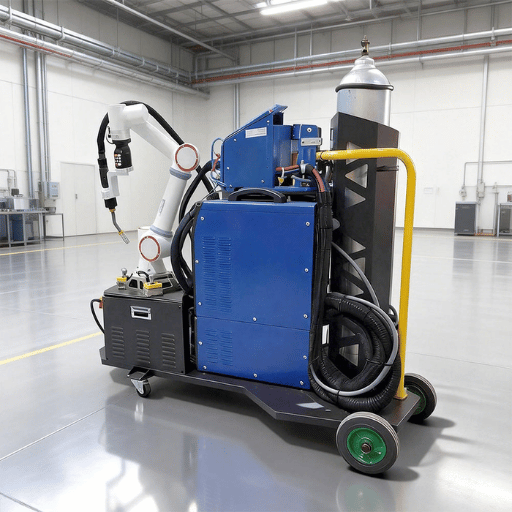
A skilled human welder can produce a flawless weld – no argument there. The difference between manual welding and robotic welding is not individual weld quality; it is consistency across thousands of identical joints. When you need every weld on a 500-piece order to look and test the same, repeatable automation wins.
| Quality Metric | Manual Welding | Robotic Welding |
|---|---|---|
| Defect Rate | 8–12% | <2% (standard) / <0.5% (with adaptive sensing) |
| Positional Accuracy | Operator-dependent | ±0.05 mm repeatability |
| Rework Rate | 10–15% of output | <2% of output |
| Consistency Over Full Shift | Degrades with fatigue | Constant |
Root cause of defects in the manual process is human variability. Fatigue, distraction, and slight hand tremors introduce porosity, undercut, and inconsistent bead profiles – especially in hour seven of an eight-hour shift. Welding robots do not get tired. Every weld it lays is a copy of the programmed path, with the same travel speed, wire feed rate, and voltage.
For operations that weld stainless steel, the safety stakes go even higher. OSHA identifies hexavalent chromium as a regulated exposure risk during stainless welding. CDC/NIOSH has raised concerns about manganese in welding fumes causing neurological damage even at low exposure levels. The IARC classifies chromium (VI) as a Group 1 carcinogen. Robotic systems with enclosed welding cells remove the operator from the fume zone entirely, cutting health risks along with weld defects.
💡 Pro Tip
Adding a sensor-based seam tracking system to your robotic welding setup can push defect rates below 0.5%. The sensor reads the joint in real time and adjusts the weld path on the fly – a worthwhile add-on for critical structural welds.
Cost and ROI: Investment, Labor Savings, and Payback Period
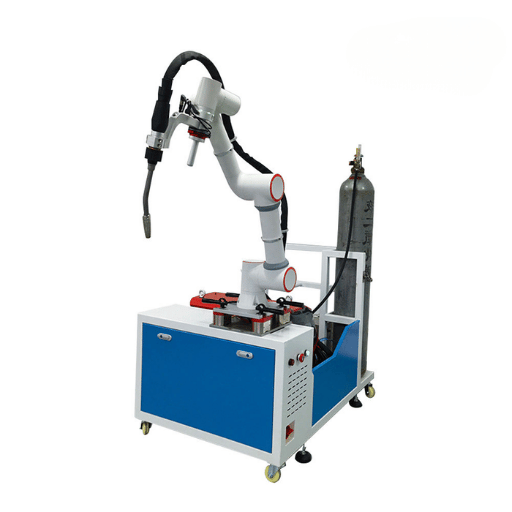
Let us talk money. Sticker price of robotic welding equipment is the first thing buyers notice – and the first thing that causes hesitation. Yes, $75K-$250K upfront investment is real. We do not sugarcoat it. But the math changes fast once you factor in labor costs, rework, and overtime.
| Cost Category | Manual Welding | Robotic Welding |
|---|---|---|
| Station Setup | $5K–$15K | $75K–$250K |
| Annual Labor (per shift) | $55K–$85K (welder wages + benefits) | $8K–$15K (monitoring labor) |
| Rework / Scrap | 10–15% of output | <2% of output |
| Consumable Waste | Higher (inconsistent parameters) | Lower (parameters locked in) |
| Payback Period | — | 12–24 months (at ≥2-shift operation) |
One mistake we see often: manufacturers compare the sticker price of a robotic welding cell against a single manual station, ignoring the 2-3 additional manual welders needed to match the robot’s output. When you account for labor costs across two shifts, the fully automated welding system often pays for itself within 12-24 months.
ROI Framework
Here is a simplified way to estimate your payback:
- Calculate displaced labor costs – welder wages ($22-$35/hr) shifts 2,080 hours, plus benefits (typically 30-40% on top).
- Add rework savings – if your current rework rate is 10%, multiply scrap cost per part annual volume 0.08 (the portion automation eliminates).
- Subtract robot operating costs – electricity, wire, shielding gas, preventive maintenance, and one operator per 2-4 cells.
- Divide system cost by net annual savings – that is your payback period in months.
For smaller shops, the entry point is lower than many expect. Cobot welding packages start around $50K-$70K for a basic MIG setup. You will not get the same throughput as a full industrial welding machine, but the math can still work for mid-volume fabrication runs of 50-500 parts per batch.
12–24 mo
Typical payback period
$50K–$70K
Cobot entry point
Which Should You Choose? A Decision Framework for Manufacturers
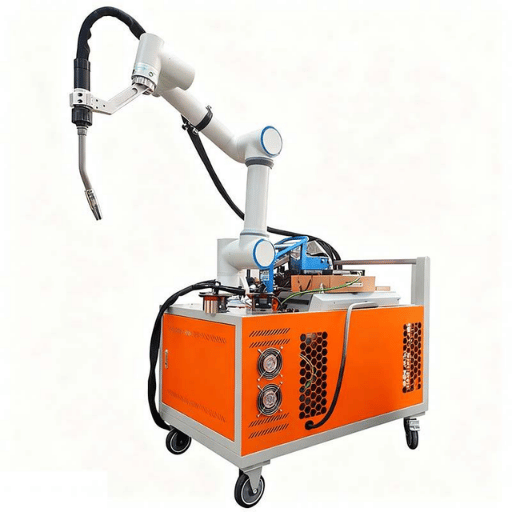
There is no single right answer to the manual and robotic welding question. Your best choice depends on your specific production profile. Use the checklist below to guide your decision.
Choose Robotic Welding When:
- You run the same weld path on 500+ parts per month
- Weld consistency and documentation are critical (pressure vessels, structural steel, automotive)
- You cannot fill open welder positions – and manual welders are getting harder to recruit
- Your current rework rate exceeds 5%
- You operate two or more shifts per day
Keep Manual Welding When:
- Your part mix changes daily with no repeating geometry
- Most welding happens on-site or in the field
- Annual production volume is under 200 identical parts
- Joint access is restricted or highly variable
- Budget does not allow for the $50K+ entry cost right now
The Hybrid Approach
Many of the manufacturers we work with run both. They automate the high-volume, repeatable welds and keep a manual welding station for prototypes, repairs, and short runs. Collaborative robots make this hybrid model easier than ever – a cobot welding cell can be repurposed across different automated welding processes in the same week.
In our 30+ years manufacturing welding robots at Zhouxiang, we have delivered 1,000+ automated welding projects across 50+ countries. Zhouxiang holds 200+ patents in welding automation and steel structure fabrication. Whether you need a single robot cell or a full production line, you can review Zhouxiang’s welding robot lineup to see which robotic systems match your requirements.
“Robotic welding is not always the right answer. For low-volume custom work, field repairs, or irregular joint geometries, a skilled manual welder will outperform any robot. The key is matching the welding method to the production profile.”
— Zhouxiang Engineering Team, based on 1,000+ project deployments
Ready to explore robotic welding for your production line?
Zhouxiang delivers automated welding systems to 50+ countries with direct factory pricing.
FAQ — Robotic Welding vs Manual Welding
Q: What are the advantages of robotic welding versus manual welding?
View Answer
Higher arc-on time (60-90% vs 15-30%), fewer defects, and 3-5 greater throughput. Robots also remove workers from direct fume and UV exposure.
Q: What are the disadvantages of robotic welding?
View Answer
Primary drawbacks are the high upfront cost ($75K-$250K for a full system), limited flexibility for non-repeating or complex geometries, and the need for a trained robot programmer. Changeover between different part types also requires programming time, which may not justify the investment for very low-volume runs.
Q: Is robotic or manual welding the best choice for your project?
View Answer
It varies depending on your production output, part consistency and budget. Fabricating the same joint on 500+ parts a month with documented weld quality specifications, will realize a robotic payback within 1-2 years. But if your typical week consists of 1-off custom fabrication for field repair, joints with tight access inside vessels or prototype runs where the geometry shifts every day – manual welding offers an on-the-fly adaptability no other robotic system can provide. Many facilities run both, routing repetitive welding jobs through the robot cell, while complex or short-run projects go to their manual welders.
Q: How much does a robotic welding system cost?
View Answer
A full industrial robotic welding system runs $75-250K depending on the robot model, welding process and cell setup. Cobot welding systems provide an affordable entry point of $50-70K for basic MIG setups. Most systems payback in 12-24 months operating across two or more shifts.
Q: Can a welding robot fully replace a human welder?
View Answer
Not necessarily. A welding robot excels in high-volume, repeatable weld paths where uniformity is important. But a human welder is still required for field work, custom repairs, tight access joints and prototype fabrication. Most contemporary shops operate both: robots for the repetitive welding tasks, skilled welders for the complex, adaptive work.
Q: Which one provides greater efficiency in welding?
View Answer
Robotic welding is more efficient on every quantifiable measure: arc-on time, throughput per shift, defect rate, and usage of consumables. One robot performs the same welding output as 2-4 manual welders. “Efficiency” on the other hand, for a one-off repair project, implies doing it now with a portable MIG system – and that is where manual welding may be more practical.
Q: What types of welding can robots perform?
View Answer
MIG, TIG, laser welding, spot welding, and plasma arc. MIG has greater popularity because it welds faster and automates more easily.
About This Analysis
This publication is authored by the engineering department at Zhouxiang, a robotic welding manufacturer established in 1991 in Wuxi, China. We have supplied 1,000+ welding automation projects in 50+ nations and possess 200+ patents in welding automation and steel structure fabrication manufacturing. Although we produce robotic welding systems, we have intentionally provided an honest perspective of both, even including the contexts in which manual welding remains the optimal option. All data is obtained from third-party sources and published with organization and year.
References & Sources
- World robotics 2025 – Industrial Robot Installations — International Federation of Robotics (IFR)
- Where Are the welders? – Welding Workforce Data — American Welding Society (AWS), October 2025
- Comparison of robotic and manual welding in Energy Efficiency and Cost — University of North Dakota, Ruprecht (2025)
- welding, Cutting, and Brazing – Hazards and Controls — OSHA (U.S. Department of Labor)
- welding Fumes and Manganese — CDC/NIOSH
- Agents Classified by the IARC Monographs – Chromium (VI) Group 1 — International Agency for Research on Cancer (IARC/WHO)