Get in Touch with Zhouxiang

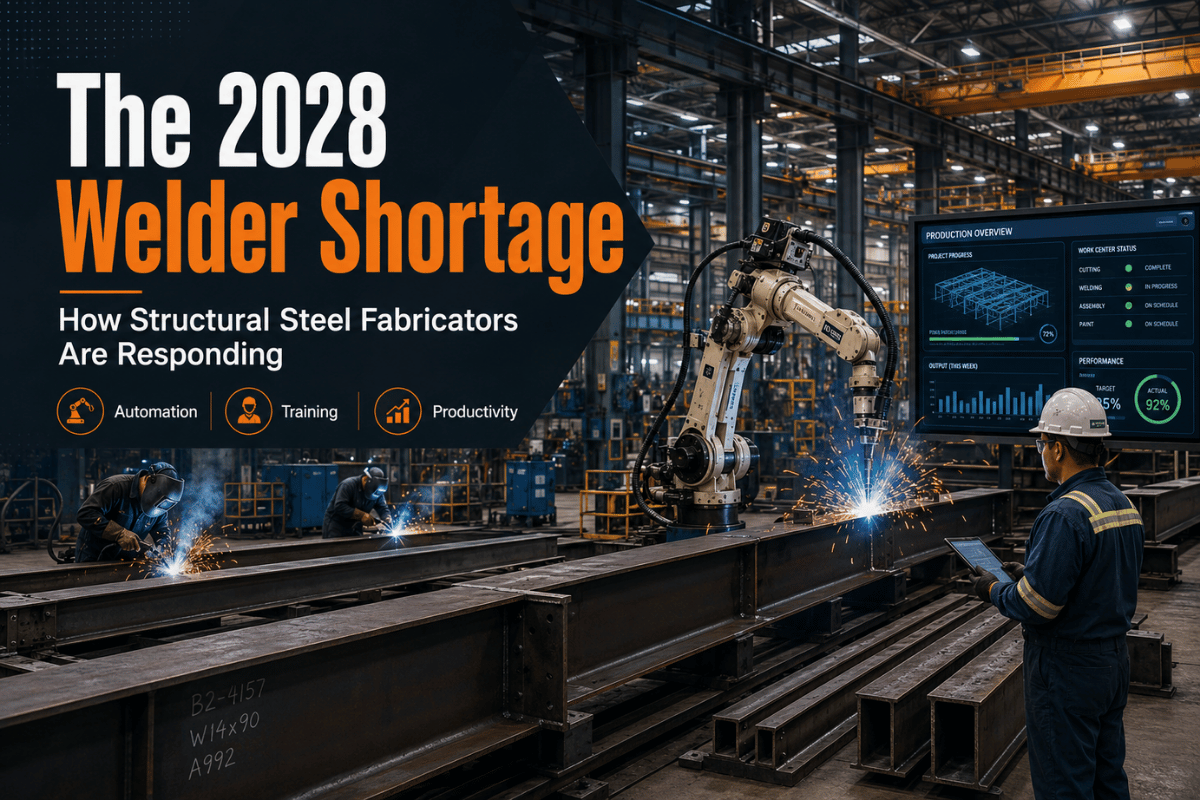
For 2028 planning, the welder shortage impact on structural steel fabrication 2028 is not just a hiring story. In steel shops, it shows up as delayed fit-up, overtime on repeated welds, fewer certified welders for critical joints, and harder calls about when to train, redesign the workflow, or add robotic welding capacity.
Quick Specs: 2028 Welder Shortage Planning
- AWS workforce data projects 320,500 new welding professionals needed in the U.S. by 2029, with 80,000 average jobs to fill each year from 2025 to 2029.
- O*NET lists 457,300 welders, cutters, solderers, and brazers jobs in 2024, with 45,600 average annual openings expected from 2024 to 2034.
- AGC and NCCER reported in 2025 that 92% of construction firms had trouble finding workers to hire, and 45% said labor shortages caused project delays.
- For structural steel shops, the practical question is capacity allocation: which welds require senior judgment, and which repeatable weld families should move to fixtures, better data, or automation?
How Big Is the 2028 Welder Shortage?
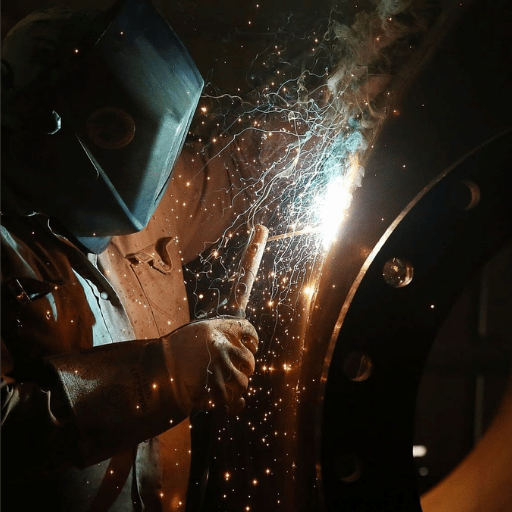
Fabricators usually hear the American Welding Society estimate that hundreds of thousands of welding professionals will be needed over the next few years. A recent AWS Welding Digest workforce article cites 320,500 new welding professionals needed in the United States by 2029, and AWS workforce summaries put average annual welding jobs to fill at 80,000 between 2025 and 2029. Earlier articles and automation-industry summaries cite a 2028 framing, including 330,000 welding professionals needed by 2028. Its exact endpoint has shifted, but the direction is stable: the welding workforce pipeline is tight.
As a federal labor reference, O*NET national employment trends give a more conservative occupational view for welders, cutters, solderers, and brazers. The occupation data shows 457,300 jobs in 2024, 2% projected employment growth from 2024 to 2034, and about 45,600 openings each year. That smaller annual number covers one occupation group, while the AWS figure covers six welding-related occupations, including structural iron and steel workers, structural metal fabricators and fitters, and welding machine operators.
How many welders will be needed over the next few years?
Current answer: AWS projects 320,500 new welding professionals by 2029, while BLS projects 45,600 annual openings for welders, cutters, solderers, and brazers from 2024 to 2034. That gap is not a contradiction. They measure different labor pools. Fabricators should read the numbers as a planning band, not a single forecast.
| Data Source | Labor Pool Measured | Planning Signal |
|---|---|---|
| AWS workforce data | Six welding-centered occupations | 320,500 new professionals projected by 2029 |
| BLS OOH | Welders, cutters, solderers, brazers | 45,600 annual openings from 2024 to 2034 |
| AGC/NCCER 2025 survey | Construction firms hiring workers | 92% report hiring difficulty; 45% report labor-driven delays |
Why Structural Steel Fabrication Feels the Shortage Faster Than General Manufacturing
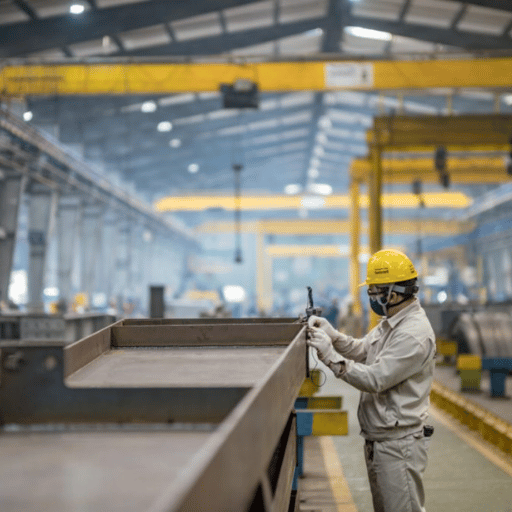
Structural steel fabrication depends on welders, fitters, machine operators, material handlers, inspectors, and detailers moving work through the same shop rhythm. When one trade is short, the whole queue changes. Beam lines can cut and drill material, but stiffeners, base plates, clips, and column details still need fit-up, weld sequence control, and inspection release before shipping.
AISC’s workforce development program frames the issue directly: the steel industry is dealing with a skilled trade shortage with fewer skilled workers available. Its engage and recruit guidance also notes that many fabricators are reaching younger students through tours, CTE programs, and welding competitions. That matters because structural steel is not a one-week training problem. Reading drawings, understanding WPS limits, controlling distortion, and passing inspection take time.
Where the shortage shows first
- Fit-up waits for senior judgment.
- Repetitive fillet welds consume certified welder time.
- Inspection release waits behind rework.
- Estimators add lead-time padding to protect schedules.
What cannot be fixed by hiring alone
- Poor weld family data.
- Manual programming delays.
- Fixture variation between shifts.
- No clear split between expert tasks and repeatable tasks.
“Projects of all types are being delayed.”
Ken Simonson, AGC chief economist, quoted in AGC’s 2025 workforce survey release
2028 Fabrication Capacity Gap Map
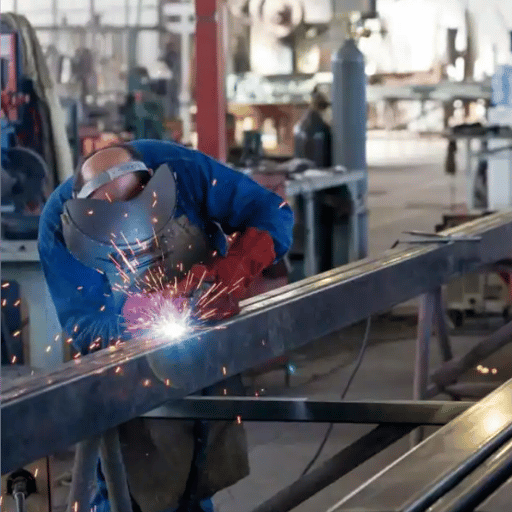
Reading the welding shortage only as “How many welders are missing?” leads to shallow decisions.
Better question: “Which shop decisions keep scarce welders on the work that requires them?” This map turns shortage symptoms into response tracks for structural steel fabricators, where a shortage can hide inside rework, crane waits, WPS questions, or programming delays.
| Shop Symptom | Likely Root Cause | First Response | When Automation Enters |
|---|---|---|---|
| Overtime rises for welders | Senior welders cover too many repeatable joints | Build a skills matrix by WPS and joint family | After 3 repeated weld families exceed planned hours for 2 straight months |
| Rework queues grow | Weld profile varies by shift or operator | Refresh WPS, fit-up checks, and inspection feedback | When the same weld family repeats enough to fixture and track |
| Backlog slips after cutting/drilling | Weld flow, not cutting flow, is the constraint | Measure weld hours by beam type and attachment type | When repetitive beam or column details dominate weld hours |
| New hires need months to carry code work | Training path is informal | Pair apprenticeship tasks with documented weld families | When robot operation can become a teachable production role |
| Robot quotes stall at programming questions | CAD/BIM data is not ready for weld-path use | Audit Tekla, SolidWorks, or drawing data quality | When weld geometry can be imported or recognized with 3D vision |
| Quality audits tighten | Manual variation is visible to inspectors | Lock WPS/PQR discipline and traceability | When real-time seam tracking and repeatable parameters reduce variation |
Engineering Note
Before any robot cell is quoted, separate weld families by joint type, WPS, part length, access angle, and fixture repeatability. For robot safety planning, use current industrial robot safety references such as OSHA robotics standards, ISO 10218-1:2025, and ANSI/A3 R15.06-2025. Do not treat a welding robot as a torch purchase; it is a safeguarded production cell.
Before any robot cell is quoted, separate weld families by joint type, WPS, part length, access angle, and fixture repeatability. For robot safety planning, use current industrial robot safety references such as OSHA robotics standards, ISO 10218-1:2025, and ANSI/A3 R15.06-2025. Do not treat a welding robot as a torch purchase; it is a safeguarded production cell.
Recruiting and Training Still Matter, But They Do Not Fix Every Bottleneck
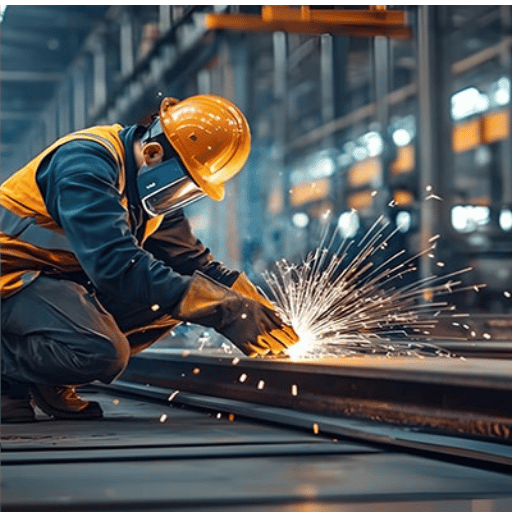
Apprenticeship, CTE outreach, and entry-level welding paths are still part of the answer. AISC points fabricators toward student engagement, shop tours, welding competitions, and earlier contact with middle school and high school students. AWS lists training pathways that range from 6 months to 18 months for certificate programs to 3 years to 4 years for apprenticeships.
Those timelines matter for a 2028 plan because a new welder entering training today may not be ready for every structural steel weld within 24 months if the shop needs code work, drawing reading, and inspection discipline.
How should fabricators read labor demand data?
Welding is in demand, but the answer changes by skill level, location, and job quality.
BLS expects limited employment growth for one welder occupation group, yet still projects 45,600 annual openings because people retire, transfer, or leave the labor force. AWS looks at a wider welding workforce and sees 80,000 average annual jobs to fill from 2025 to 2029. Fabricators should not read the market as “any applicant solves the problem.” The scarce person is the one who can read drawings, follow WPS limits, control distortion, and pass inspection in a busy shop.
- –Build a skills matrix that covers 12 months before the hiring season, not after a project slips.
- –Separate apprentice tasks from certified structural welds, so entry-level workers get real progression without carrying code work too early.
- –Document which welds consume expert time but do not require expert judgment on every pass.
- –Give senior welders a role in fixture, WPS, and robot-cell readiness rather than leaving them on repetitive welds all day.
Where Robotic Welding Actually Helps Structural Steel Shops
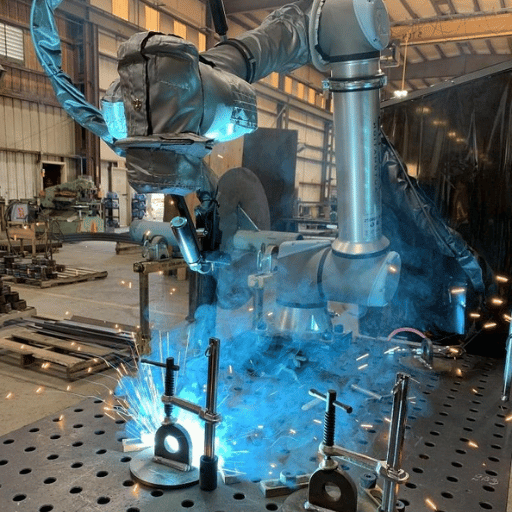
Robotic welding helps most when the weld path, part access, fixture repeatability, and production mix are known. It does not remove the need for skilled welders. It changes where their time should go. Reporting from the Association for Advancing Automation notes that welding robots now work in more complex environments and that software, simulation, seam tracking, and offline programming are becoming more important. For structural steel, those functions matter because beams, columns, stiffeners, and plates are larger and less uniform than small welded parts.
That is why the best candidate is not “all welding.” It is the weld family with enough repetition, access, fixture control, and digital data to let a robot repeat the path safely. Shops reviewing structural steel welding robot systems should start with the welds that already create scheduling pain: stiffener plates, base plates, beam attachments, column details, or repetitive fillet welds that keep senior welders away from harder work.
Is automation replacing welders?
For fabrication in structural steel automation can be better explained as capacity reallocation. Robots can tolerate repeatable paths, synchronized motion, and stable parameters. However, expert welders are still reserved for the fit-up decision, WPS approval, fixture checks, repair assessment, and work that changes too quickly to be programmed as a cell. Any shortage approach that assumes robotics as a labor replacement alone will ignore the more difficult truth: in order to program the task, weld knowledge needs to be systemized.
| Weld Family | Automation Fit Signal | Human Skill Still Needed |
|---|---|---|
| Stiffener plates on beams | Repeated joint patterns, measurable access, stable fixtures | Fit-up release, WPS review, distortion checks |
| Column base plates | Repeatable geometry and multi-pass planning | Heat input decisions and inspection readiness |
| Bridge diaphragm plates | Good candidate when 3D vision can handle fit-up variation | Geometry review and quality acceptance |
| One-off repair welds | Poor candidate unless repeated in volume | Senior welder judgment remains primary |
Why are more structural steel fabricators investing in robotic beam welding?
Robotic beam welding is gaining attention because high-mix structural work has become easier to program than it was a decade ago. That old objection was valid: if every beam needed hours of teach-pendant programming, the robot could lose its advantage. Newer systems use CAD/BIM input, simulation, seam tracking, and vision to reduce that burden. Value is not only faster welding. It is the ability to protect scarce manual welders from the repetitive work that prevents them from solving harder fabrication problems.
Before a budget request, zxweldingrobot.com should be evaluated against the shop’s measured bottleneck, not as a generic robot purchase. Compare fixture scope, rail or cantilever format, and programming needs against a welding robot cost guide and a welding robot selection checklist. A useful trial log can track 40 hours of senior welder time, 20 hours of repeat weld work, and 2 months of fixture notes before the quote discussion starts.
Choosing the Response: Hire, Train, Redesign, or Automate?
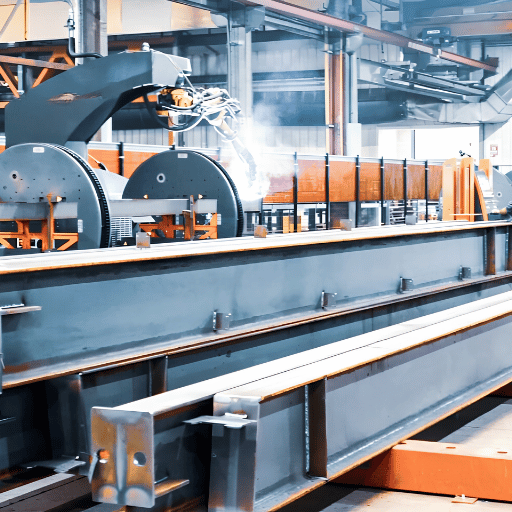
Choosing one tool and forcing every problem into it is the wrong response. A fabricator facing fewer workers should decide by bottleneck type. Hiring helps when there is real local talent available. Training helps when the shop can wait through a learning curve. Workflow redesign helps when welders are losing time to handling, staging, or unclear data. Automation helps when repeatable welds consume expert hours and the shop can feed the robot with clean geometry and fixtures.
| Response Track | Use It When | Measure Before Spending |
|---|---|---|
| Hire | Open work needs certified judgment across varied joints | Open requisitions, wage band, acceptance rate, time to productive work |
| Train | Mentors, repeatable tasks, and a 6 months to 18 months runway are available | Skill matrix progress, test pass rate, WPS coverage |
| Redesign workflow | Welders lose time to handling, staging, unclear drawings, or rework loops | Crane waits, setup time, inspection hold time, rework tickets |
| Automate | Repetitive weld families drain senior welder hours month after month | Weld hours by family, fixture repeatability, CAD/BIM readiness, safety scope |
4-Track Capacity Response Matrix
- If the constraint is certified judgment, hire or retain expert welders first.
- If the constraint is future pipeline, push apprenticeship and CTE links now.
- If the constraint is non-value added handling, staging, and data flow, fix them first.
- If the constraint is repeated weld time, pilot a robot-ready weld family with fixtures and safety planning.
What Changes Between 2026 and 2028?
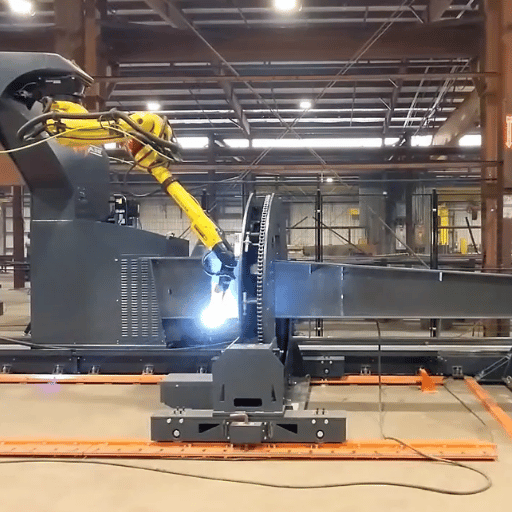
From 2026 to 2028, the problem is less about a single cliff and more about compounding pressure. Retirements continue. Construction owners still face labor-related delay risk. Fabricators bidding public infrastructure, manufacturing plants, energy work, and data-center-adjacent steel will be asked to hold lead times while the labor market stays tight. BLS also notes that automation in manufacturing may limit overall demand for some welding workers, which is another way of saying that the work mix is changing, not disappearing.
Shop managers have about a 12 months to 24 months effective planning window. This allows time to chart weld hours by family, run a fixture inventory, build shop and school partnerships, improve CAD/BIM transfer and readiness, and test one automation candidate without risking an entire shop on one purchase.
| Time Window | Action | Evidence to Collect |
|---|---|---|
| First 3 months | Map weld families and identify repeated bottlenecks | Weld hours, rework tickets, WPS list, fixture notes |
| 3 months to 6 months | Launch skills matrix and school outreach | Trainee progression, mentor capacity, certification gaps |
| 6 months to 12 months | Pilot workflow redesign or one robot-ready weld family | Cycle records, inspection results, safety review, CAD readiness |
| 12 months to 24 months | Scale the response that moved the constraint | Backlog trend, lead-time variance, expert welder allocation |
Summary: The Shortage Is a Capacity Planning Problem, Not Just a Hiring Problem
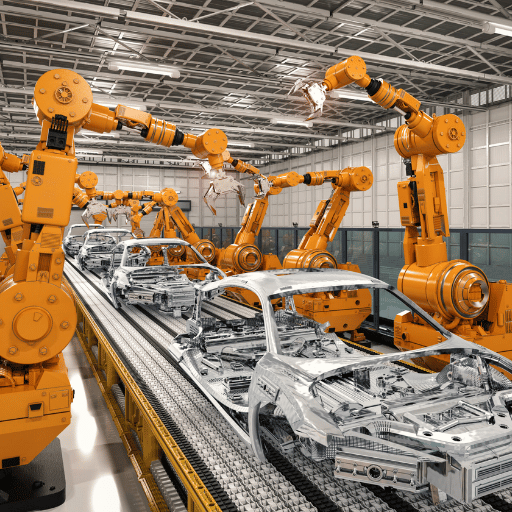
By 2028, the welder shortage should push structural steel fabricators to make sharper capacity decisions. Hiring and apprenticeship protect the future workforce. Better staging, fixture discipline, and WPS control protect current output. Robotic welding belongs in the plan when repeated weld families are holding back skilled welders from the work that needs their judgment.
Practical test: if senior welders are spending the week on repeatable welds while fit-up, inspection, and hard joints wait behind them, the shop has a capacity allocation problem. One answer may be training. It may be workflow redesign. It may be a rail-mounted or cantilever robotic welding cell. The right move starts with measuring the weld families that actually consume the week.
Next Step for Fabricators
Should repeatable structural welds be consuming too much qualified welder time, analyze the weld families that are suitable for rail-mounted or cantilever automation before purchasing equipment. For zxweldingrobot.com, the useful starting brief is not “replace a welder”; it is “which repeated weld families are tying up expert hours each week?”
FAQ
Q: Is there really a welder shortage in 2028?
View Answer
Yes, but use the date carefully. Current AWS workforce data points to 320,500 new welding professionals needed by 2029, while earlier industry summaries used a 2028 framing. Fabricators should treat 2028 as a near-term planning marker, not a cliff date. Hiring pressure, retirements, training timelines, and replacement openings are already active, so waiting for one exact forecast year misses the shop-level risk.
Q: How does the welder shortage affect structural steel fabrication schedules?
View Answer
It usually appears as queue time, not a single missing person. Fit-up waits longer, repetitive welds consume senior labor, and rework takes longer to clear.
Q: Can robotic welding replace structural steel welders?
View Answer
No. Robots repeat prepared weld paths; people still own fit-up judgment and acceptance decisions.
Q: What welds are easiest to automate in structural steel shops?
View Answer
Repeated weld families with stable access and fixtures are the strongest candidates. Common examples include stiffener plates, beam attachments, column base plates, and other patterns that repeat enough to justify path planning, seam tracking, fixture checks, and safety setup. One-off repair welds, mixed access work, and joints with poor fit-up control should stay with skilled manual welders until the process is stable enough to measure.
Q: What should a small fabrication shop do before buying a welding robot?
View Answer
Track weld hours by family for several production cycles. Then review CAD/BIM data quality, fixture repeatability, WPS coverage, safety needs, and operator training. First automation candidate should be measurable, repeatable, and narrow enough to test.
Q: How should fabricators balance apprenticeship and automation?
View Answer
Pair them. Apprenticeship builds future welders; automation protects current experts from repeatable work.
About This Analysis
This article uses public workforce, steel-industry, and robotics sources to frame the shortage as a fabrication capacity problem. Brand information from zxweldingrobot.com is used only where the article discusses structural steel welding robot options; third-party labor claims are sourced from AWS, BLS, AISC, AGC, A3, OSHA, ISO, and ANSI references.
Related Resources
References & Sources
- Where Are the Welders? – American Welding Society Welding Digest
- Welders, Cutters, Solderers, and Brazers: National Trends – O*NET OnLine
- Workforce Development – American Institute of Steel Construction
- Engage and Recruit – American Institute of Steel Construction
- 2025 Workforce Survey Release – Associated General Contractors of America and NCCER
- Solving Industrial Automation’s Biggest Challenges: Welding in Complex Environments – Association for Advancing Automation
- Robotics Standards – Occupational Safety and Health Administration
- ISO 10218-1:2025 – International Organization for Standardization
- ANSI/A3 R15.06-2025 Industrial Robot Safety Update – New Equipment Digest